Black Pineleaf Scale

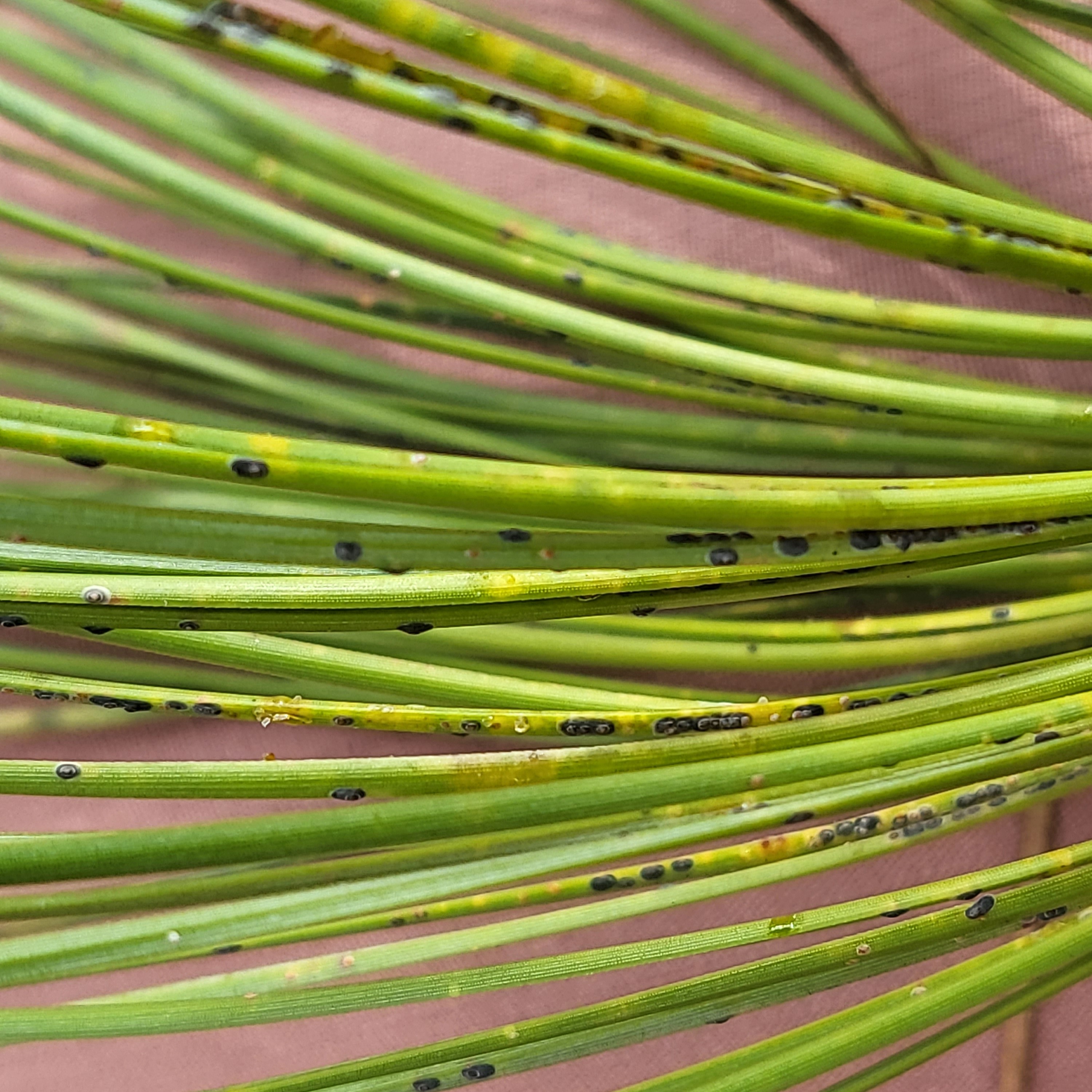
Black pineleaf scale
Nuculaspis californica
Healthy trees are unaffected at low levels. At high levels, needle production becomes stunted and growth is reduced. Weakened trees may then succumb to other damage agents, such as bark beetles and/or wood borers.
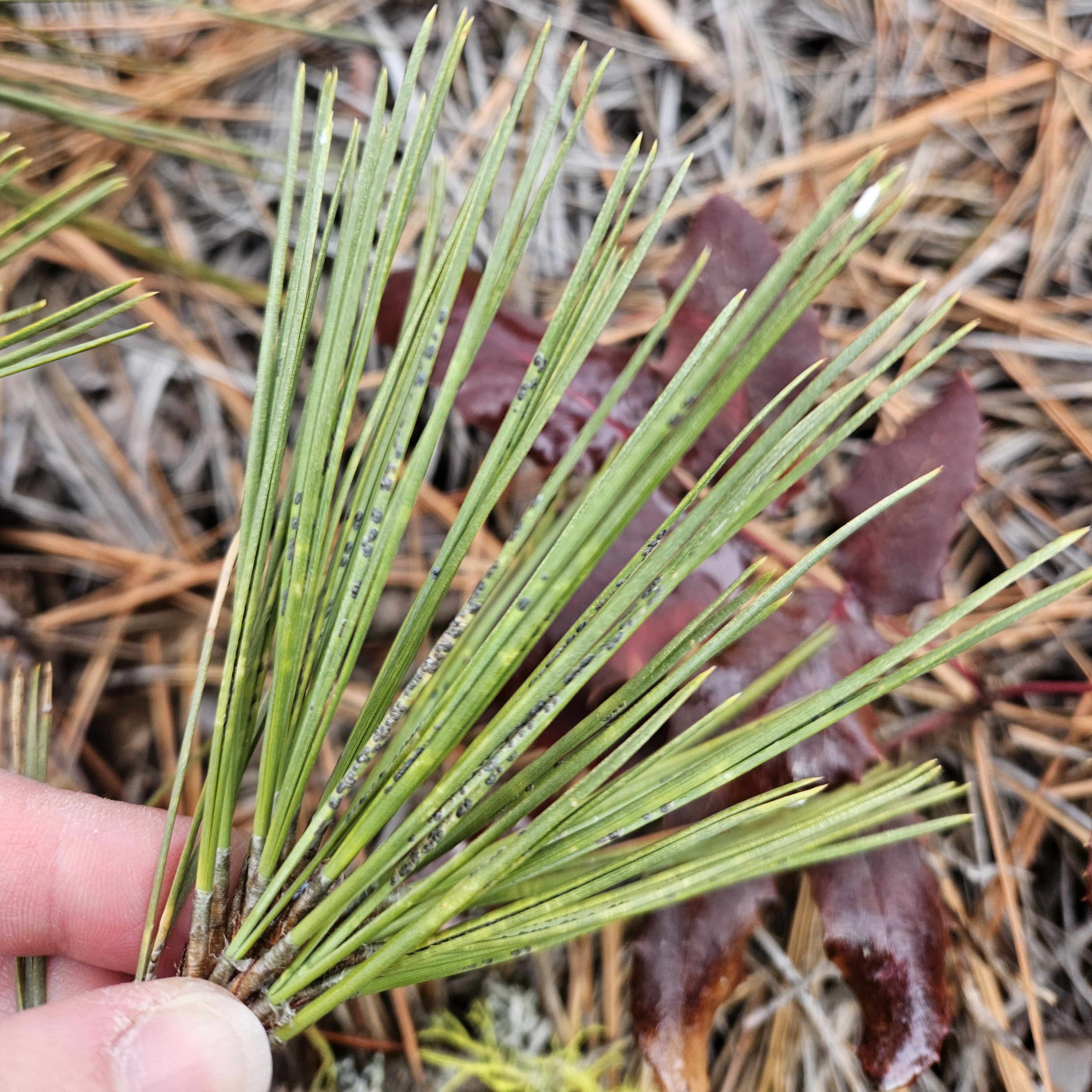
Needles infested with BPLS
Black pineleaf scale (BPLS) is native to North America and found on pine species throughout the U.S. The insect pierces needles using a stylet and sucks the sap, causing discolored yellow/necrotic areas and eventual needle loss. Scales are covered in a dark, protective waxy coating that they develop as adults. Eggs hatch mid- to late summer and disperse during a mobile "crawler" phase. After finding a host, females become immobile.
Populations are kept in check by natural enemies such as parasitic wasps and ladybird beetles. Dust from roads/construction and insecticide treatments are associated with BPLS outbreaks, since both factors reduce natural enemy populations. Rapid drops in temperature cause mortality to BPLS.
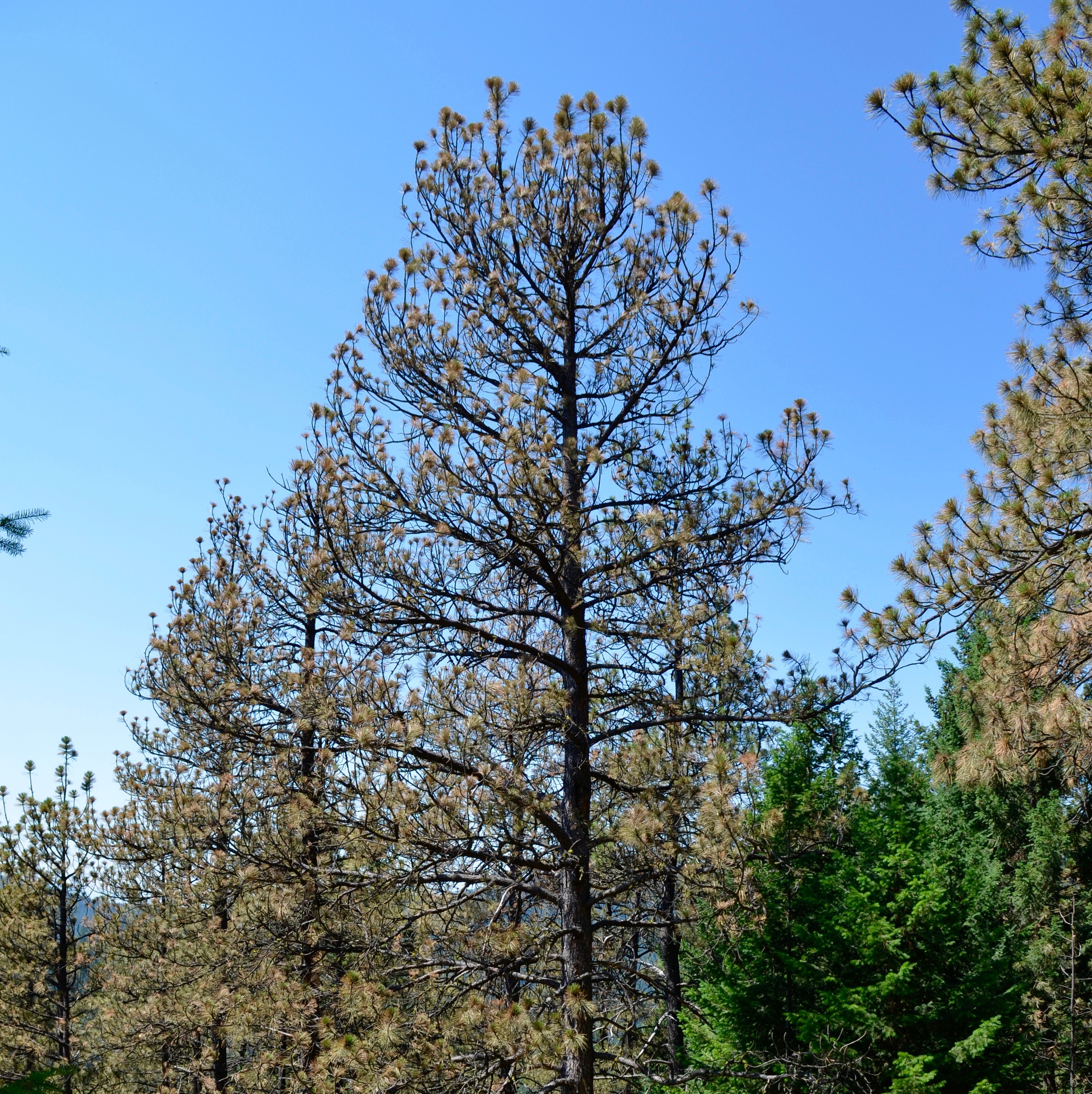
Lion's tailing on infested ponderosa
Looking for thinning foliage and chlorotic (yellowing or fading) needles.
Lion's tailing: older, infested needles are dropped, resulting in bare branches with a tuft of new needles at the tip.
Note: thinning foliage and lion's tailing are also symptomatic of other stressors.
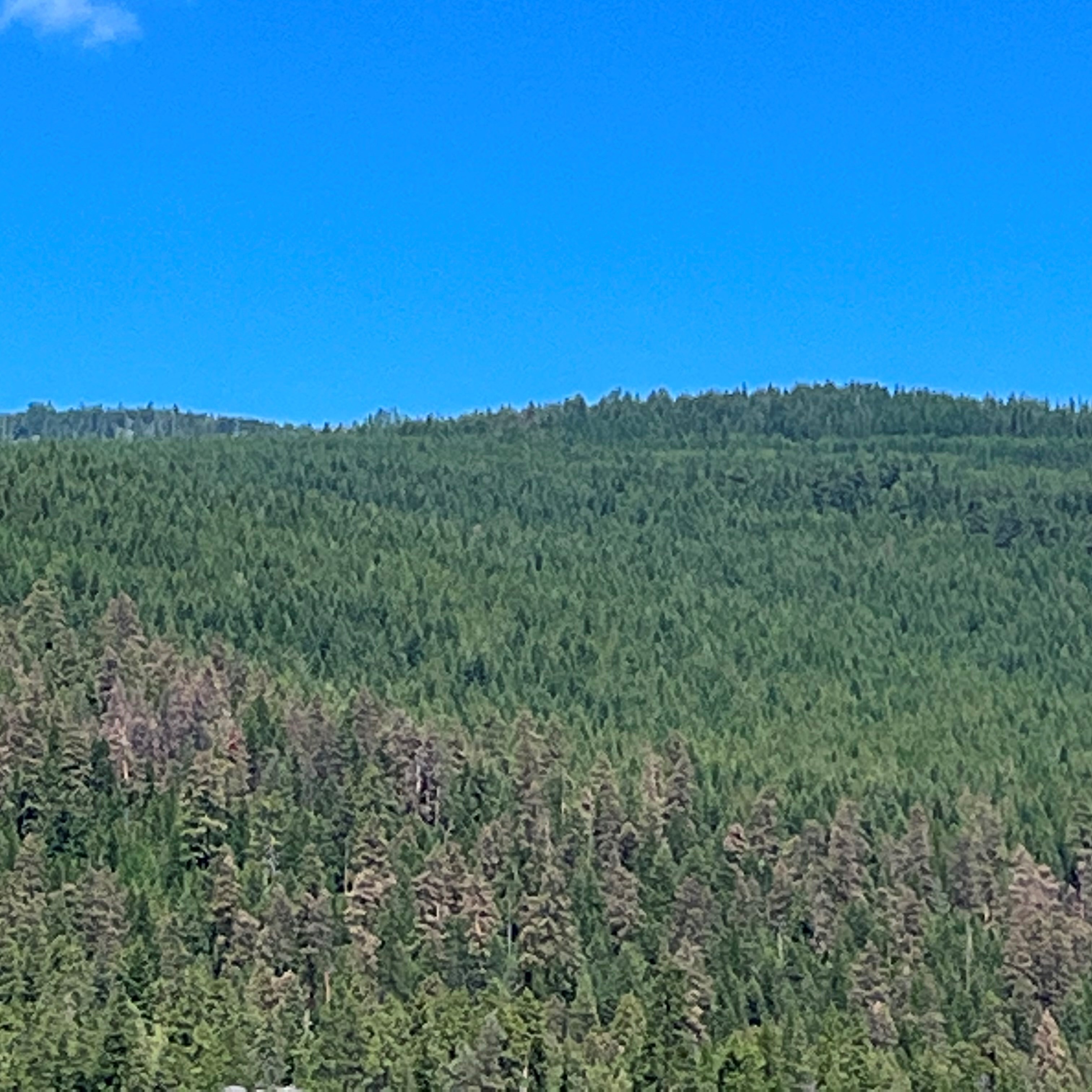
Landscape-level outbreak of black pineleaf scale
Promote tree health and vigor through thinning and/or irrigation to combat effects of needle loss.
Monitor pines for scales; 20 to 30 scales per needle is considered a high infestation.
Pesticide application will harm natural enemy populations, but systemic insecticides and horticultural oils are effective against BPLS. Apply systemics before eggs hatch. Apply oils during the crawler stage.
Printable fact sheet: Black Pineleaf Scale
Forest Insect & Disease Leaflet: Black Pineleaf Scale FIDL
Management Guide: Black Pineleaf Scale Management Guide
The Forest Pest Management Program supports service foresters throughout Montana. Contact your local service forester for questions regarding insects and diseases in your area.
2705 Spurgin Rd Missoula, MT 59804