
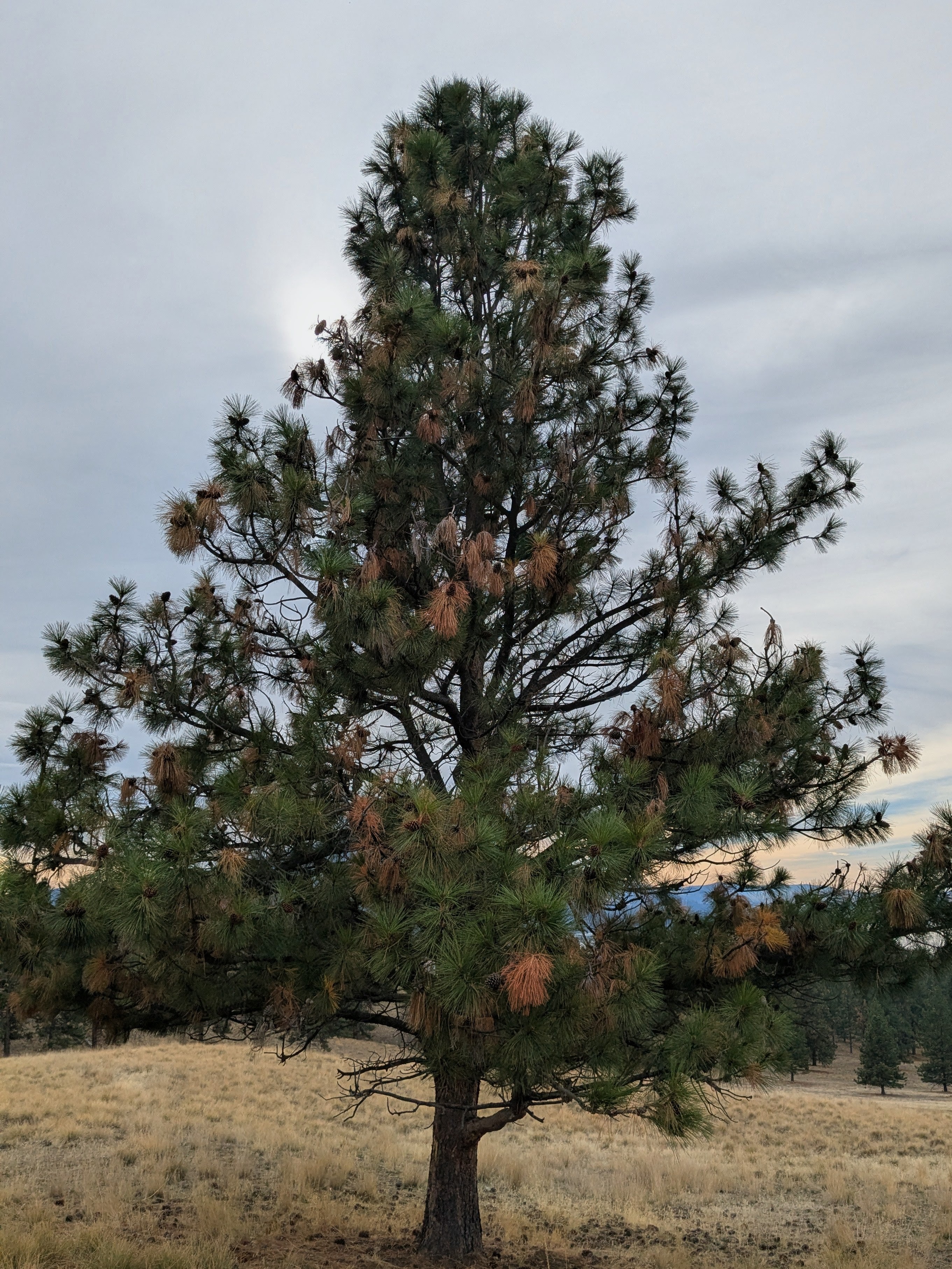
Diplodia Shoot and Tip Blight
Diplodia pinea
HOST: Ponderosa Pine
Ornamental pines (Scots, Austrian pine) are also susceptible.
DAMAGE: Branch Dieback
Diplodia rarely causes mortality but can kill individual branches.
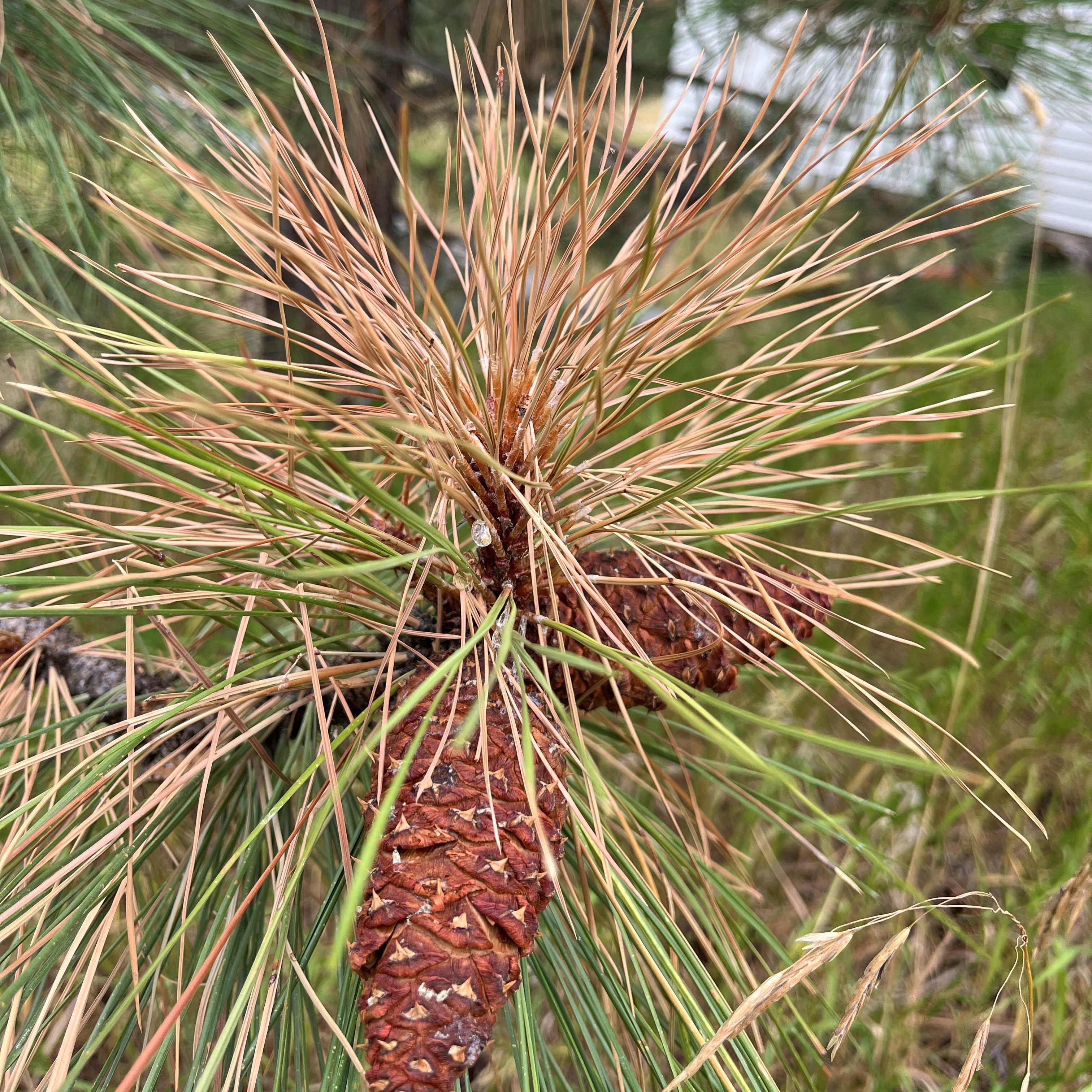
Shoot infected with diplodia
Ecology
Diplodia shoot and tip blight is a fungus that causes lesions on branches of ponderosa pine. Diplodia produces spores at the end of the summer that are spread by rain splash and wind. These spores infect young shoots the following spring, if conditions are sufficiently temperate and moist. New needles will appear stunted, short and brown. Infections may be latent in trees and erupt when triggered by drought or hail injury.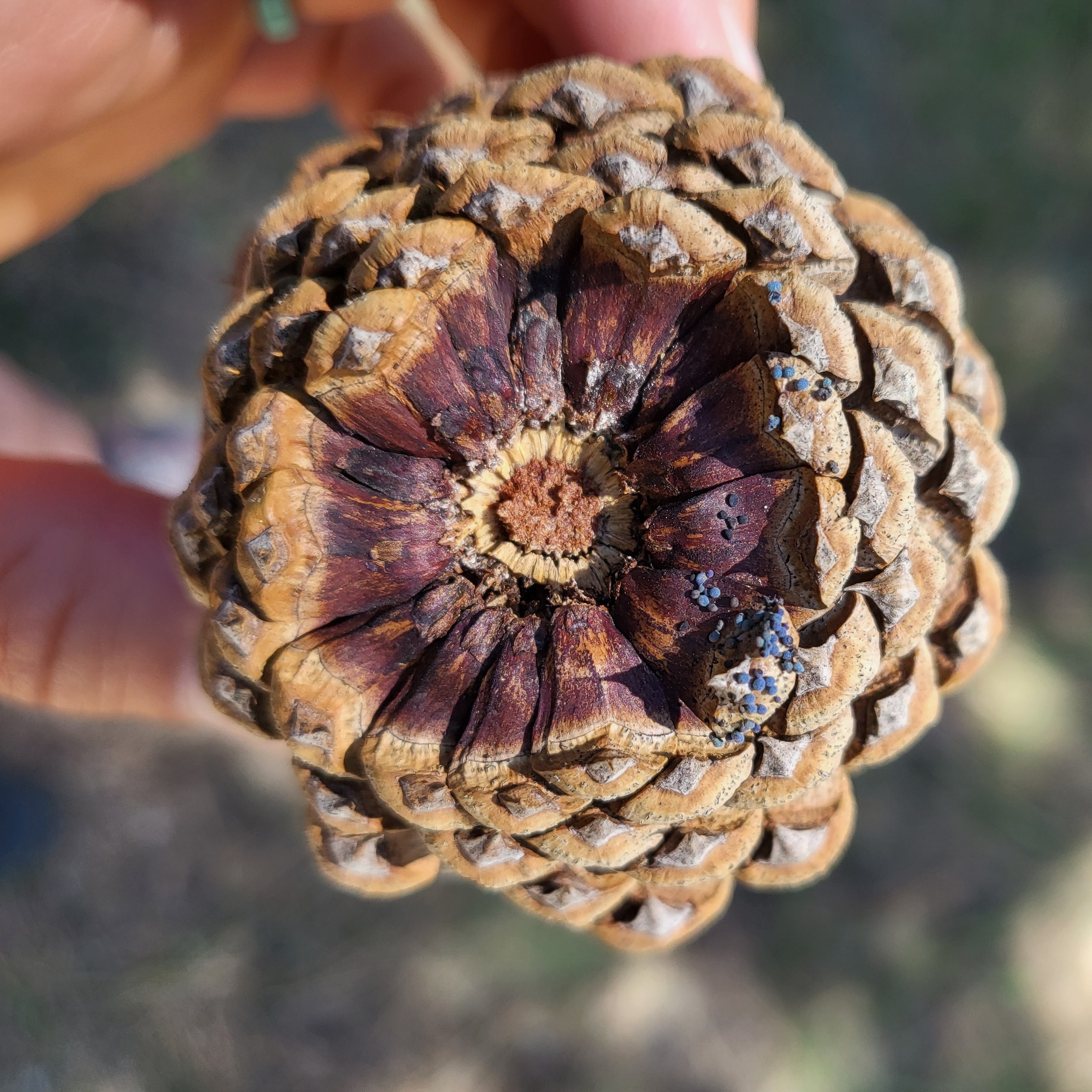
Pycnidia on cone
Identification
-
Damage begins in the lower crown and progresses upwards.
-
Dead branches in crown appear as orange spots of foliage.
-
Grey needles remain attached to branch after death.
-
Resinous lesions appear on branches.
-
Small black spore-producing structures (“pycnidia”) are found on needles and cone scales, often appearing as minute black pustules.
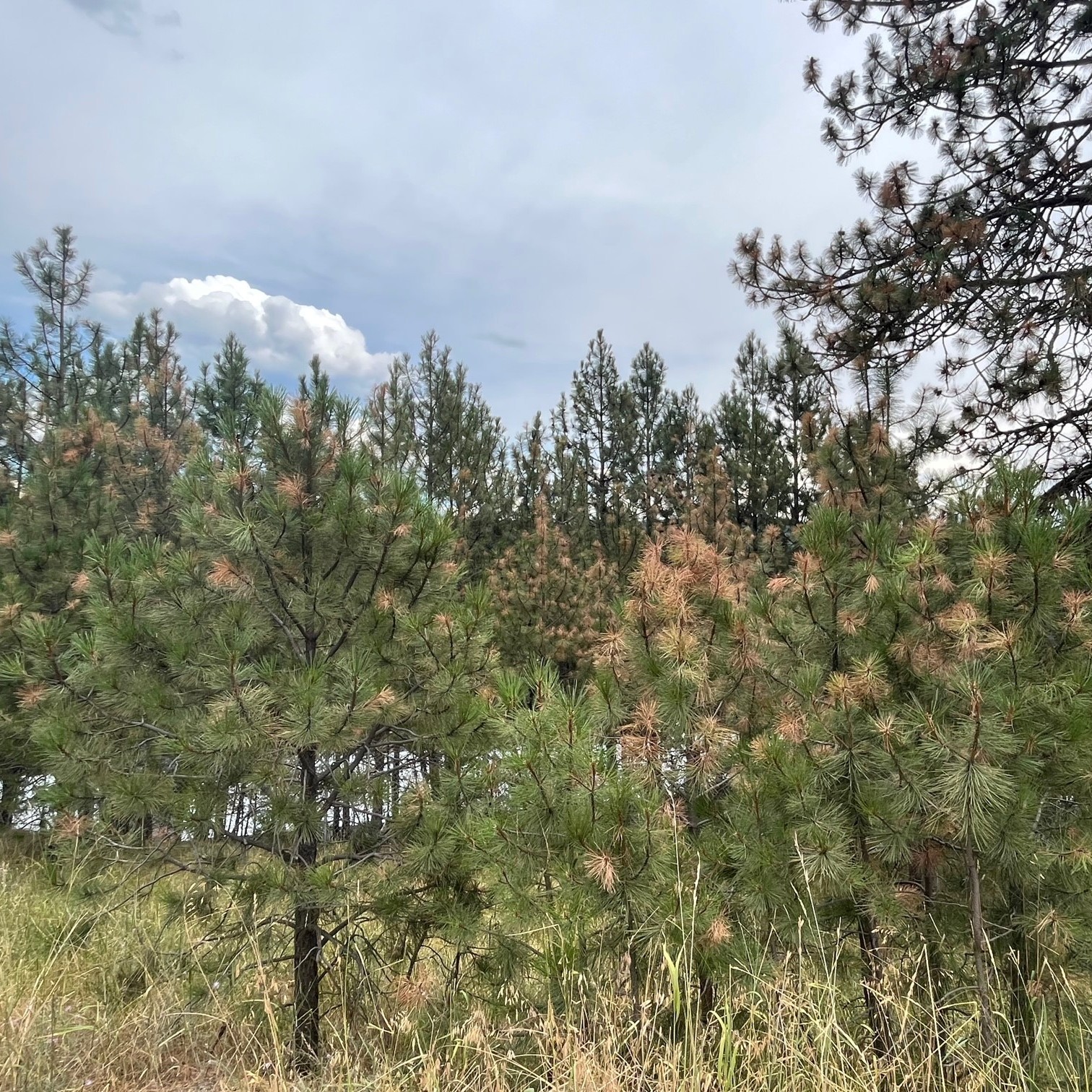
Infected stand
Management
-
Promote tree vigor to keep latent infections asymptomatic.
-
Avoid pruning during wet, temperate conditions.
-
Thin stands to reduce competition for water.
-
Do not fertilize susceptible trees; excess fertilizer can exacerbate infections.
-
Infections can reside in a shoot without symptoms for years; therefore, removing infected material does not control disease.
Contact the Forest Pest Management Program
The Forest Pest Management Program supports service foresters throughout Montana. Contact your local service forester for questions regarding insects and diseases in your area.
2705 Spurgin Rd Missoula, MT 59804