
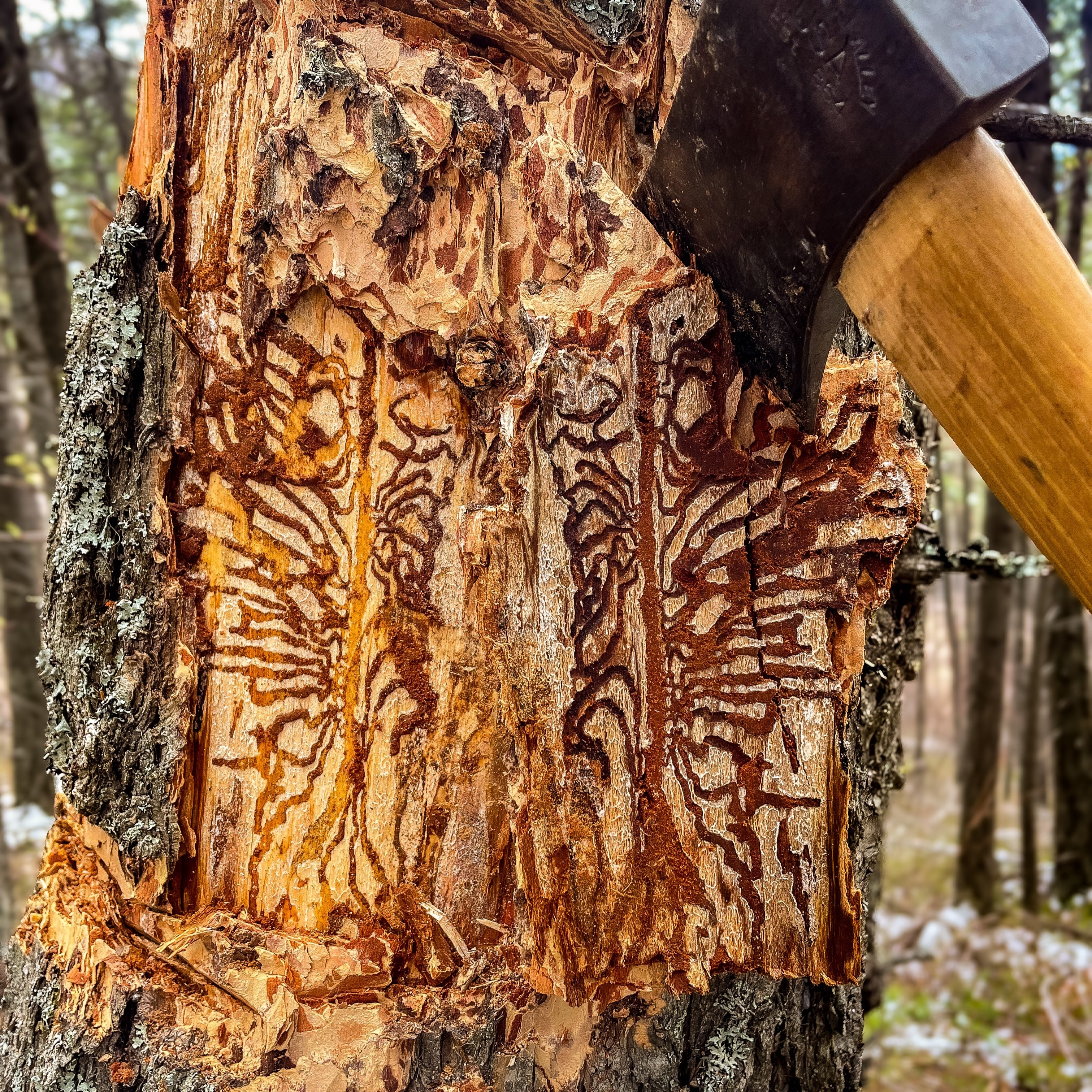
Douglas-fir Beetle
Dendroctonus pseudotsugae
HOST: Douglas-fir
Douglas-fir that are stressed due to root disease, fire injury, age, overstocking, drought, and/or defoliation have a lower ability to resist attack.
DAMAGE: Mortality
Douglas-fir beetle feeds on phloem (the vascular tissue that transports water and sugars), girdling and killing attacked trees. Once infested, a tree cannot be saved.
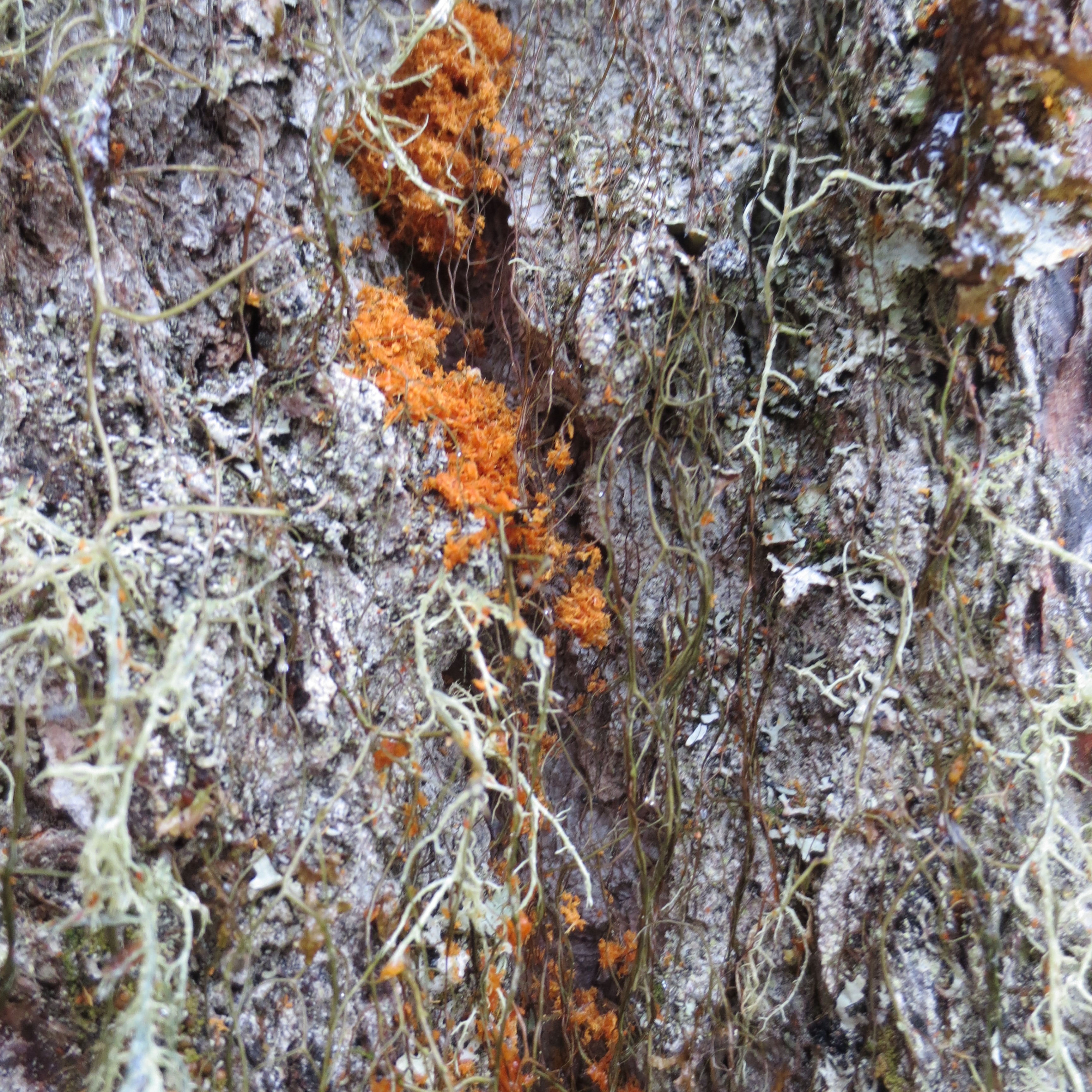
Frass from Douglas-fir beetle attack
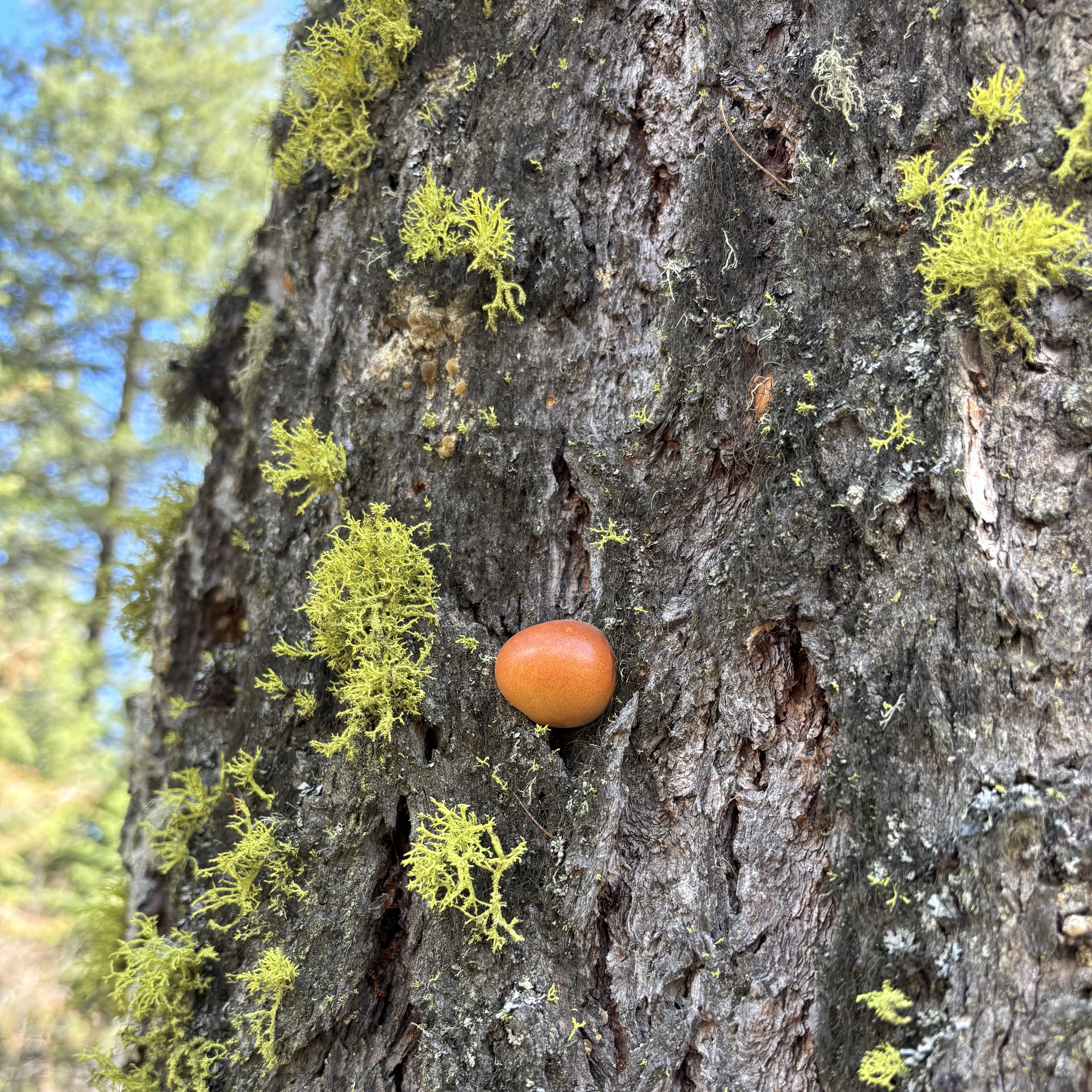
Pouch fungus Cryptoporus volvatus
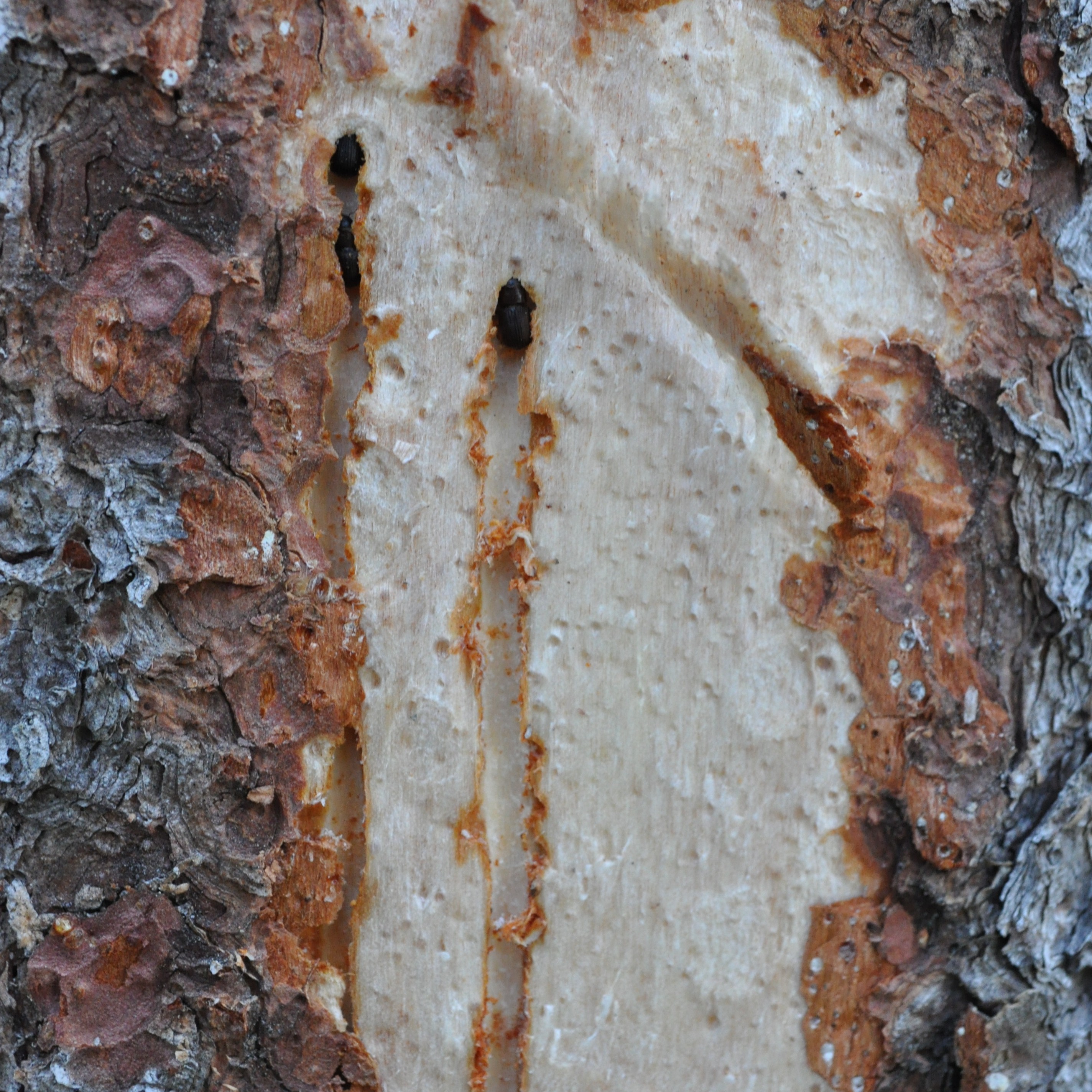
Adults mating, laying eggs
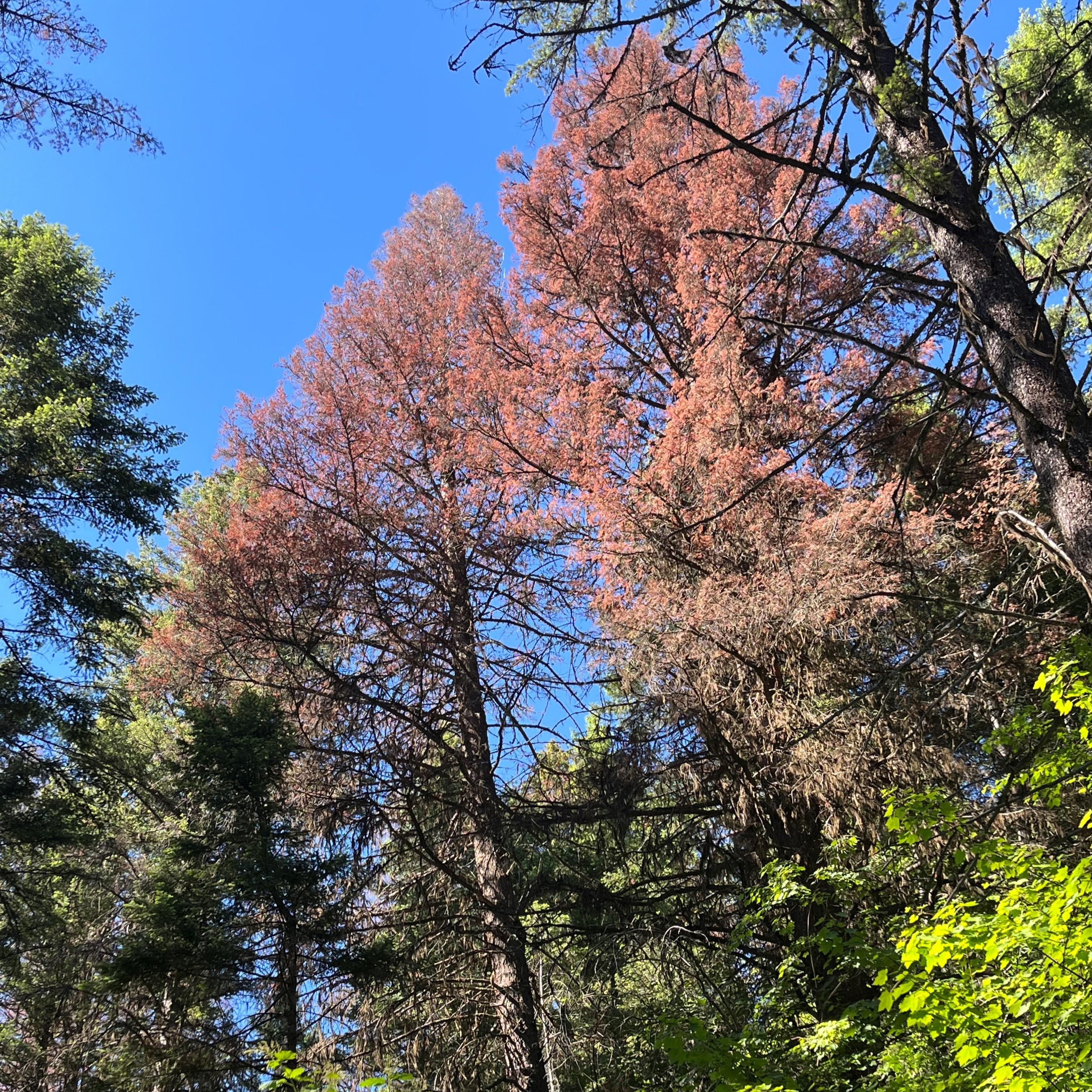
Douglas-fir beetle mortality
Ecology
Douglas-fir beetle (DFB) is native to western North America and is found throughout the range of its host tree, Douglas-fir. When DFB populations are low (endemic conditions), DFB is found in small pockets of downed or dying trees. Stressed trees are more susceptible to attacks. When environmental disturbances create an abundant supply of freshly downed or damaged Douglas-fir, beetle populations increase and spill over into healthy trees. Wood borers often co-occur with Douglas-fir beetle.
Identification
-
Reddish-brown boring dust (frass) accumulating in bark crevices
-
Galleries with alternating larval galleries etched into inner bark
-
Presence of brown/black adult beetles, or small white larvae approximately the size of a grain of rice (less than ¼ inch)
-
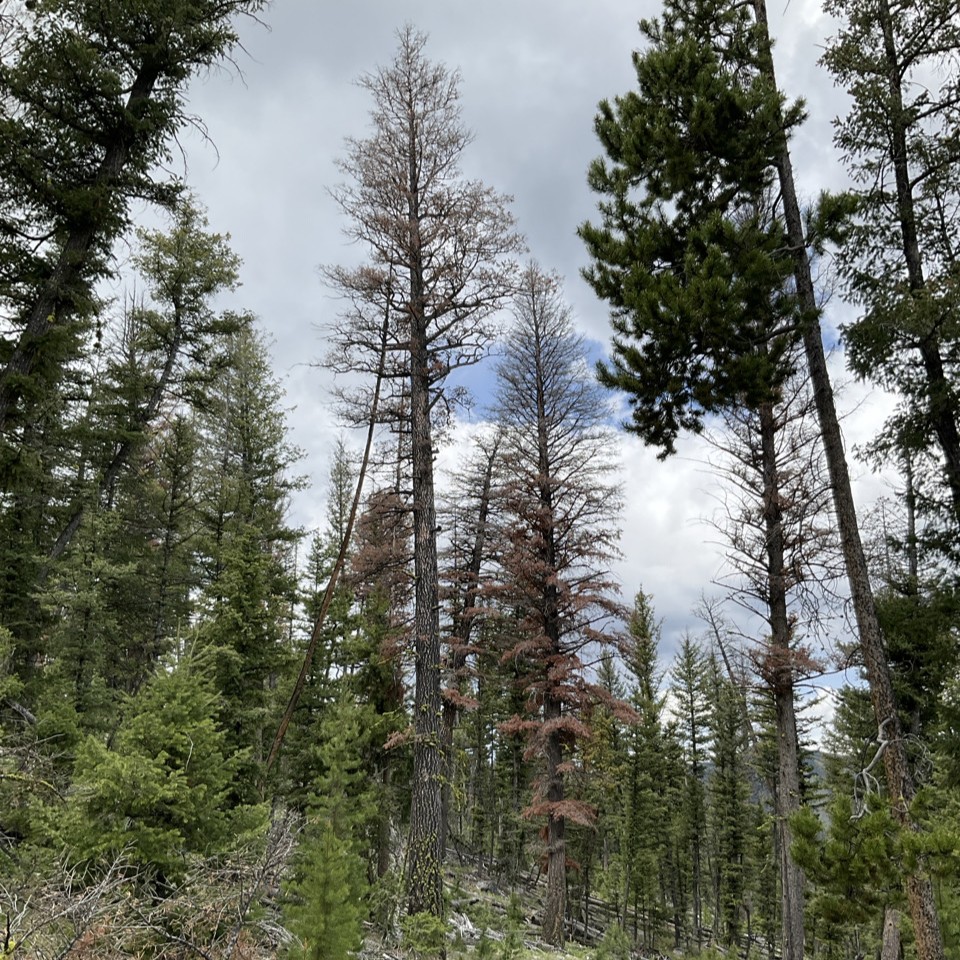
Crowns of currently infested trees may be green. Trees often don’t turn red until after beetles have emerged.
-
Pouch fungi, Cryptoporus volvatus, may grow out of bark beetle exit holes after beetle emergence.
Life Cycle
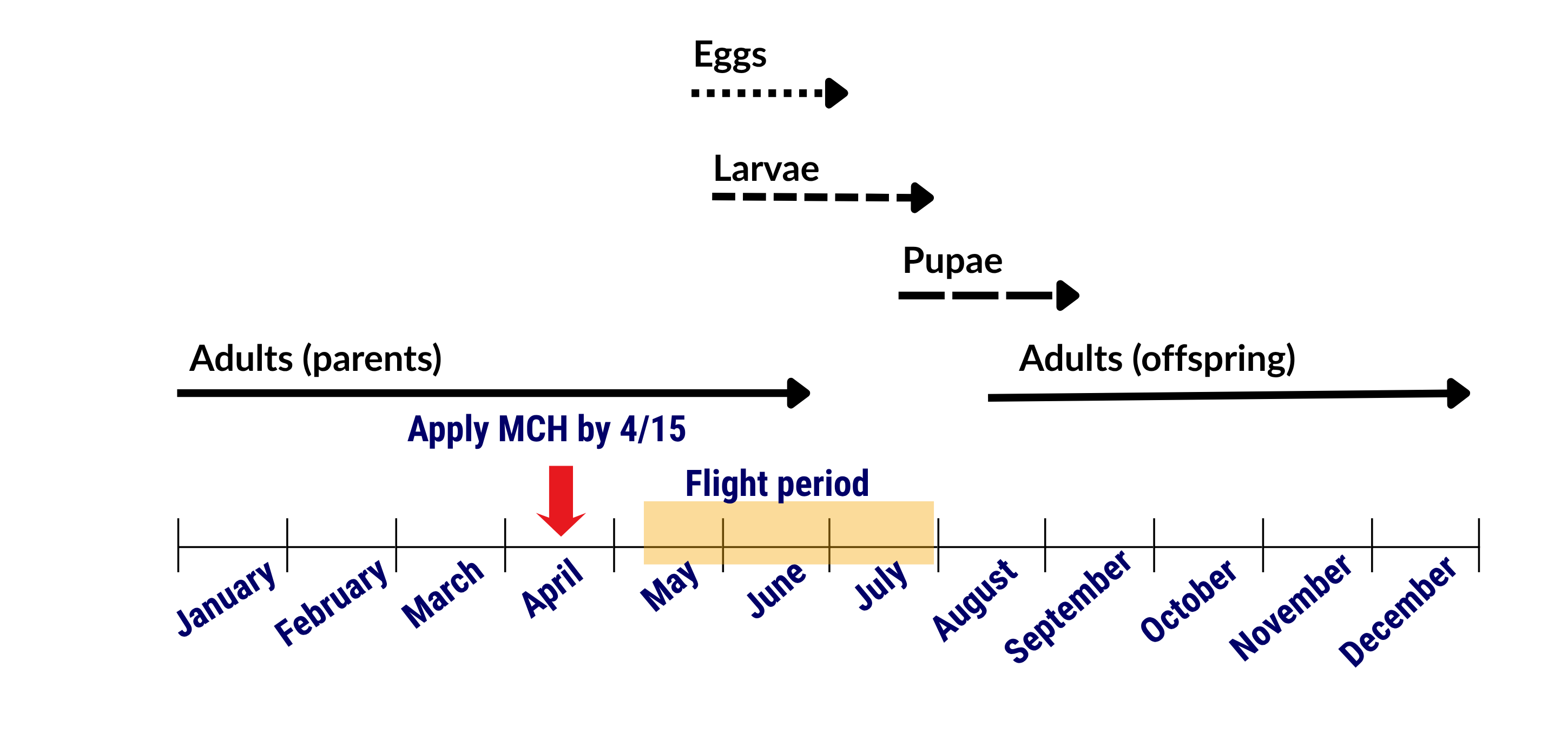
In spring, adults mass attack single trees. Once a suitable host is found, they release aggregation pheromones to recruit more beetles for a successful attack. When a host tree is full, male beetles release the anti-aggregation pheromone MCH (methylcyclohexenone) to prevent overcrowding. After mating occurs, females lay eggs along alternating sides of a long, vertical gallery. The eggs hatch into small, white larvae that bore outward from the main gallery and pupate into adults. Douglas-fir beetles require one full year to develop, with offspring ready to emerge and attack trees the following spring. The flight period begins once temperatures exceed 60° Fahrenheit, usually mid-May in Montana.
Management
-
Thin stands to reduce competition and promote individual tree vigor.
-
Brood tree removal: identify and remove beetle-infested trees before adult beetles can emerge. Trees may appear healthy but closer inspection will reveal boring dust and galleries.
-
Diversify age and size classes of Douglas-fir: DFB prefers large (>14" DBH) and overmature (>120 years old) host trees.
-
Promote non-host species such as ponderosa pine and western larch.
-
Remove or destroy infested material. Beetles will continue developing in logs and firewood left on site will emerge the following spring to attack nearby trees.
-
Be proactive. Remove windthrown, fire-scorched, or overmature trees to limit brood material in the stand.
-
Apply MCH pheromone to stands by April 15 (before beetles attack).
Additional Resources
Printable Fact Sheet: Douglas-fir Beetle
Forest Insect & Disease Leaflet: Douglas-fir Beetle FIDL
Management Guide: Douglas-fir Beetle Management Guide
Contact the Forest Pest Management Program
The Forest Pest Management Program supports service foresters throughout Montana. Contact your local service forester for questions regarding insects and diseases in your area.
2705 Spurgin Rd Missoula, MT 59804