
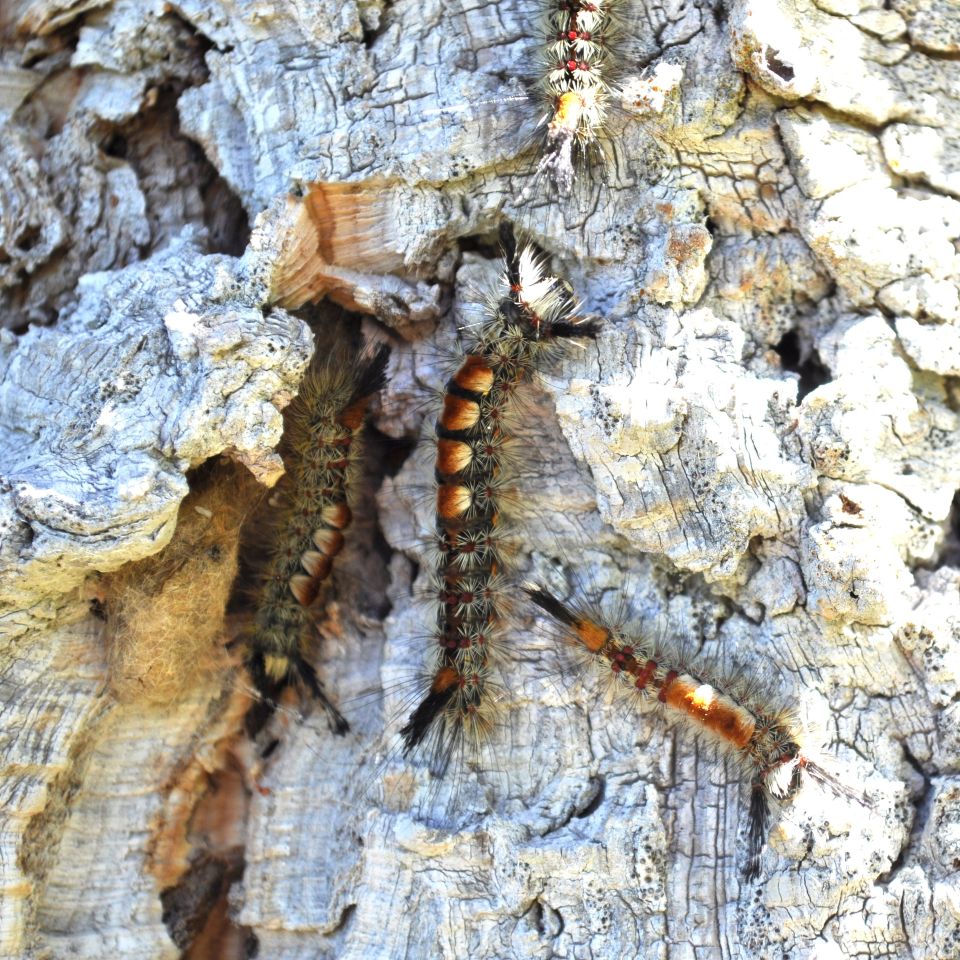
Douglas-fir Tussock Moth
Orygia pseudotsugae
HOSTS: Douglas-fir, grand fir, subalpine fir, spruce
DAMAGE: Defoliation, growth loss, top-kill, mortality
Caterpillars feed on current and previous years’ growth, often defoliating the entire tree. Understory trees can be killed within one year of severe defoliation.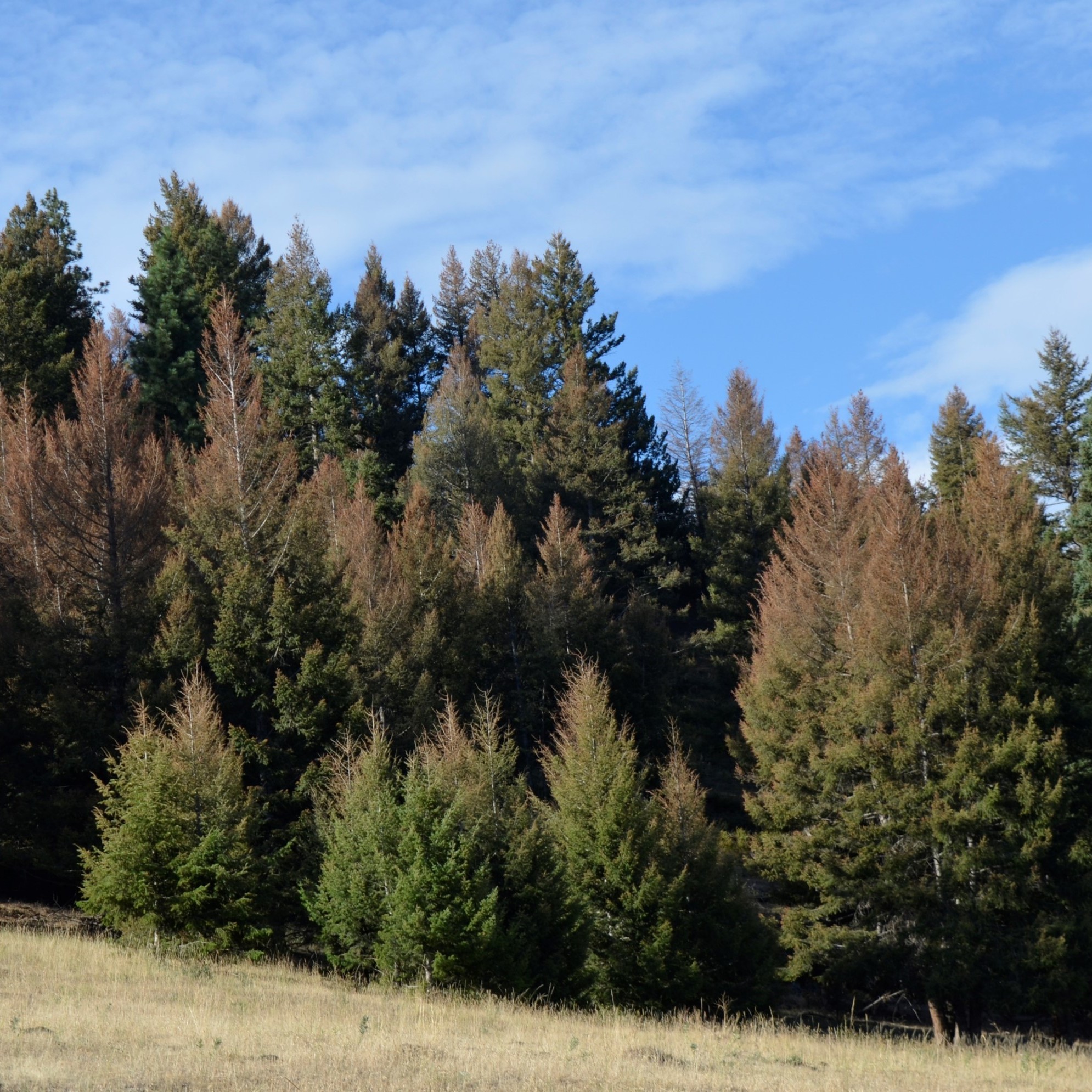
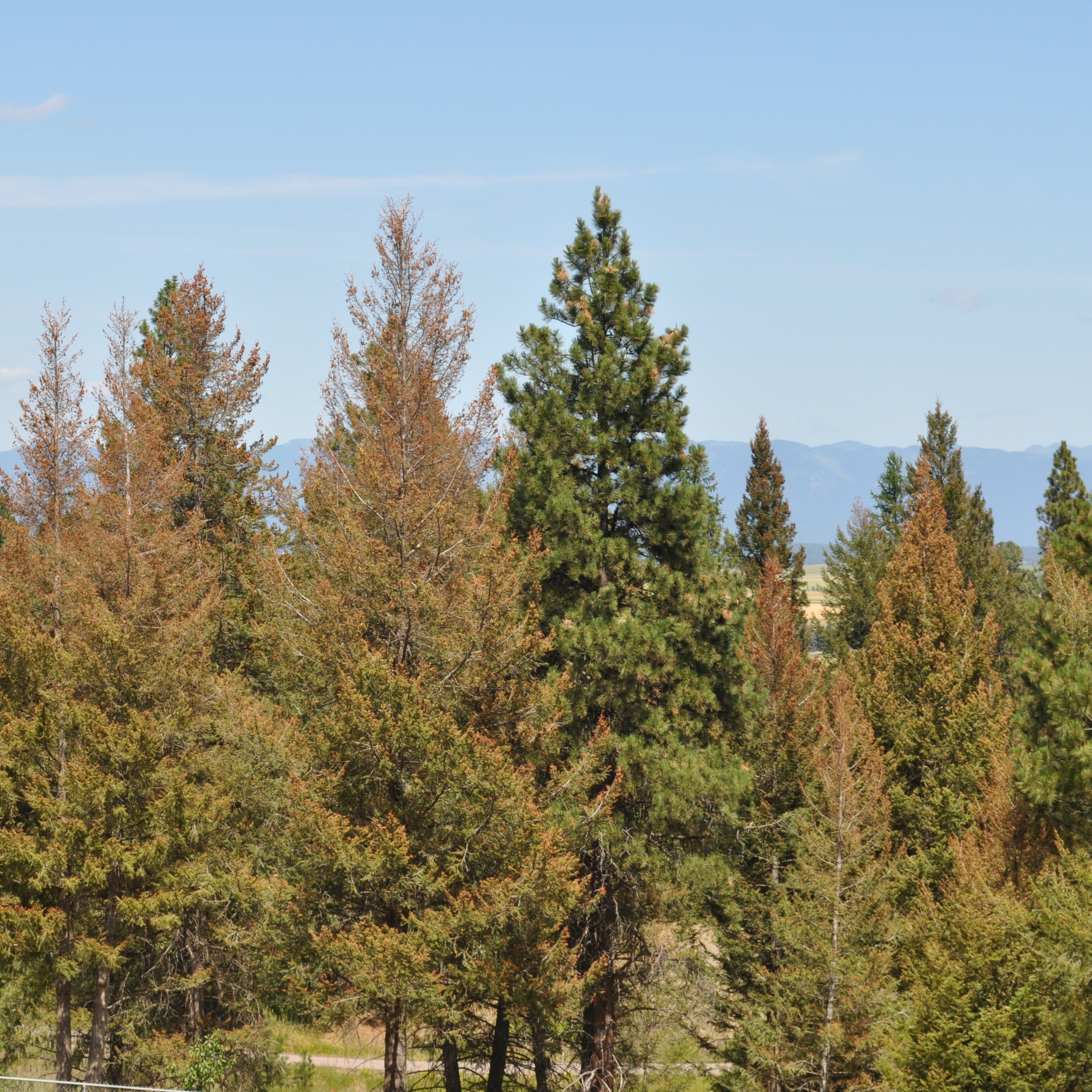
Defoliation from Douglas-fir tussock moth
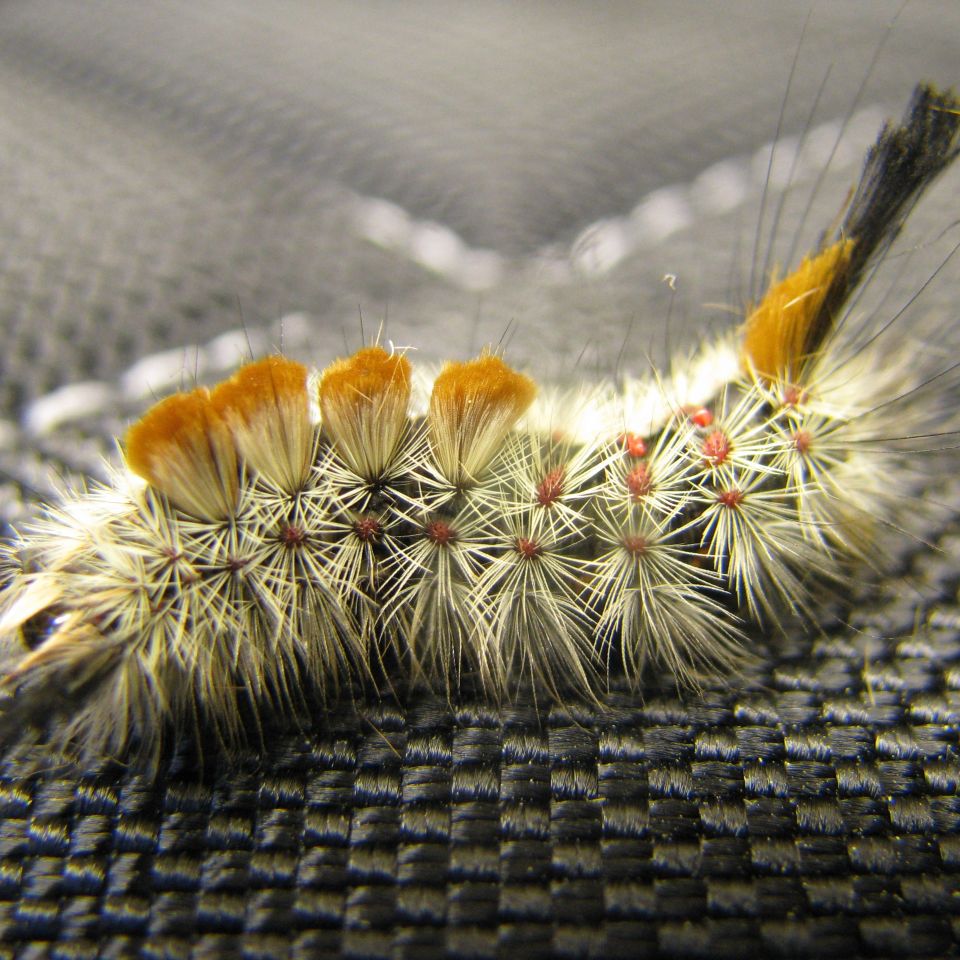
Douglas-fir tussock moth larva
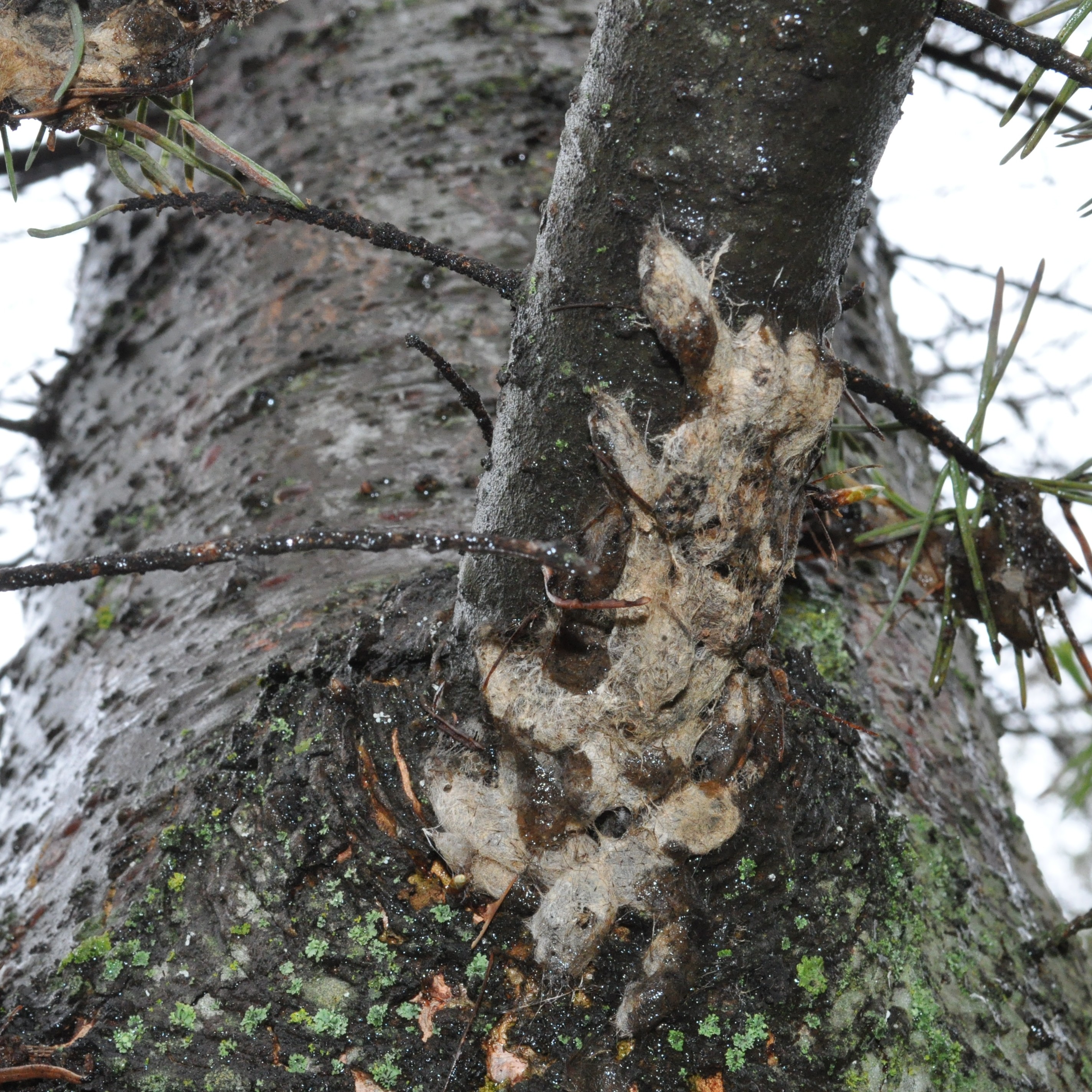
Douglas-fir tussock moth pupal cases
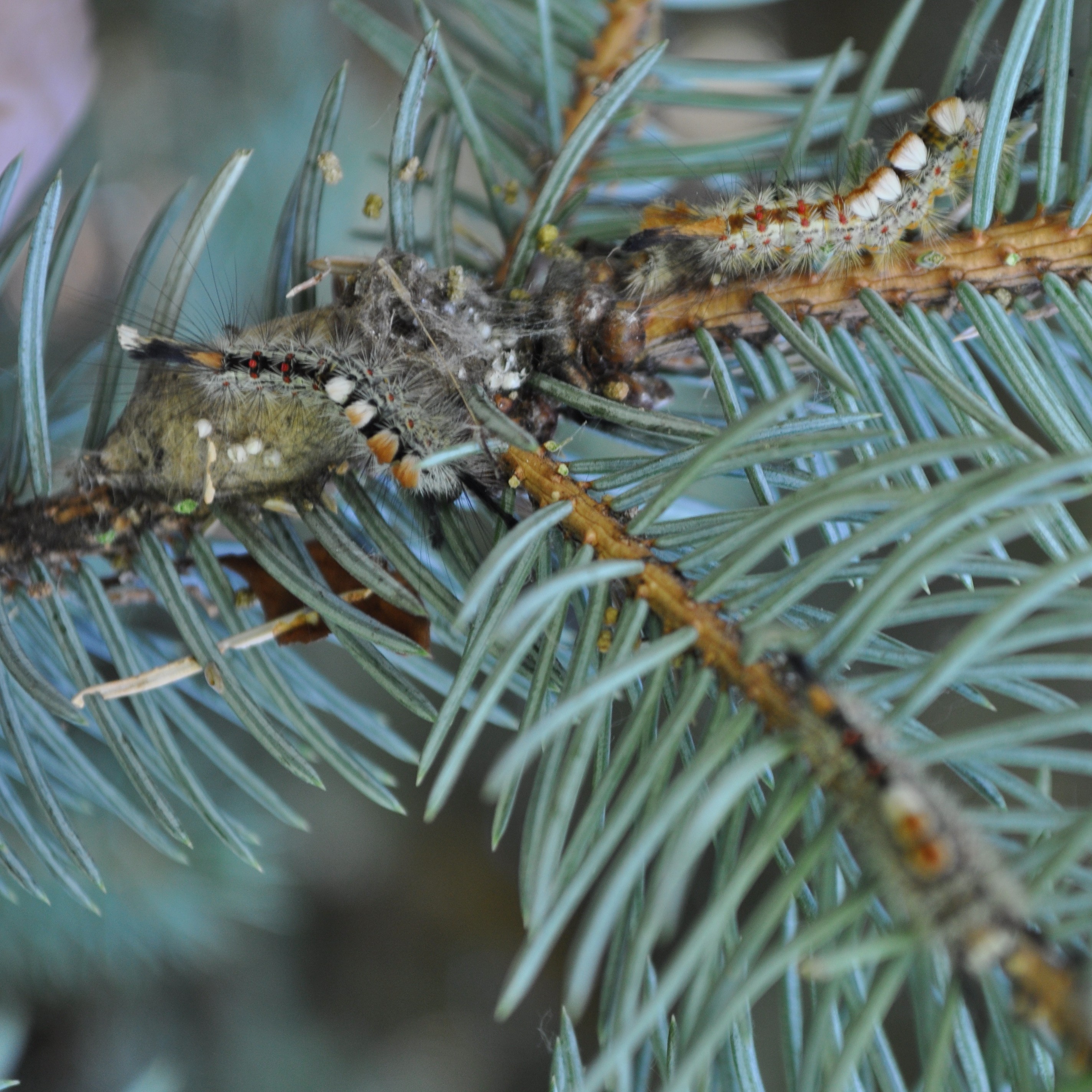
Douglas-fir tussock moth egg mass and larvae
Ecology
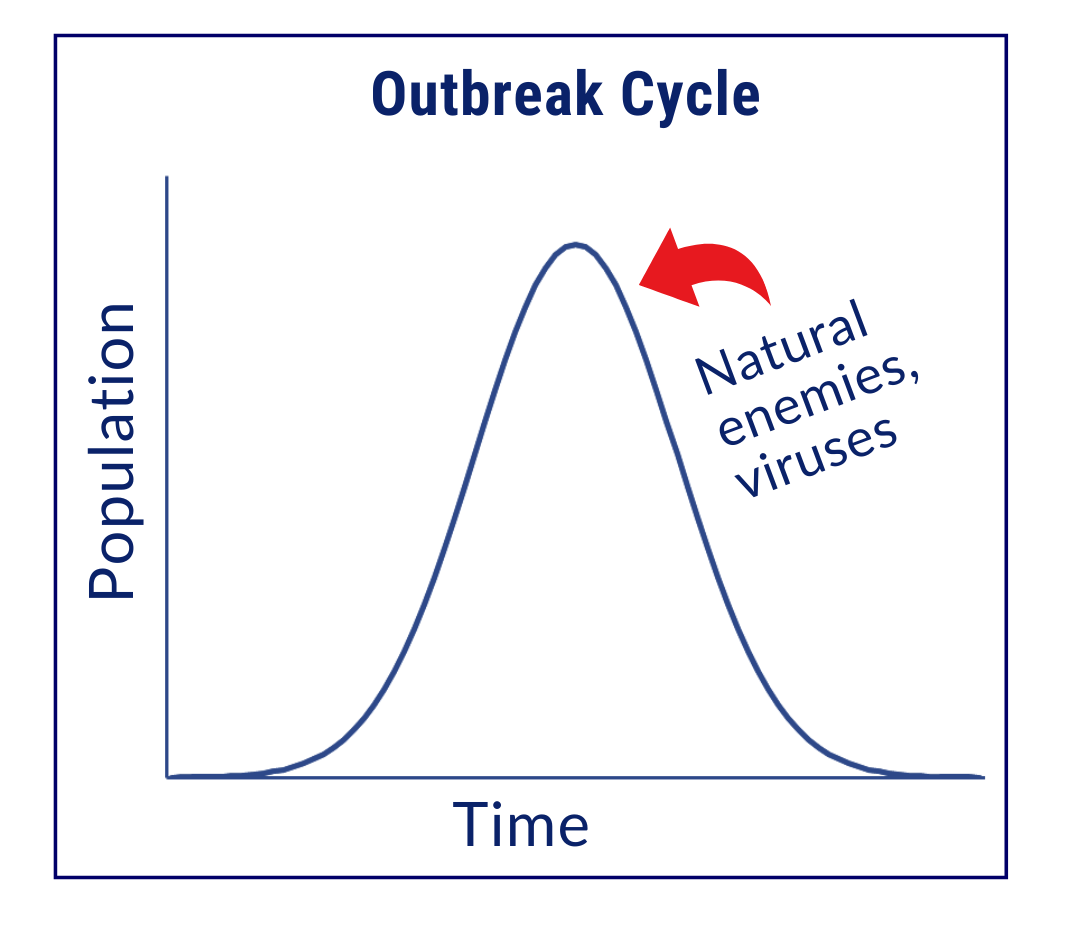
Douglas-fir tussock moth (DFTM) is a native defoliator that can cause significant damage. It is found throughout its host range in western North America, from British Columbia to Mexico. Defoliation occurs as the caterpillars feed on needles. Outbreaks are cyclical, occurring every 7-10 years in Montana, and last approximately 2-3 years. Densely stocked, multistoried stands of mature/overmature hosts are most susceptible to outbreaks, particularly if located on dry sites. Females are flightless, keeping outbreaks localized. As with other defoliator outbreaks, DFTM populations build slowly before peaking and collapsing due to natural enemies, disease, predation, and lack of food.Identification
-
Hairy caterpillars with distinct white, orange-topped tussocks along back
-
Note: exposure to DFTM hairs can cause tussockosis
(itchy skin, rashes, watery eyes, sneezing).
-
-
Gray, hairy pupal cases persist on the main stem of trees and at branch nodes.
-
Pupal cases may also be attached to buildings, furniture,
and other outdoor structures.
-
-
Crowns of affected trees appear thin, scorched, or stripped
of foliage.
Life Cycle
Douglas-fir tussock moth has one generation per year. Eggs hatch into caterpillars and begin feeding on needles in the spring just as buds burst (late May through late June). Early stage caterpillars disperse via “ballooning," where they spin silken threads and are carried on the wind (usually less than a quarter mile). Early stage caterpillars feed on the more nutritious newer foliage, while later stage caterpillars feed on older needles. Caterpillars pupate in late summer and emerge as adults, flying August through September. Female moths do not fly; they emerge from their pupal case, release mating pheromones to attract males, mate, lay eggs, and die shortly after. Eggs overwinter in a mass encased with hairs from the mother’s body.
Management
-
Viruses naturally develop in the population and control outbreaks within 3 years of onset.
-
Thin stands to reduce competition and promote individual tree vigor. Defoliation may still occur, but trees will be more likely to rebound after outbreak subsides.
-
Single-storied stands are more resilient to DFTM, since caterpillars can’t drop down and reproduce in the understory.
-
Promote non-host species such as pines (lodgepole and ponderosa) and western larch to reduce the number of susceptible hosts.
-
Insecticides may be useful for short-term control of high-value trees. Follow the pesticide label and use proper personal protective equipment. Using a licensed pesticide applicator is encouraged.
Additional Resources
Printable Fact Sheet: Douglas-fir Tussock Moth
Forest Insect & Disease Leaflet: Douglas-fir Tussock Moth FIDL
Management Guide: Douglas-fir Tussock Moth Management Guide
Contact the Forest Pest Management Program
The Forest Pest Management Program supports service foresters throughout Montana. Contact your local service forester for questions regarding insects and diseases in your area.
2705 Spurgin Rd Missoula, MT 59804