
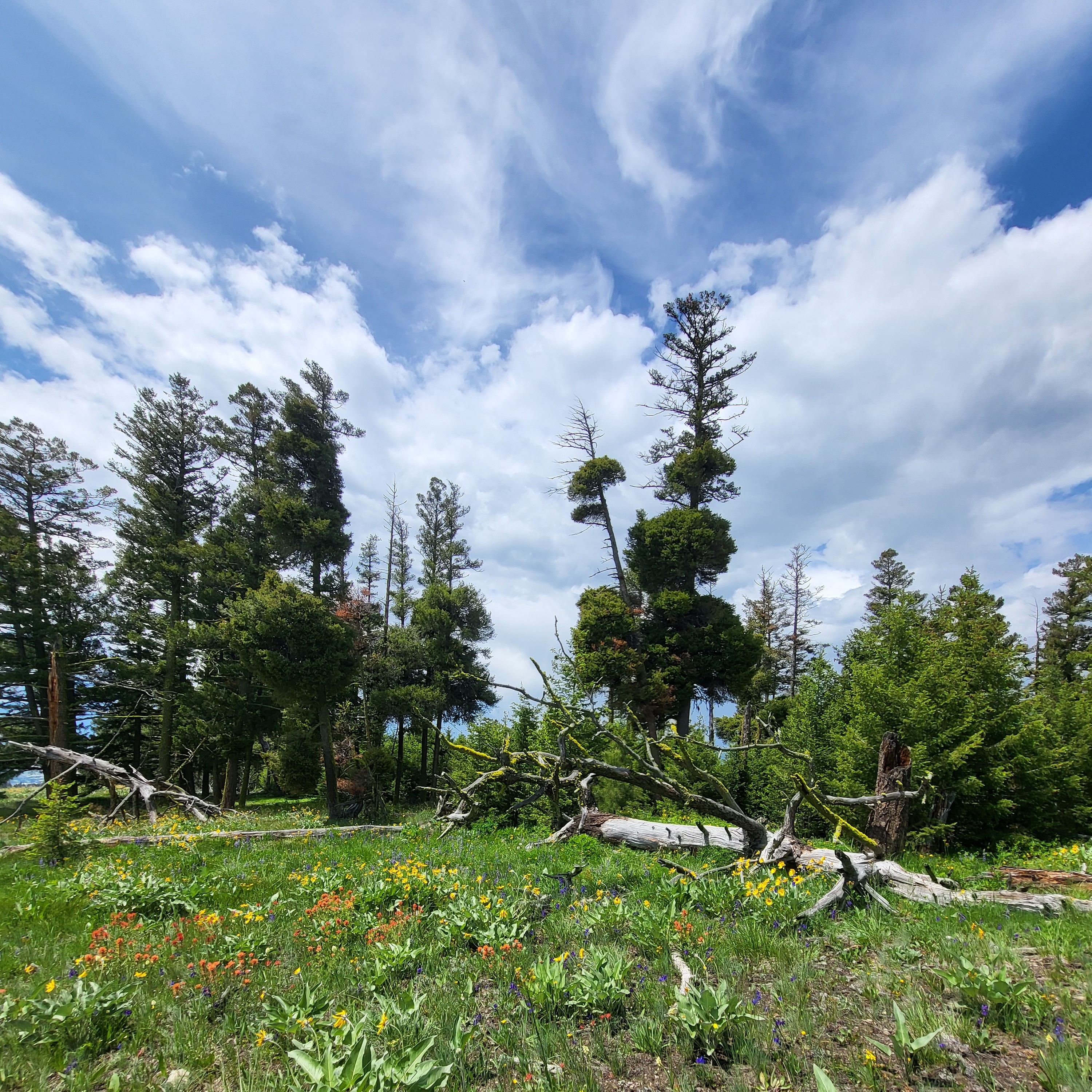
Dwarf Mistletoe
Arceuthobium spp.
HOSTS: Multiple
Lodgepole pine, Douglas-fir, larch, limber pine
DAMAGE: Deformity, eventual mortality
Dwarf mistletoe plants draw nutrients from the tree and reduce growth. Severe infections can cause topkill or ultimately kill the entire tree. Deformity resulting from brooms can impact timber value.
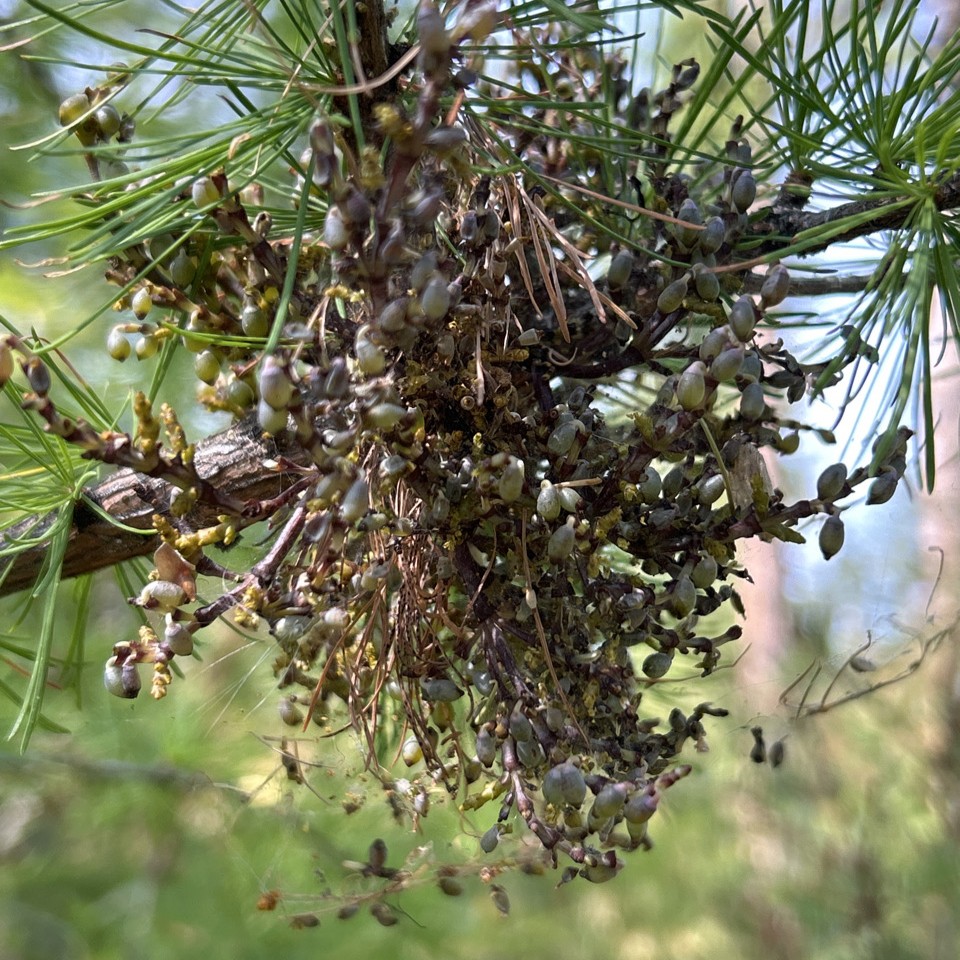
Western larch dwarf mistletoe plant with seeds
Ecology
Dwarf mistletoes are native, parasitic plants that grow on coniferous trees. There are four dwarf mistletoe species in Montana that each infect a particular host. Crossover between species is known to occur, but generally dwarf mistletoes are host-specific. Dwarf mistletoe causes bushy growths on branches called “witches’ brooms”. Brooms are lush and vigorous while the rest of the tree is depleted of water and nutrients. Over time, the parasite starves the tree above the broom, often causing top-kill and thinning in the canopy. In the fall, dwarf mistletoe plants produce seeds that are explosively shot up to 50 feet away, raining down on and infecting small trees in the understory. For this reason, dwarf mistletoe spreads more quickly in uneven-aged stands. Although damaging to trees, witches’ brooms can benefit wildlife by providing food and shelter.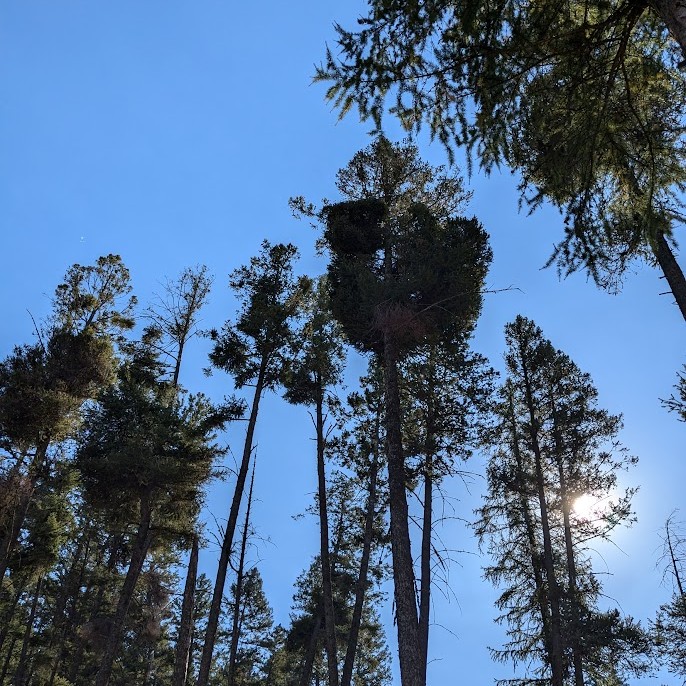
Witches' brooms
Identification
-
Tapered branch swellings, often with mistletoe plants growing from swollen areas
-
Witches' brooms on branches
-
Small mistletoe plants growing on infected branches (size and color vary by species)
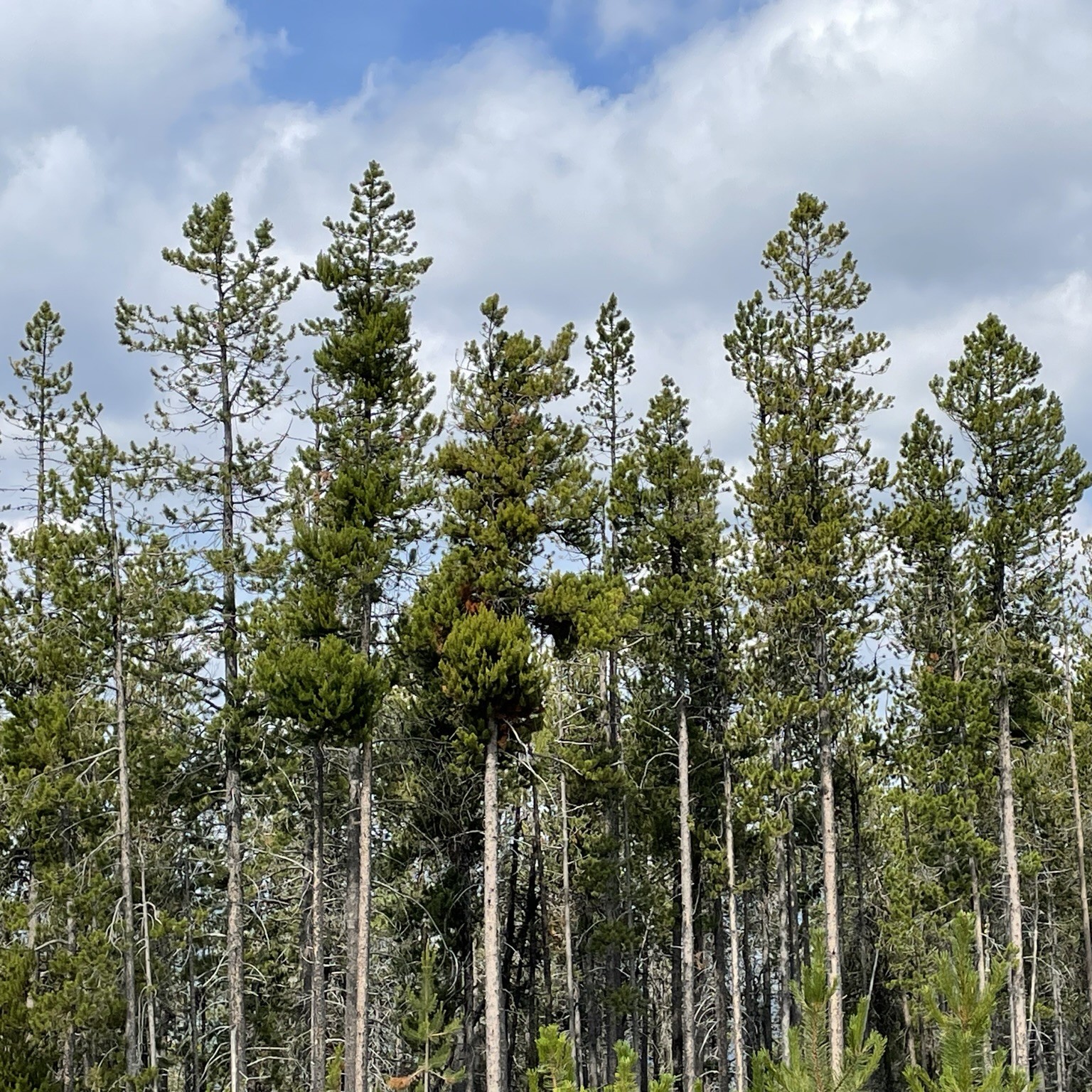
Lodgepole pine stand infected with dwarf mistletoe
Management
-
Clear a buffer strip of all host trees within 30 feet from any infected tree(s).
-
Remove infected trees from overstory within 7-10 years if susceptible species are regenerating in the understory.
-
Note that each dwarf mistletoe is specific to a particular tree species. Shift stand composition to non-host species.
-
Prune off heavy brooms near recreation sites/homes.
Additional Resources
Printable fact sheet: Dwarf Mistletoe
Forest Insect & Disease Leaflets:
Management Guide: Dwarf Mistletoe Management Guide
Contact the Forest Pest Management Program
The Forest Pest Management Program supports service foresters throughout Montana. Contact your local service forester for questions regarding insects and diseases in your area.
2705 Spurgin Rd Missoula, MT 59804