
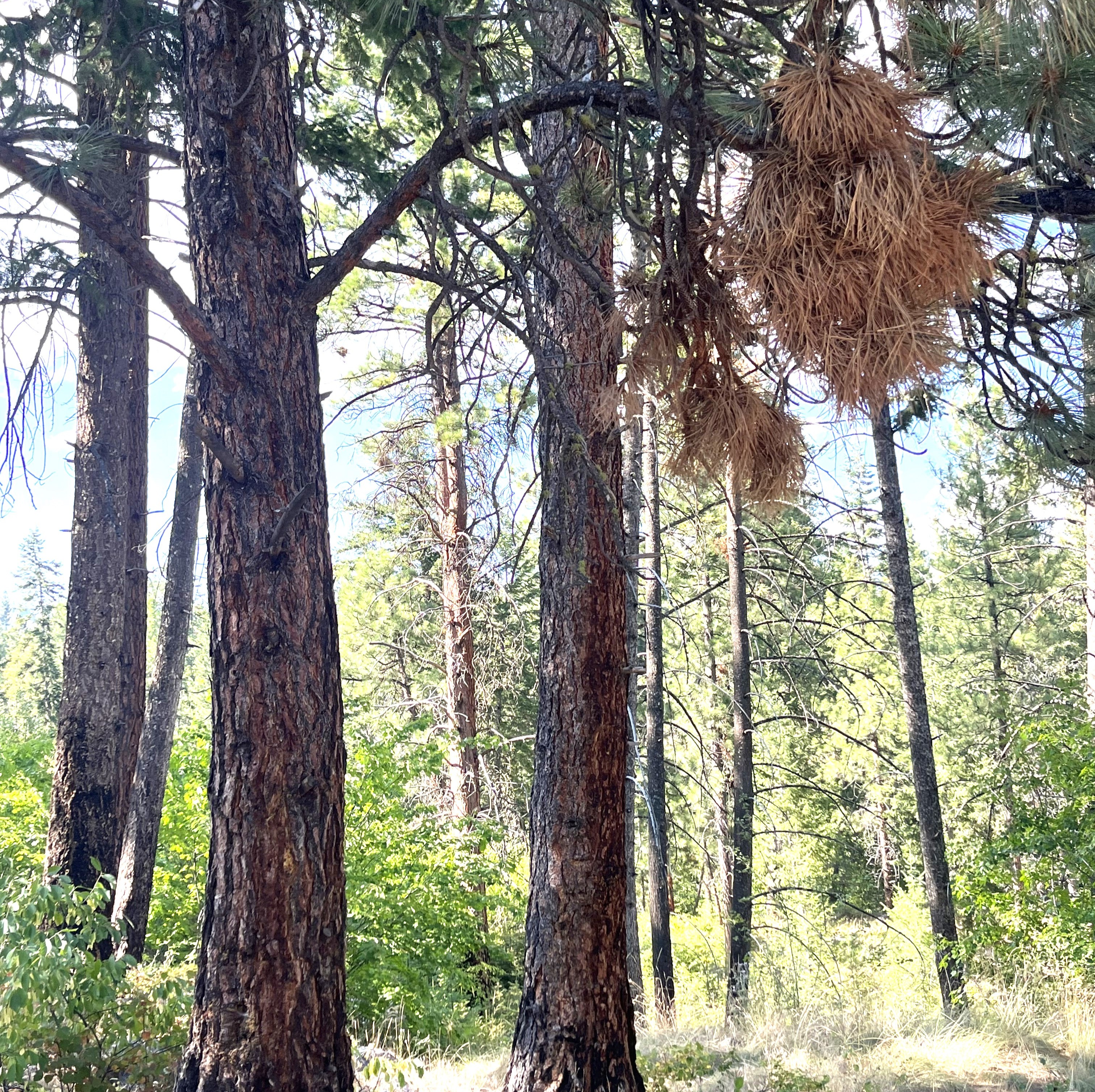
Elytroderma Needle Cast
Elytroderma deformans
HOST: Ponderosa Pine
May occur in lodgepole, but less common
DAMAGE: Growth loss, branch mortality
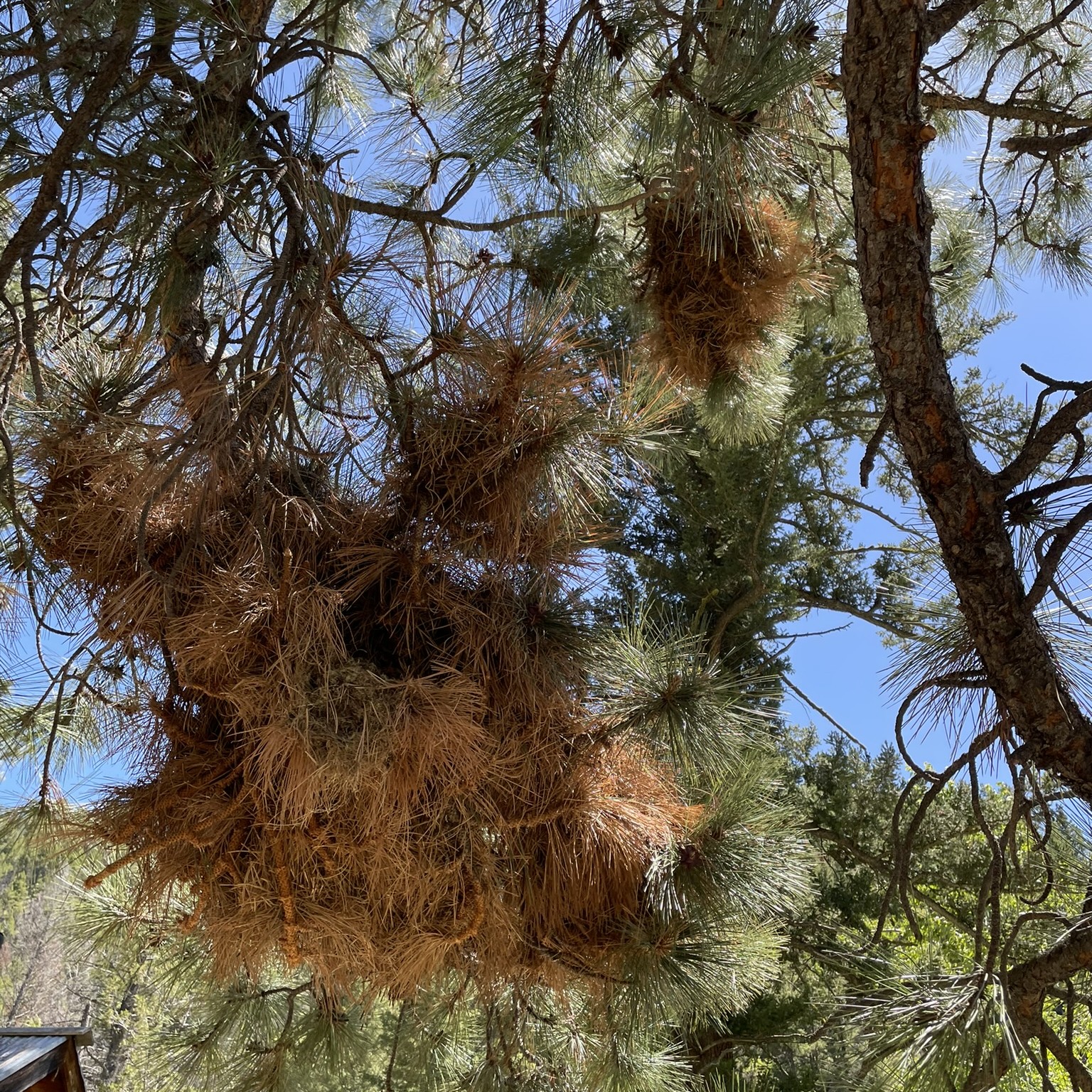
Elytroderma broom
Ecology
Elytroderma deformans is a needle cast fungus that causes branch deformities, needle discoloration, and needle loss. Needles are infected by wind-borne spores in late summer/fall. Elytroderma enters the needles and grows into the twigs, becoming systemic within the tree and causing symptoms the following spring. Spores are produced mid-to-late summer the year after infection. Elytroderma needle cast is the only needle cast in Montana that lives within the twigs and reinfects every year. Death is uncommon and usually only occurs on small, young trees.
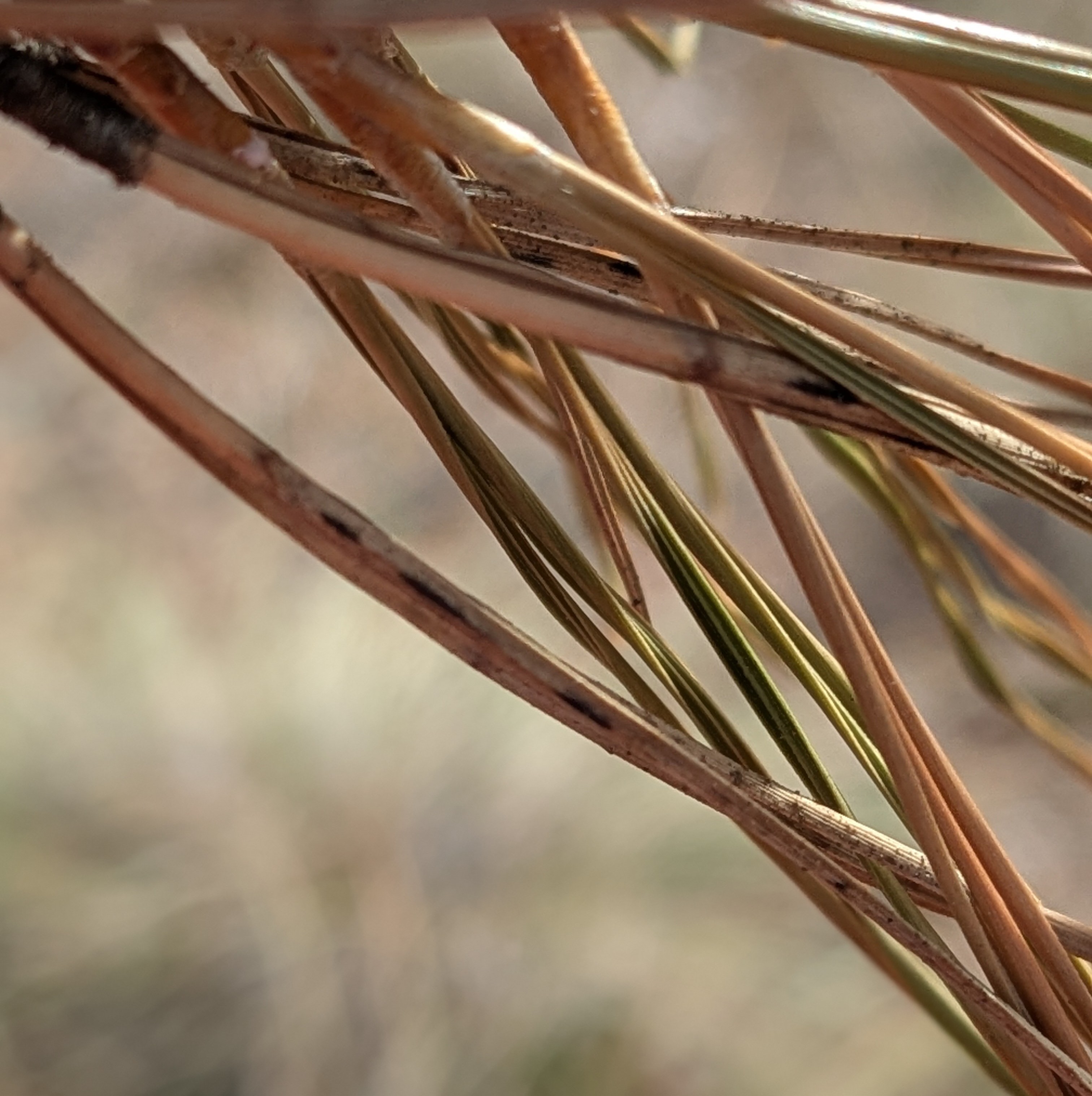
Elytroderma fruiting bodies
Identification
-
Brooms of bushy, round needles (referred to as “witches’ brooms”)
-
Needles that are red/orange at the tips but green at the base
-
Thin, black, elongated fruiting bodies (spore structures) growing at the base of needles
-
Shedding of needles from within the broom
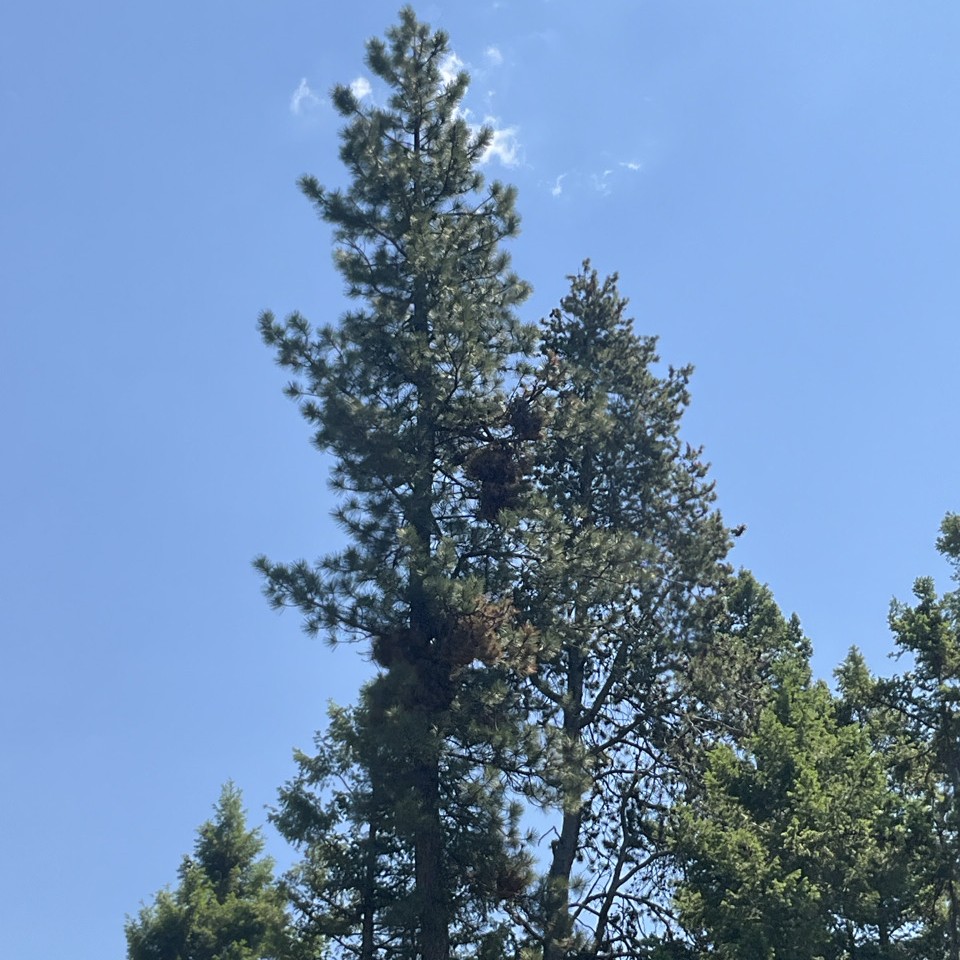
Elytroderma brooms in ponderosa
Management
-
Increase spacing between trees to promote drying of foliage.
-
Remove trees with severe infections.
-
Shift to non-host species, such as Douglas-fir and larch, in areas where infections are chronic and severe.
-
Thin stands to increase residual tree vigor.
Additional Resources
Printable fact sheet: Elytroderma
Forest Insect & Disease Leaflet: Elytroderma FIDL
Management Guide: Elytroderma Management Guide
Contact the Forest Pest Management Program
The Forest Pest Management Program supports service foresters throughout Montana. Contact your local service forester for questions regarding insects and diseases in your area.
2705 Spurgin Rd Missoula, MT 59804