
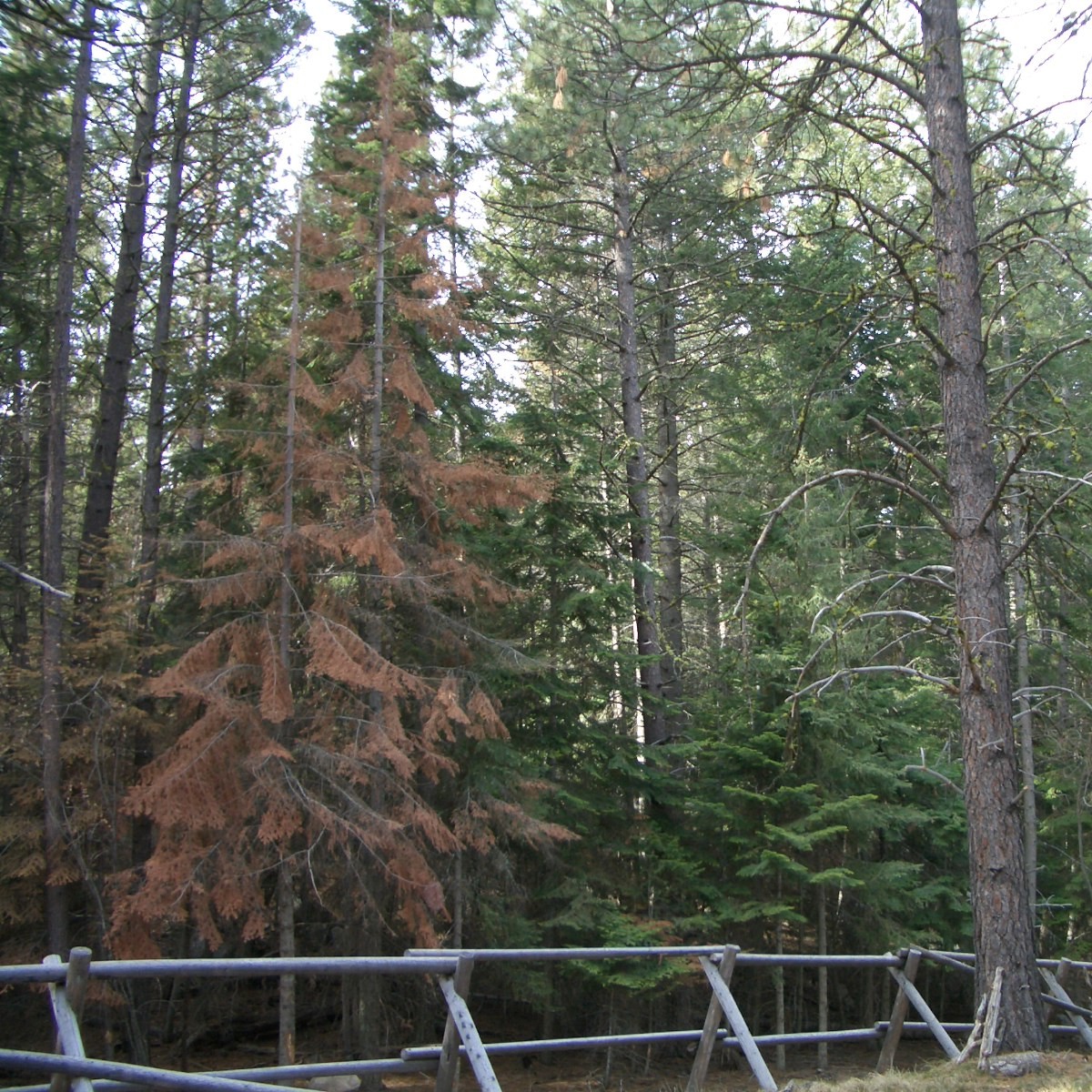
Fir Engraver
Scolytus ventralis
HOST: Grand fir
Occasionally found in subalpine fir and Douglas-fir, mountain hemlock and Engelmann spruce. Outside of Montana, fir engraver also infests red, white, and noble firs.
DAMAGE: Variable
Fir engraver damage may range from dead branches to topkill to outright mortality. Healthy trees can recover from strip attacks.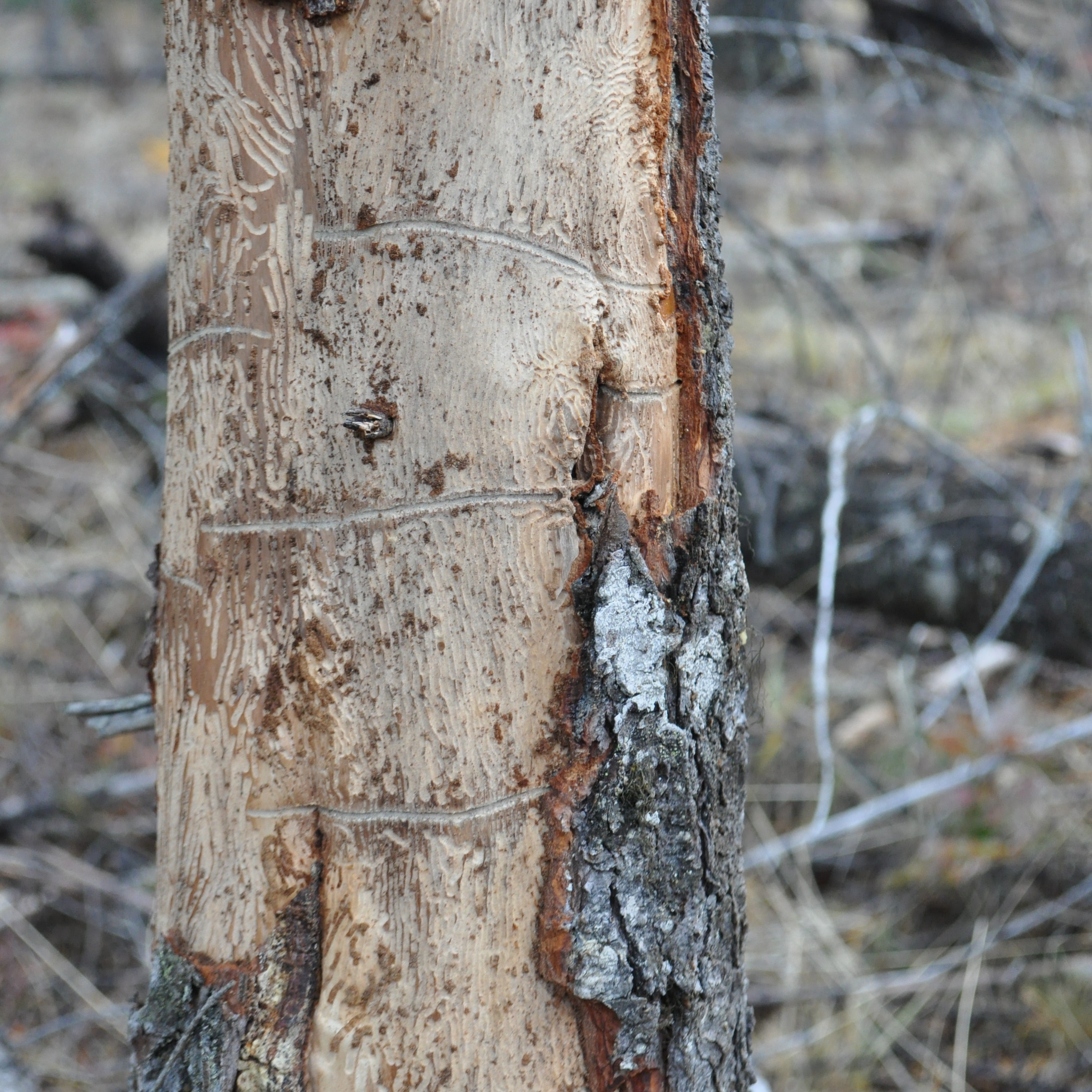
Fir engraver galleries
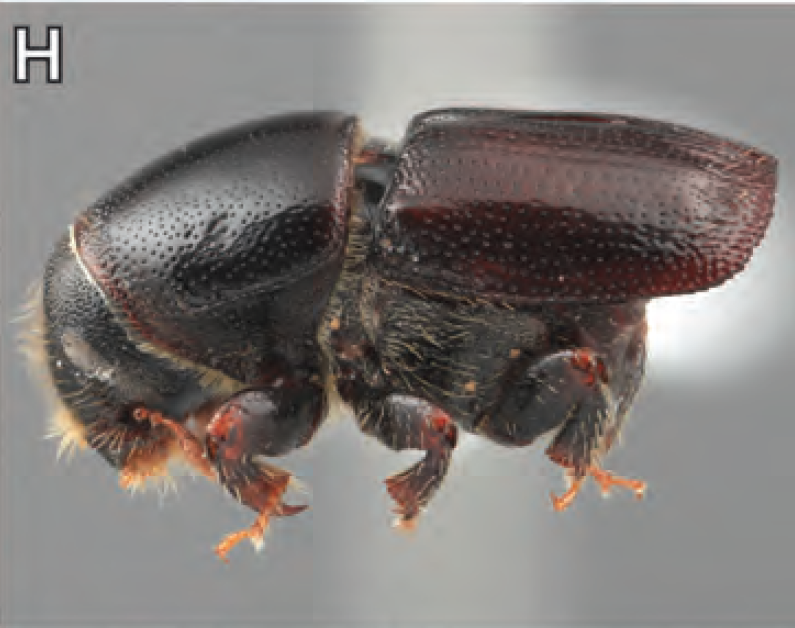
Fir engraver adult. Credit: Smith and Cognato
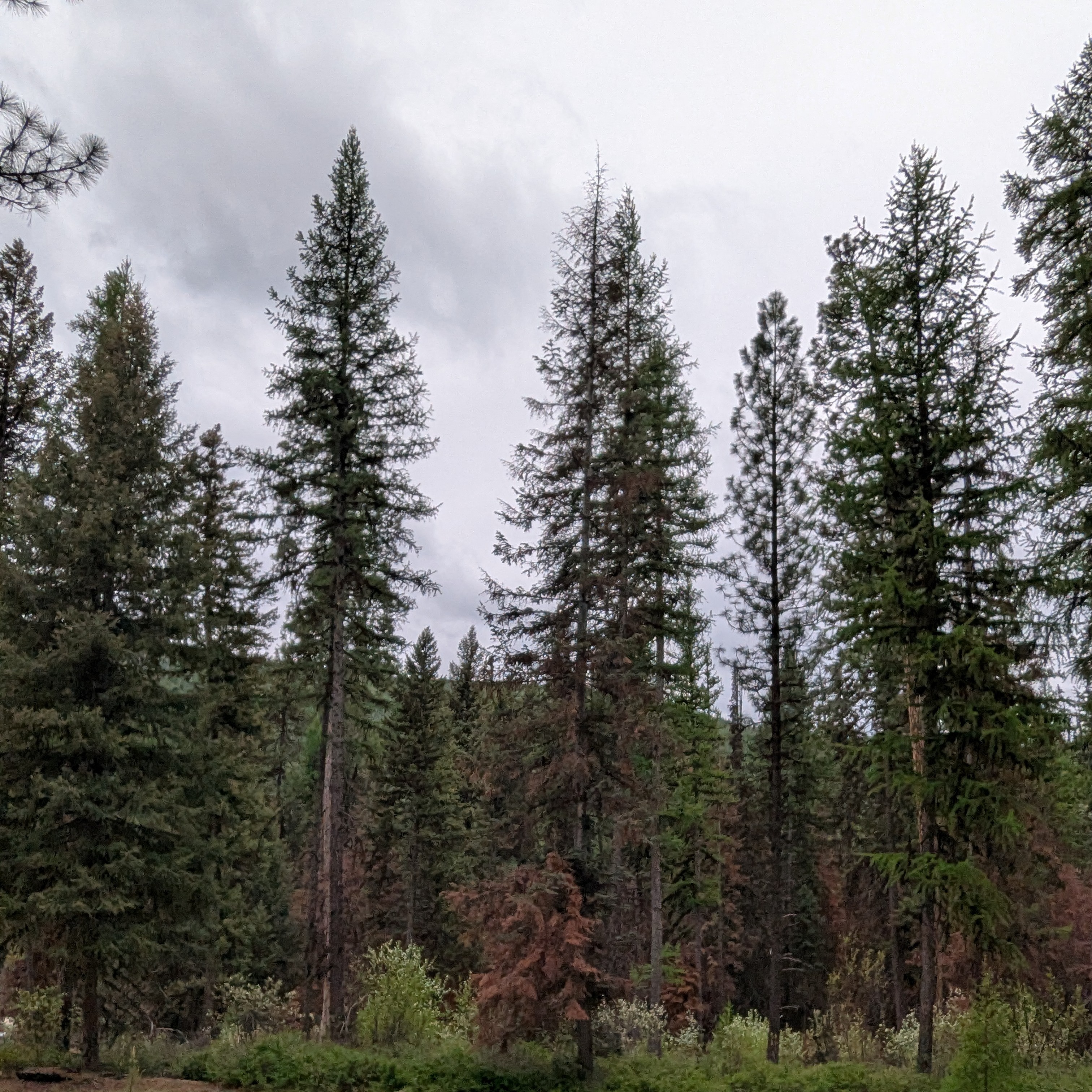
Dying grand fir
Ecology
Fir engraver is found throughout the range of its host species which, in Montana, are found in the northwest. Fir engraver’s unique horizontal gallery pattern (horizontal parental galleries with perpendicular larval tunneling) means the beetle may not necessarily kill the tree, unlike other bark beetles. However, mortality does occur, especially in trees that are stressed due to drought, root disease, defoliation, or other stressors. Fir engraver infests fresh logs and windthrow as well as live trees. Typically, the beetle attacks where the trunk or branches are at least 4 inches or greater in diameter; attacks may occur in the upper canopy, girdling branches and/or causing topkill.
Identification
-
Light brown boring dust (“frass”) accumulating in bark crevices
-
Distinct horizontal galleries etched into inner bark
-
Presence of brown adult beetles with diagnostic “chop” in declivity (behind), or presence of small white larvae that are approximately the size of a grain of cooked rice (less than ¼ inch)
-
Crowns of infested trees may be green, often turning red after beetles have emerged
Life Cycle
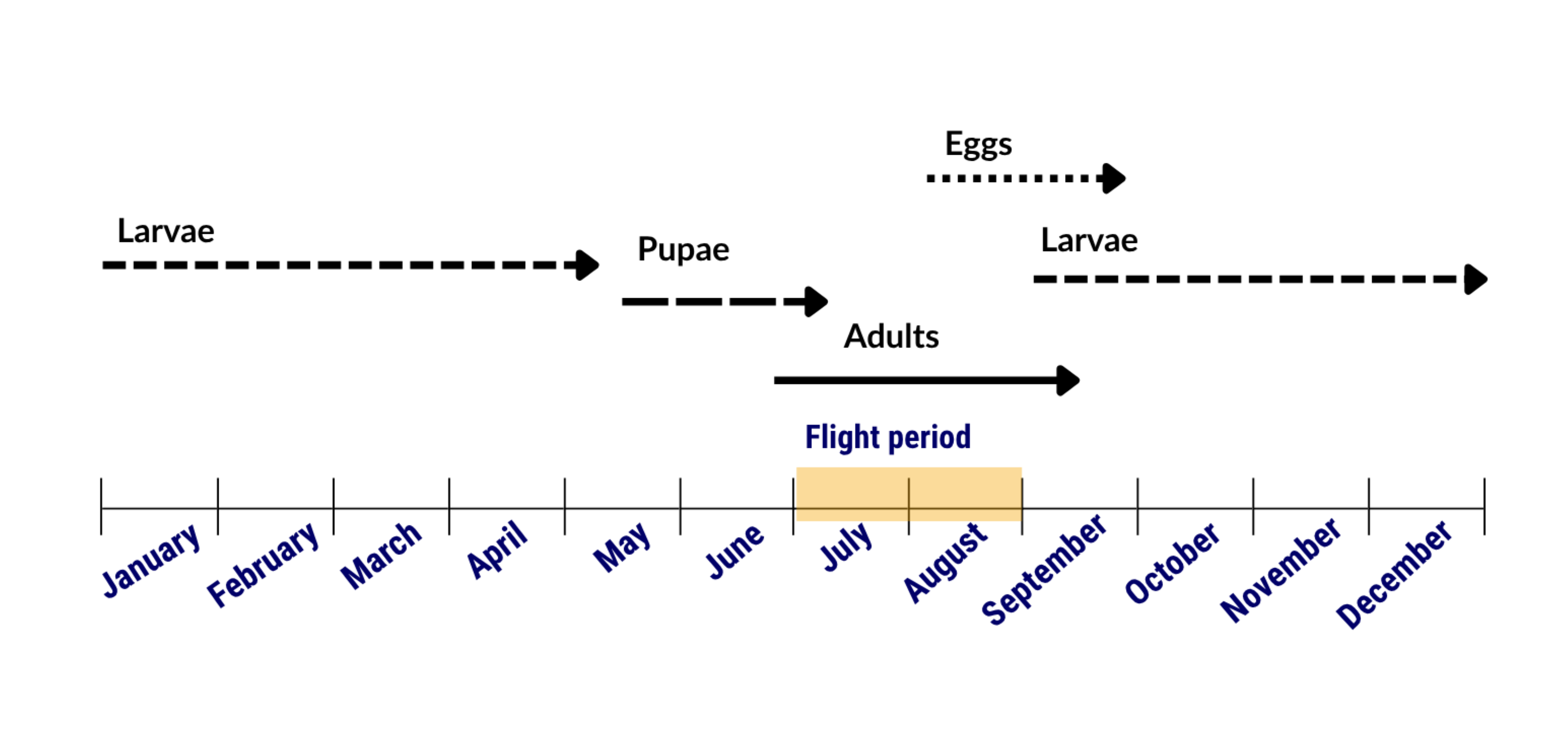
Adult beetles emerge from trees and fly between July and August. Females select the host tree, and males follow. Unlike other bark beetle species, fir engraver does not have a known aggregation pheromone. Adults attack trees by boring under the bark and excavating a horizontal gallery, laying eggs along the margins. Eggs hatch into larvae that feed on the phloem until cold winter temperatures initiate dormancy. They resume feeding in the spring before emerging as adults later in the summer. Fir engraver beetles complete one generation per year.
Management
-
Promote non-host species adapted to drier sites, such as Douglas-fir, ponderosa pine, and western larch.
-
Thin dense stands to reduce competition and promote individual tree vigor.
-
Remove diseased or injured trees, as these are more susceptible to attack.
-
Identify and remove beetle-infested trees prior to beetle emergence. Trees may appear healthy but closer inspection will reveal boring dust in bark crevices.
-
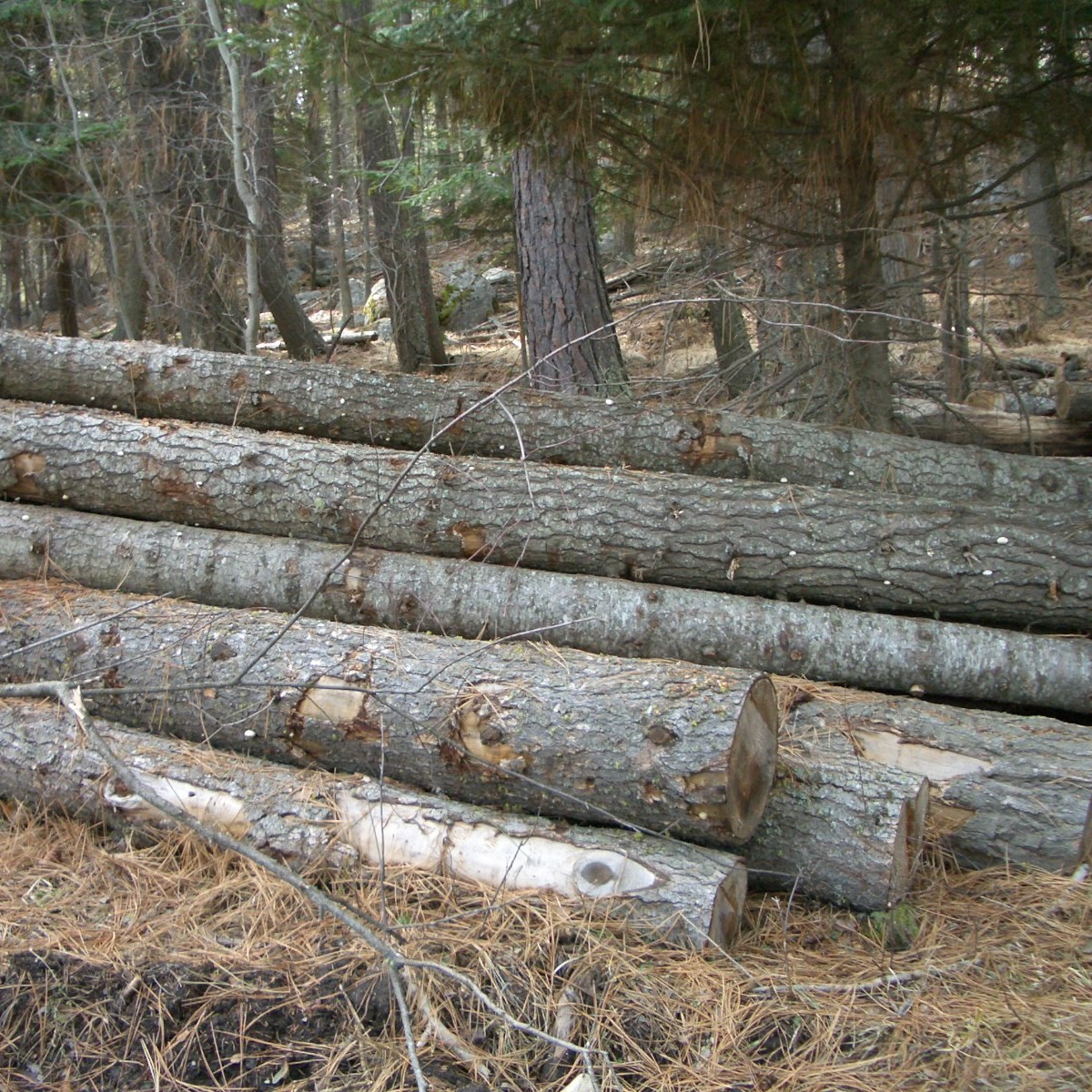
Remove or destroy infested material. Beetles will continue to develop in logs and firewood and, if left on site, can emerge the following summer to attack nearby trees.
-
Preemptively remove windthrown trees to limit host material in stand.
Additional Resources
Printable Fact Sheet: Fir Engraver
Forest Insect & Disease Leaflet: Fir Engraver FIDL
Management Guide: Fir Engraver Management Guide
Contact the Forest Pest Management Program
The Forest Pest Management Program supports service foresters throughout Montana. Contact your local service forester for questions regarding insects and diseases in your area.
2705 Spurgin Rd Missoula, MT 59804