
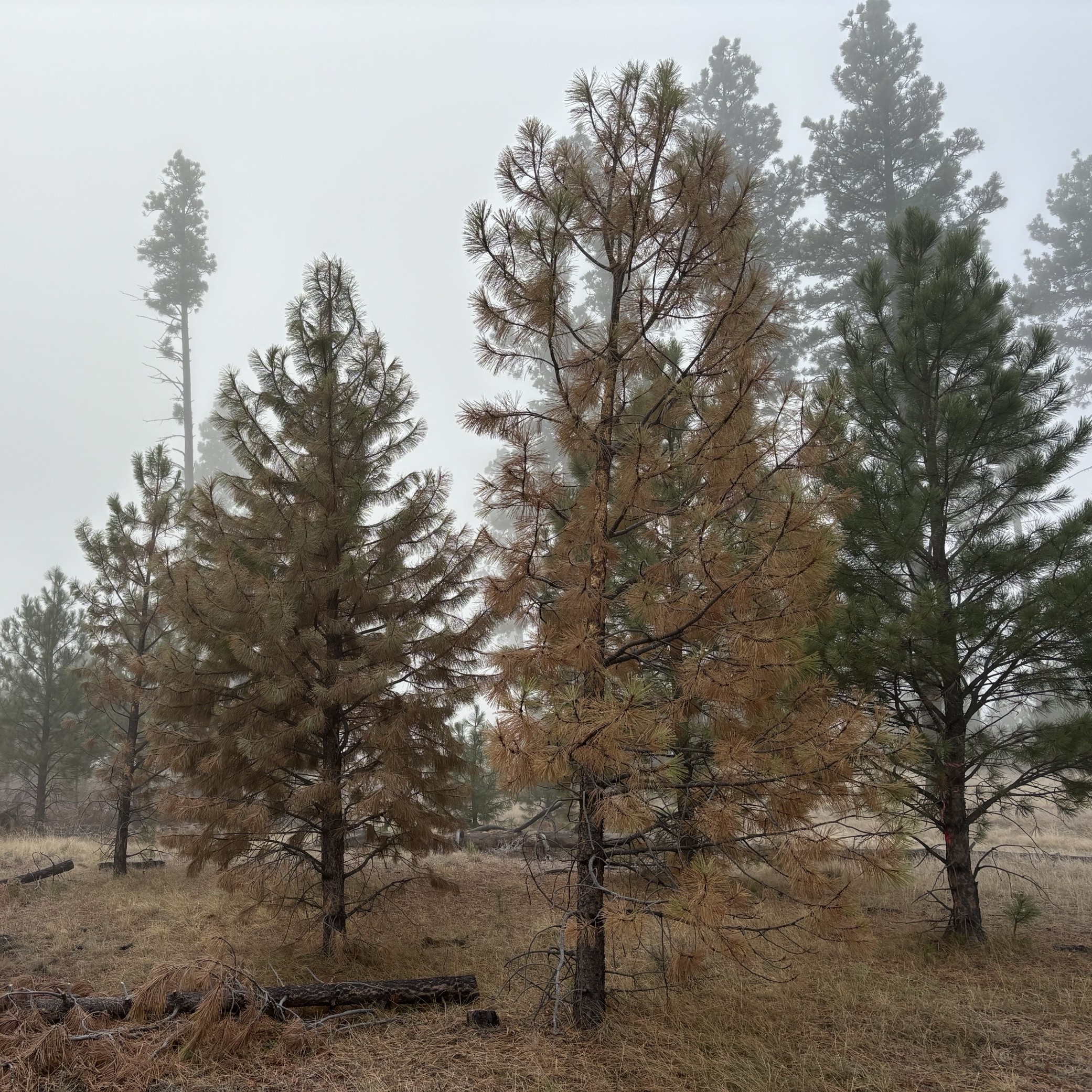
Pine Engraver
Ips pini
HOSTS: All Pine Species
Ponderosa and lodgepole are the most common hosts in Montana.DAMAGE: Variable
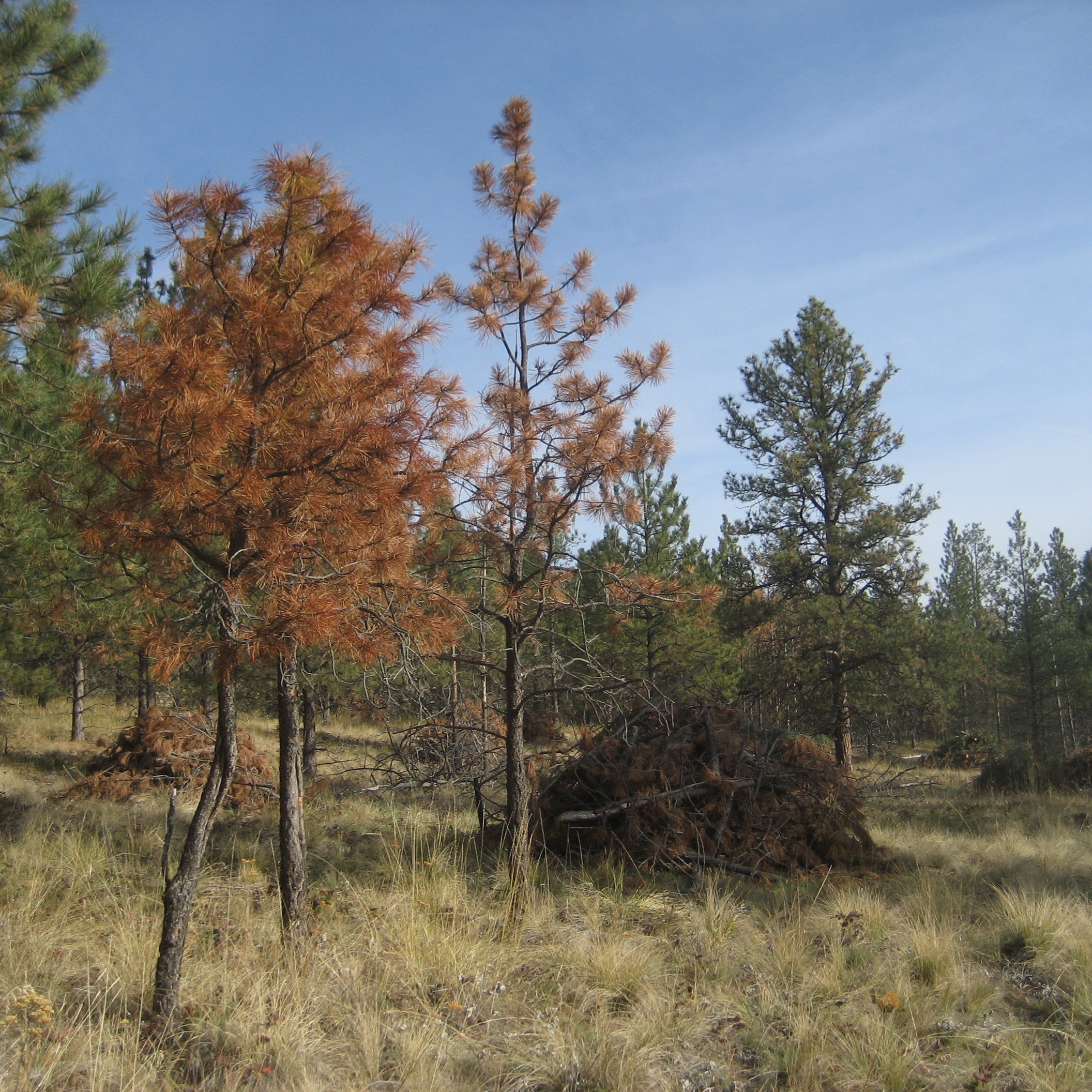
Topkill in larger trees, mortality in saplings/pole-sized trees during outbreaks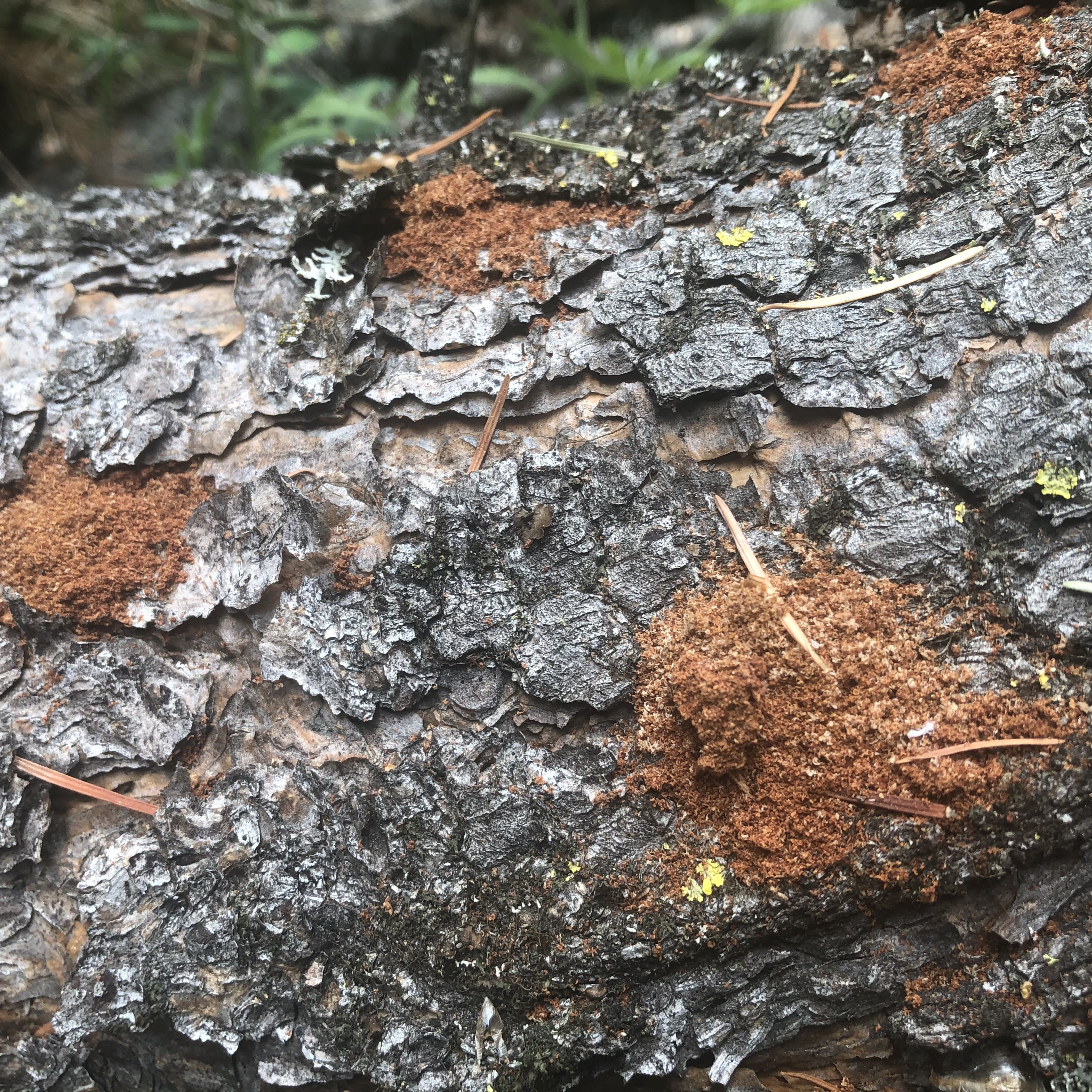
Pine engraver frass
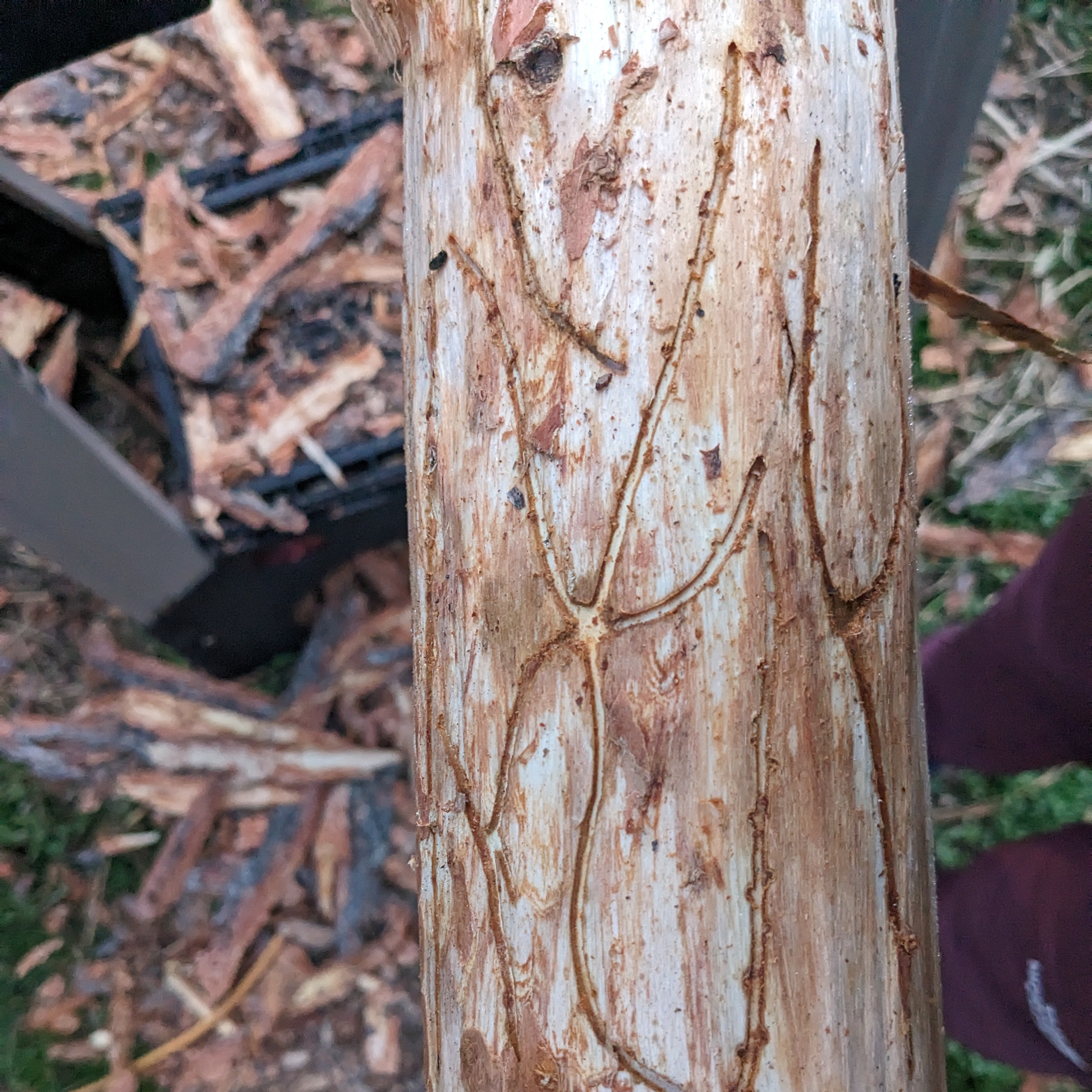
Pine engraver galleries
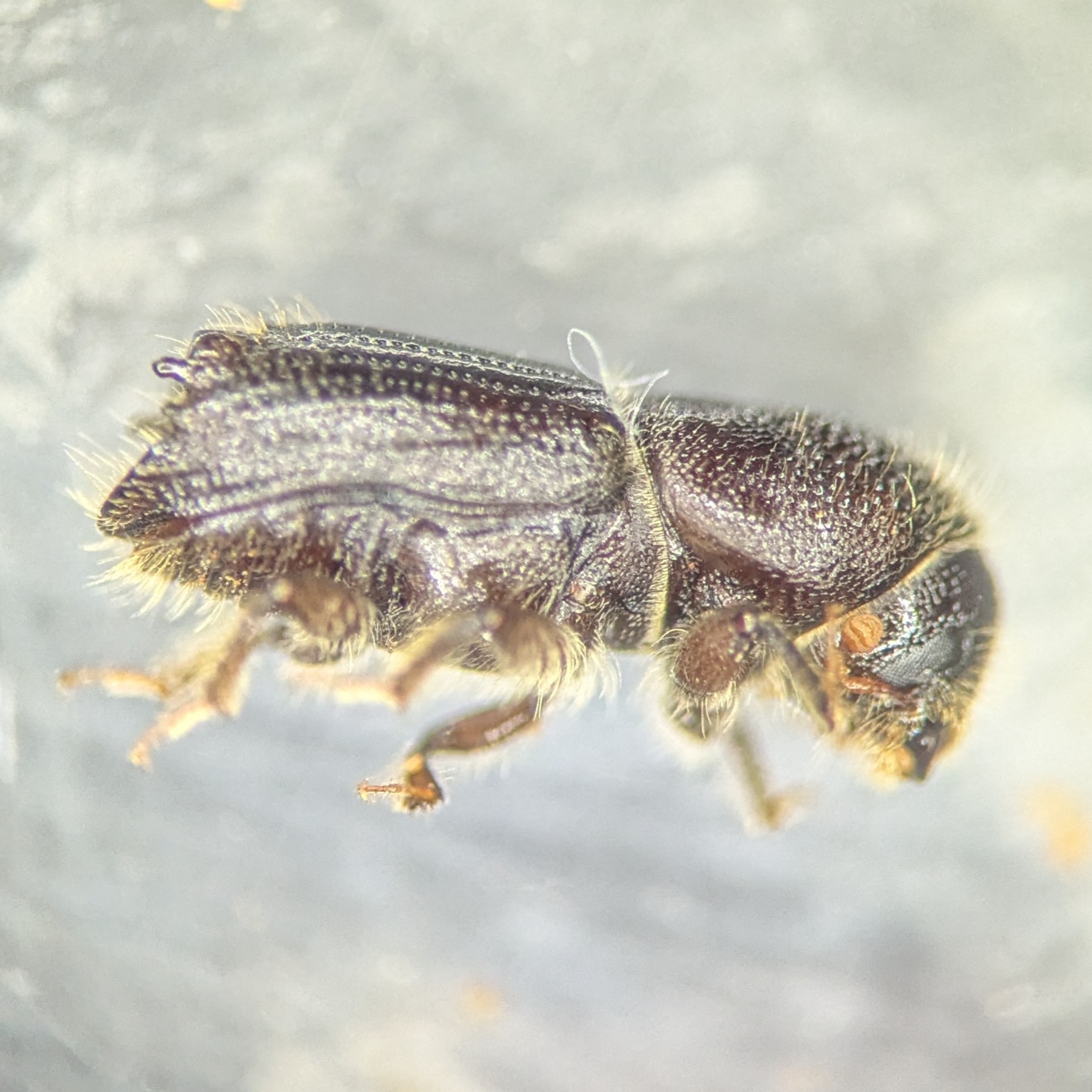
Adult Ips beetle with spines on rear
Ecology
Pine engraver beetle is found throughout North America. This bark beetle is considered non-aggressive (secondary) due to its propensity to preferentially attack downed trees or green slash before live trees. Pine engravers consume and reproduce in the phloem (vascular tissue that transports water and nutrients). Therefore, downed material that is still moist is prime breeding habitat. Smaller diameter material (2-10 inches in diameter) is preferred; beetles cannot complete their life cycle in anything smaller than 2 inches. However, when the first generation offspring exit slash, they will infest nearby live trees, resulting in top-kill of large-diameter trees, or mortality of smaller (pole-sized) trees when populations are high. Trees that are stressed due to drought, overstocking, or other damages (wind breakage, snow load, fire) are especially prone to pine engraver infestation. Outbreaks usually only last one to two years, but can persist longer depending on available breeding material and weather conditions. Other species of bark beetles and wood borers may be present in Ips-infested trees.
Identification
-
Accumulations of fine red-brown boring dust (frass) on top or underneath infested slash (or logs)
-
Distinct, multi-branched galleries with no boring dust; often a Y, X, H, or star-shape
-
Presence of brown adult beetles or small white larvae approximately the size of a grain of cooked rice (less than 1/4 inch)
- Ips beetles have spines on their rear unlike Dendroctonus beetles, which have smooth, rounded behinds.
Life Cycle
Adult beetles emerge in early spring, when temperatures consistently exceed 63° Fahrenheit. Males initiate attacks, opting for downed trees and slash during the first flight period. The species is polygamous; each male mates with multiple females, who then create egg galleries radiating outward from a central nuptial chamber. This first generation takes about 40-55 days to develop and emerge in June. When the first generation emerges, this second flight period poses a greater risk to standing live trees. Reproduction occurs, with the second generation completing development in a shorter period (30 to 40 days) due to the warmer temperatures occurring later in the season. Occasionally a partial third generation may develop due to warmer conditions and overwinter as larvae, but two generations are the most common in Montana.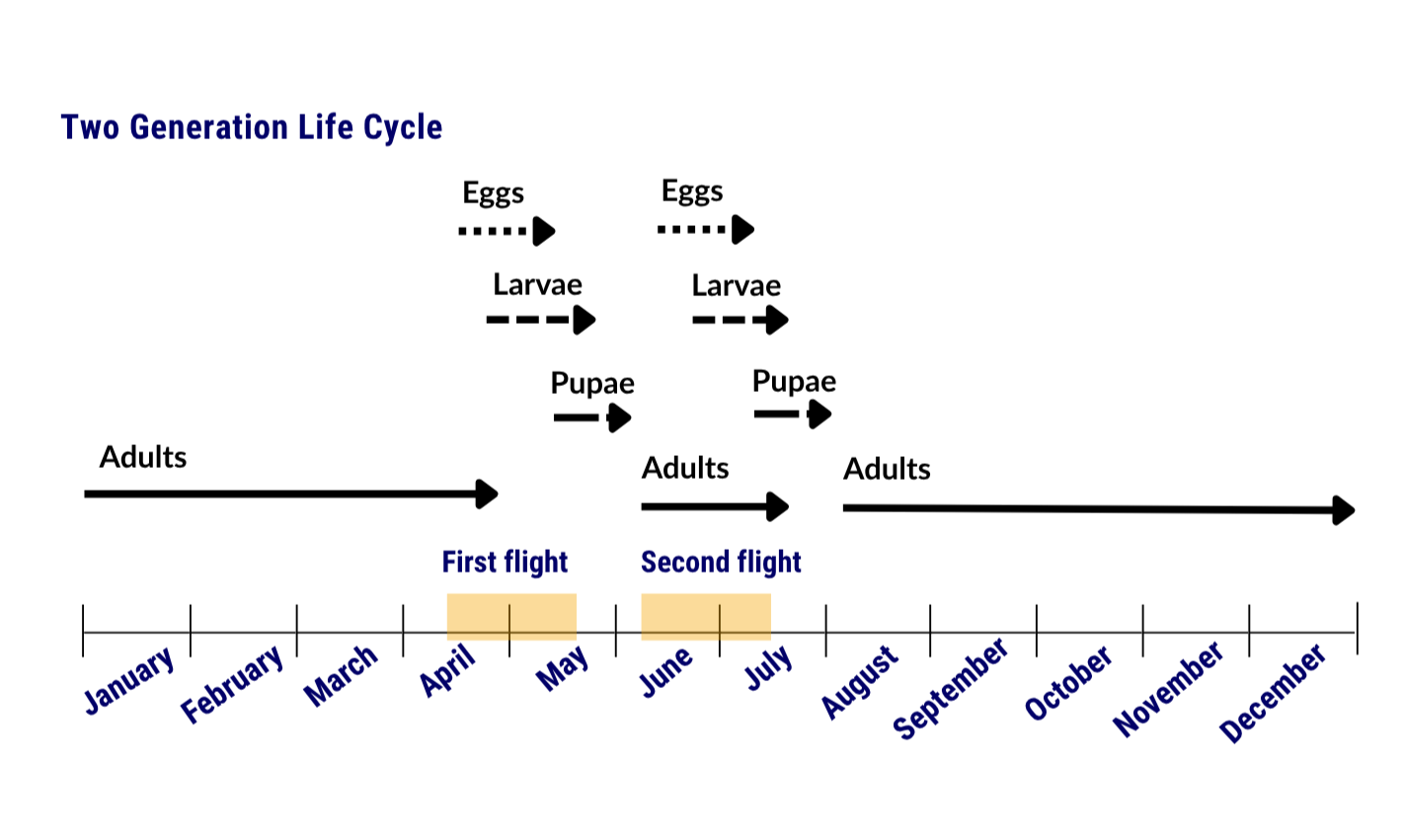
Management
-
Create slash only during September-December months, if possible. Slash generated in early winter through late spring should be treated by chipping or lop and scatter, or removed before it can become a source of breeding material for beetles emerging in the spring. Inspect slash piles, log decks, and windthrown trees for infestation.
-
Chip, burn, or remove infested material.
-
-
Large (20 feet long, 10 feet deep) slash piles will retain moisture and attract beetles from the initial spring flight period. Their offspring will go deeper into the pile instead of going out to attack nearby live trees.
-
Traps and interspersed slash piles might be useful in managing beetles on site. Contact your local service forester to determine whether these options could be effective in your specific situation.
-
Thin stands to promote tree vigor; stands with basal area 80-100 square feet per acre are less susceptible to attack.
Additional Resources
Printable Fact Sheet: Pine Engraver
Forest Insect & Disease Leaflet: Pine Engraver FIDL
Management Guide: Pine Engraver Management Guide
Contact the Forest Pest Management Program
The Forest Pest Management Program supports service foresters throughout Montana. Contact your local service forester for questions regarding insects and diseases in your area.
2705 Spurgin Rd Missoula, MT 59804