
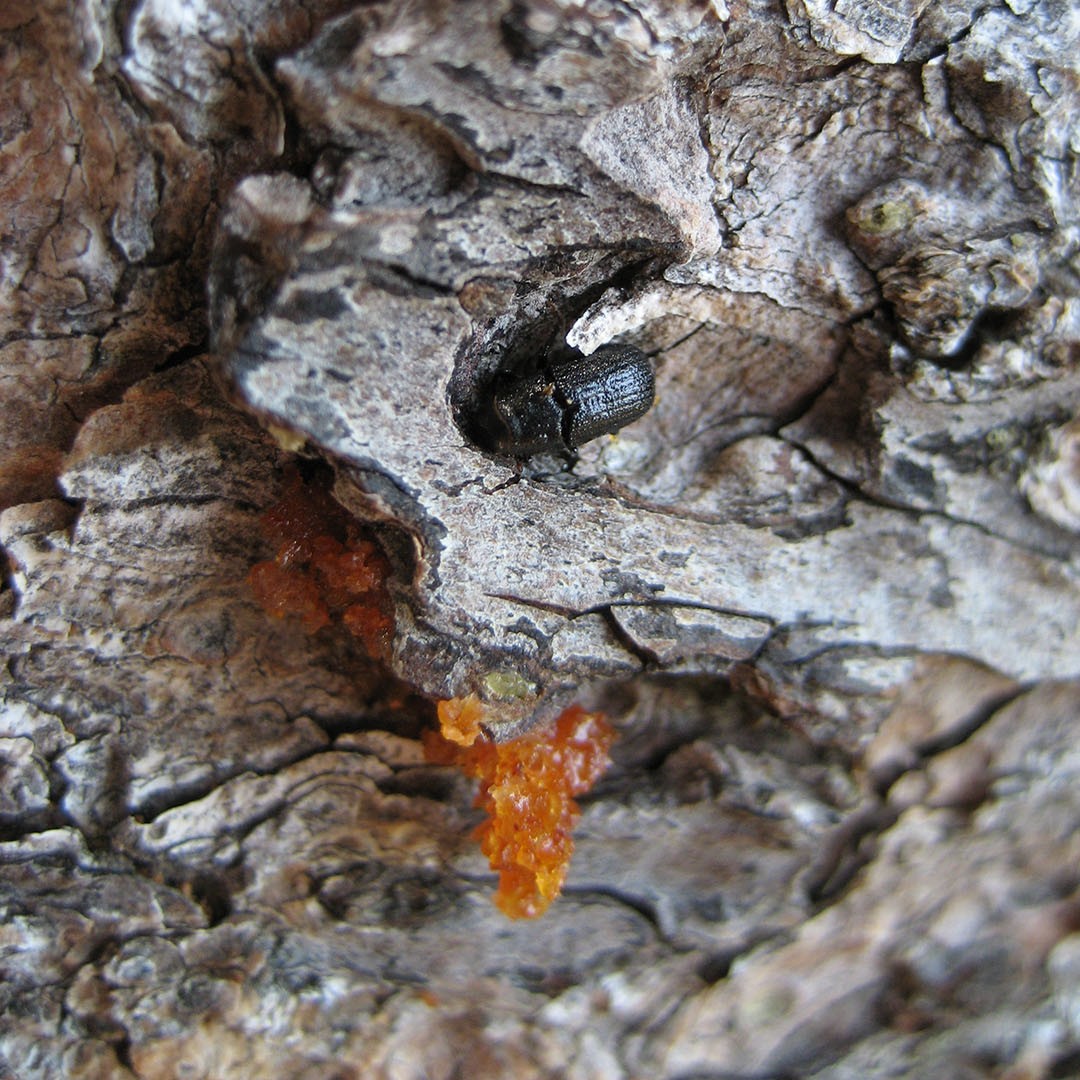
Mountain Pine Beetle
Dendroctonus ponderosae
HOSTS: All Pine Species
Lodgepole, ponderosa, western white pine, limber pine, whitebark pine, and ornamental pines
DAMAGE: Mortality
Mountain pine beetle feeds on phloem (the vascular tissue that transports water and sugars) and introduces blue stain fungi. Together, the beetle and fungal pathogens girdle the tree, resulting in death.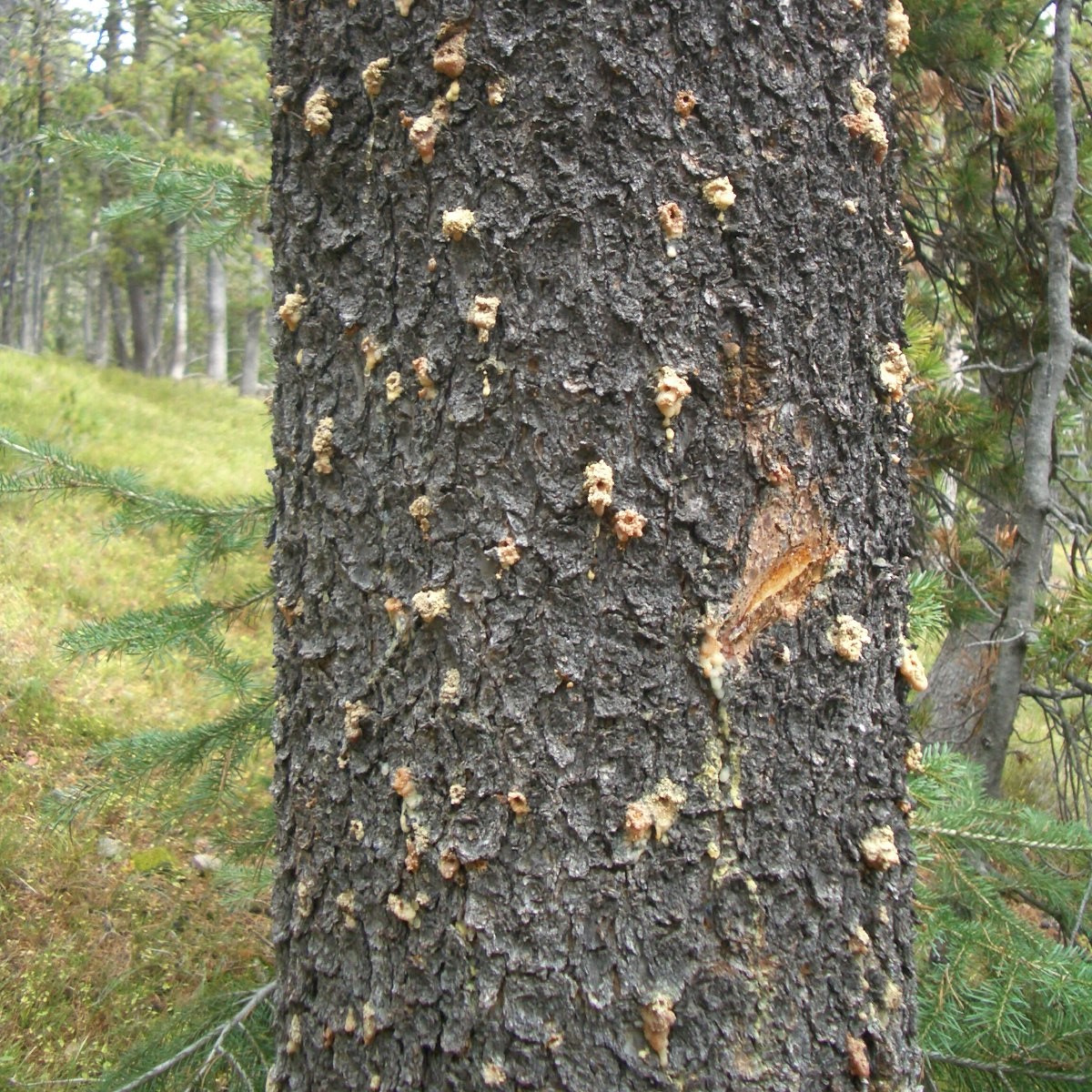
Mountain pine beetle pitch tubes on lodgepole
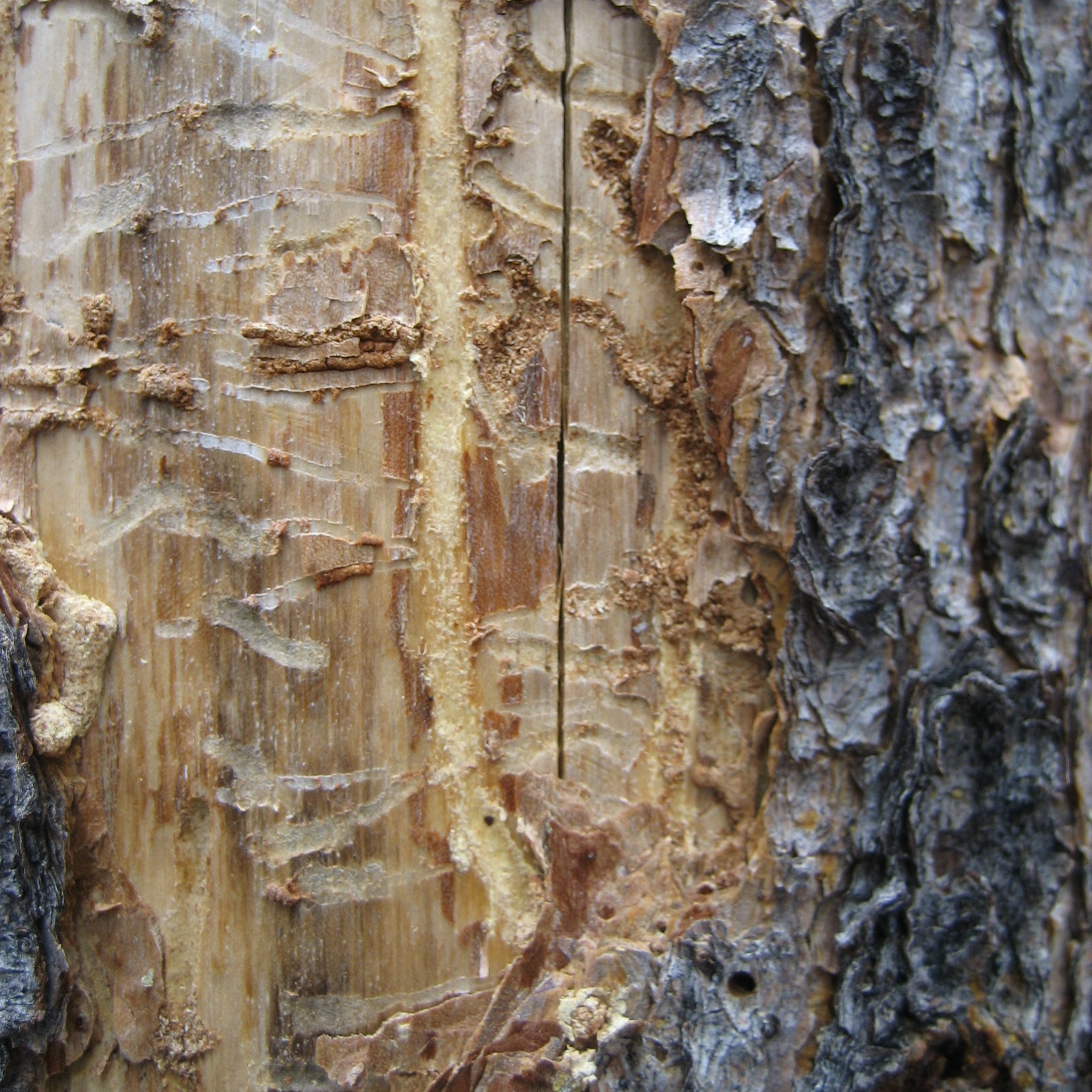
Mountain pine beetle gallery
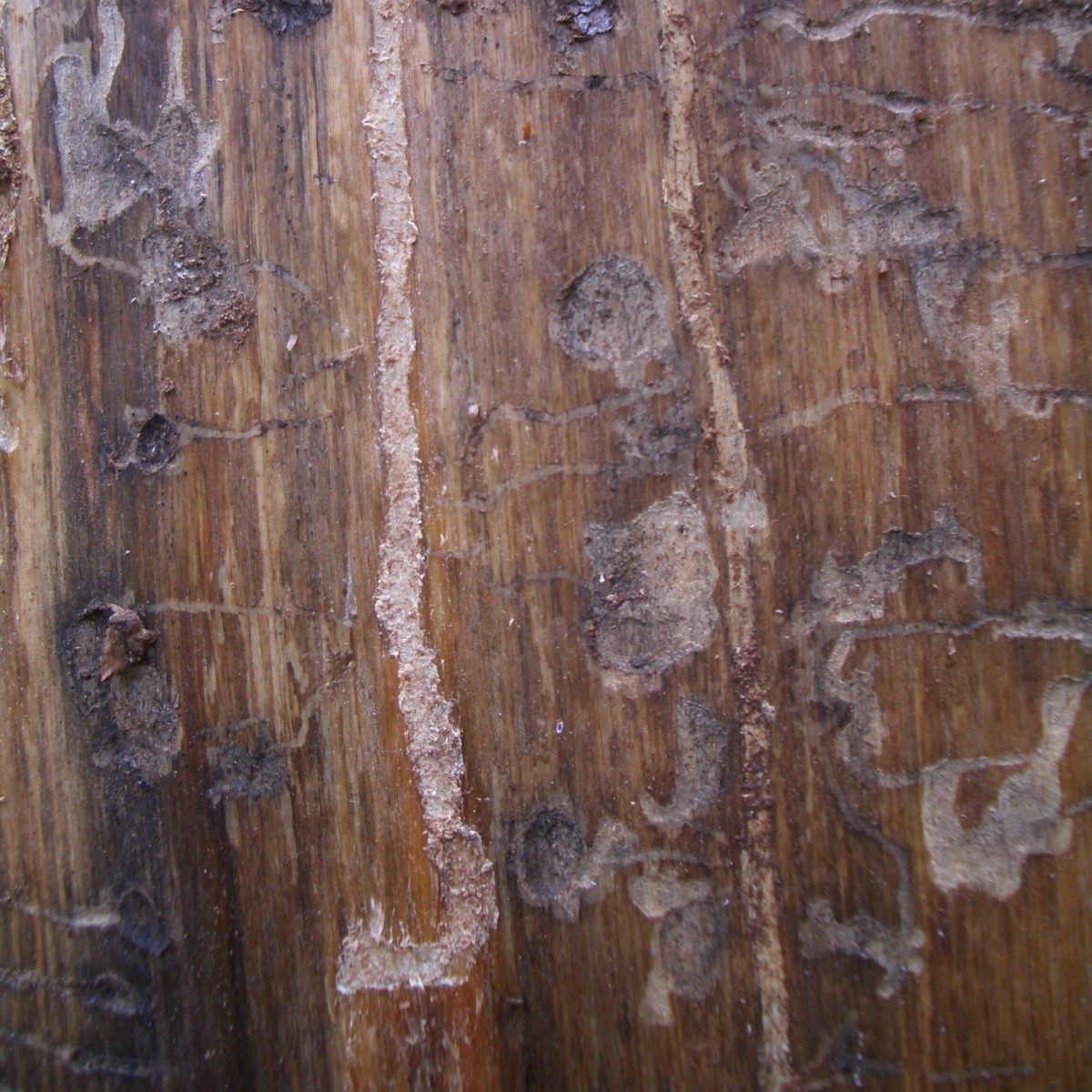
Mountain pine beetle galleries
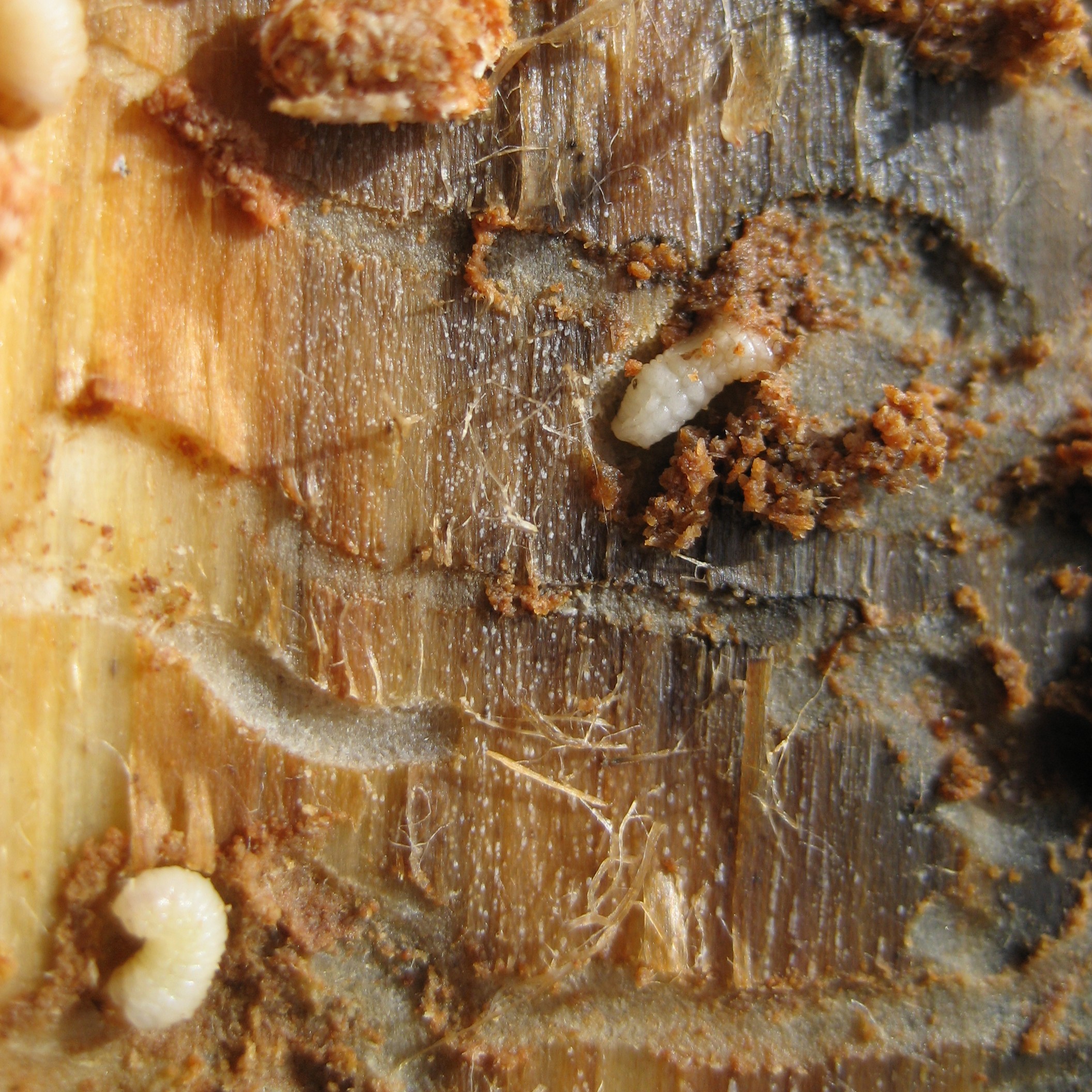
Mountain pine beetle larvae
Ecology
Mountain pine beetle (MPB) is native to western North America and is a natural part of pine ecosystems. It is considered one of the most aggressive bark beetles because it can kill healthy trees and cause landscape-level mortality during outbreaks. At low-level (endemic) populations, MPB kills stressed/dying trees. When MPB attacks a healthy tree, the tree will pitch the beetles out with resin. Drought-stressed trees cannot produce enough resin and MPB numbers can overwhelm the host defenses. During outbreaks, the sheer number of beetles can overwhelm healthy trees as well. Favorable climate coupled with susceptible forest conditions promote outbreaks. Forests more susceptible to outbreaks have a high proportion of densely-stocked, large diameter pine hosts. Hazard ratings are available through the United States Forest Service.
Identification
-
Orange-red boring dust ("frass") accumulating in bark crevices
-
Creamy orange pitch tubes, approximately the size and shape of popcorn, up the main bole of tree
-
Red turpentine beetle also attacks pines and produces pitch tubes, but these are red and only on the first six feet of the trunk.
-
-
"Blind attacks" may occur when trees do not have enough moisture to produce pitch tubes. Boring dust is the only external indicator.
-
Distinct vertical galleries with a regular or reversed "J" hook at the base, etched into inner bark
-
Presence of brown adult beetles (less than 1/4 inch) and/or presence of small white larvae (approximately the size of a grain of rice)
-
Crowns are often still green while trees are infested with beetles, and generally turn red once beetles have emerged. Look for infestations in trees with green crowns and external signs/symptoms of attack (frass and pitch tubes).
Life Cycle
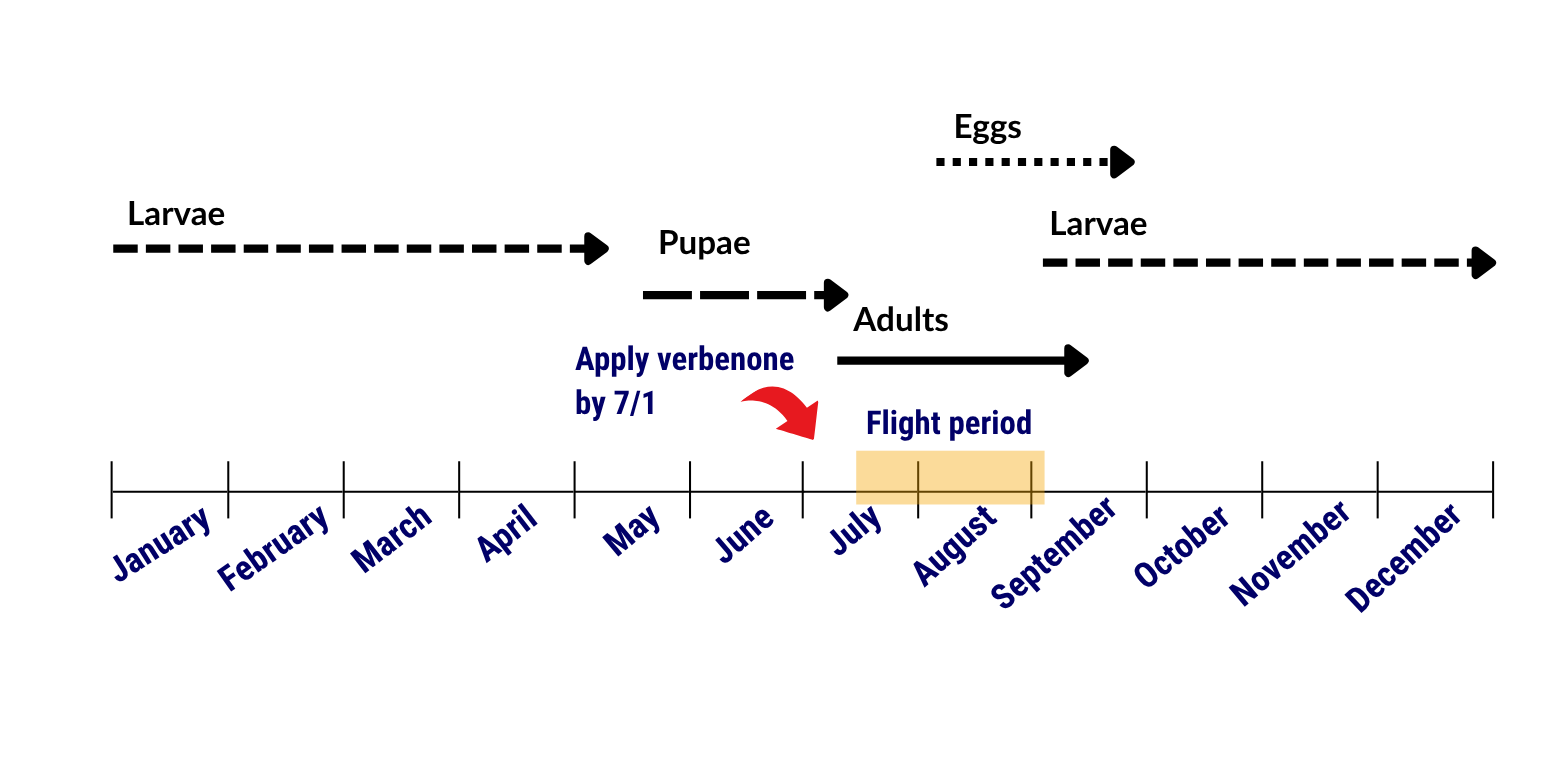
Adult beetles emerge from trees between mid-July and August. Females are the host-selecting sex, and release aggregation pheromones to recruit more beetles for a successful attack. Once a tree is at capacity, males release an anti-aggregation pheromone (verbenone) to signal that the tree is full and repel additional beetles. After mating, females excavate a vertical gallery, laying eggs along the margins. Eggs hatch into larvae that feed under the bark until cold temperatures trigger dormancy. They overwinter as larvae and pupate into adults the following summer. Mountain pine beetle completes one generation per year in Montana. Development is temperature-dependent and the species may require two years to mature at higher elevations.
Management
-
Stands with a high stocking density are more susceptible to MPB. Thin stands to reduce competition and promote remaining individual tree vigor.
-
Identify and remove infested trees prior to beetle flight period. Trees may look healthy with green canopies, but boring dust in bark crevices indicates infestation. Infested material should be removed or destroyed, as beetles will continue developing in logs and firewood. If infested material is left onsite, beetles will emerge the following summer to attack nearby trees.
-
Diversify age and size class; outbreaks are most severe in pine stands 80-120 years old with an average DBH greater than 8 inches. Diversify species composition to limit host availability.
-
Apply verbenone to stands by July 1 (before the flight period begins). Follow manufacturer instructions for dosage rate.
-
Chemical preventive sprays (ex. carbaryl, bifenthrin, permethrin) can protect individual uninfested trees when applied to the entire trunk before MPB flight. Consult with a licensed pesticide applicator.
Additional Resources
Printable Fact Sheet: Mountain Pine Beetle
Forest Insect & Disease Leaflet: Mountain Pine Beetle FIDL
Management Guide: Mountain Pine Beetle Management Guide
Contact the Forest Pest Management Program
The Forest Pest Management Program supports service foresters throughout Montana. Contact your local service forester for questions regarding insects and diseases in your area.
2705 Spurgin Rd Missoula, MT 59804