Needle Diseases
Various species
HOSTS:
Various fungi cause needle diseases associated with specific species of conifers in Montana.DAMAGE:
Needle diseases are usually cosmetic and do not cause mortality. Subsequent years of infection may decrease tree vigor and growth.Ecology
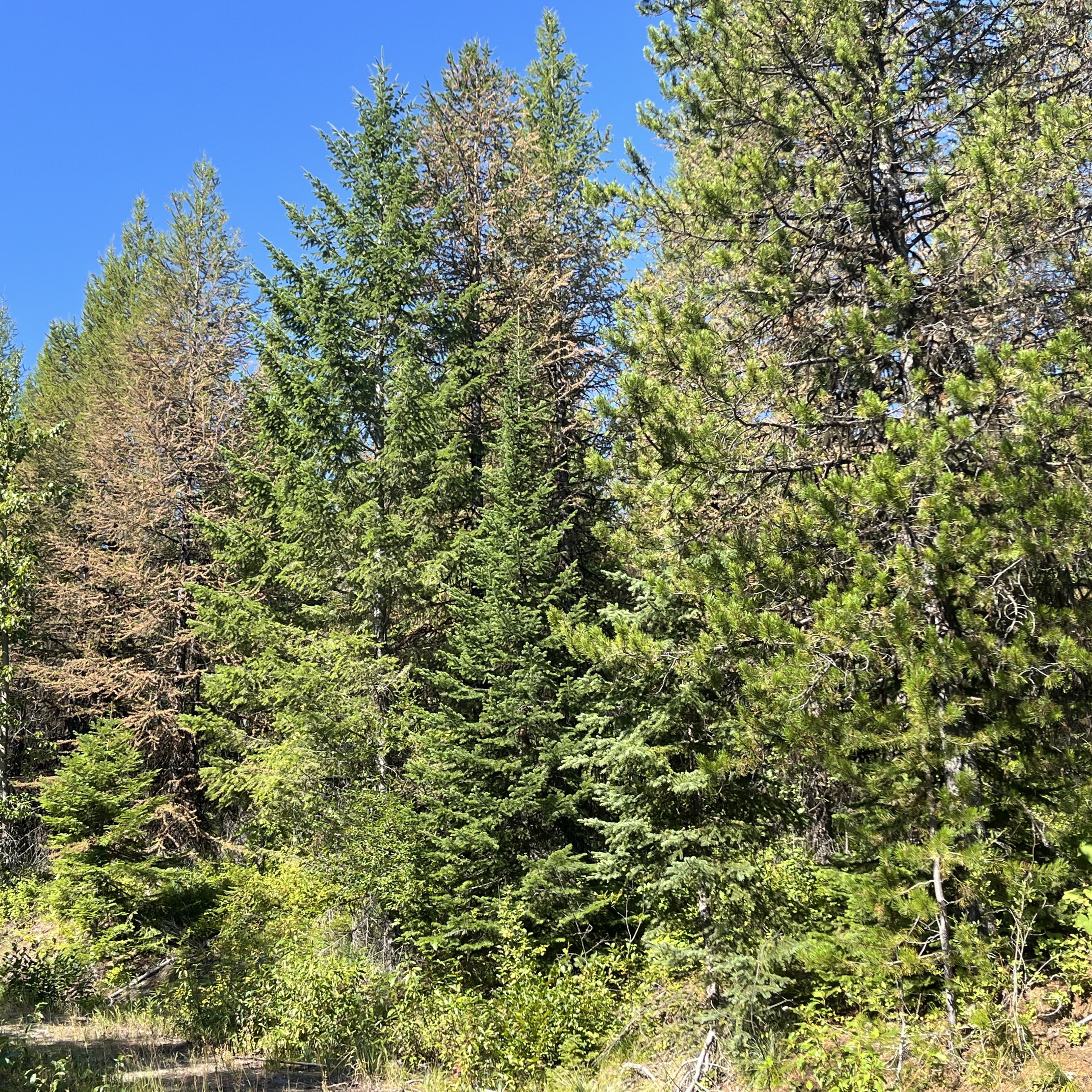
Needle diseases are caused by fungi growing in needles, causing them to discolor, die, wilt, or entirely fall off. Spores are produced on dead needles during cool wet springs and then splashed by rain onto new needles. Spores do not proliferate if conditions are not suitably wet and cool. Although needle diseases do not cause mortality outright, repeated years of infection reduce the tree's ability to photosynthesize, reducing resilience to ongoing stressors such as drought. The following fungi are all native to Montana, and can be found throughout the range of their hosts.
Identification
-
Thinning foliage
-
Discoloration of needles concentrated in the lower crown, where moist air accumulates and fungal spores proliferate
-
Spore-producing structures (fruiting bodies) apparent on needles
-
Spotted or banded patterns of discoloration on individual needles
Other factors causing needle discoloration:
-
Seasonal color change (western larch, cedar) or senescence (when needles die at the end of their lifespan)
-
Insect feeding
-
Abiotic factors such as drought, heat, frost
-
Chemical damage including herbicides and magnesium chloride
Dothistroma Needle Blight of Pines
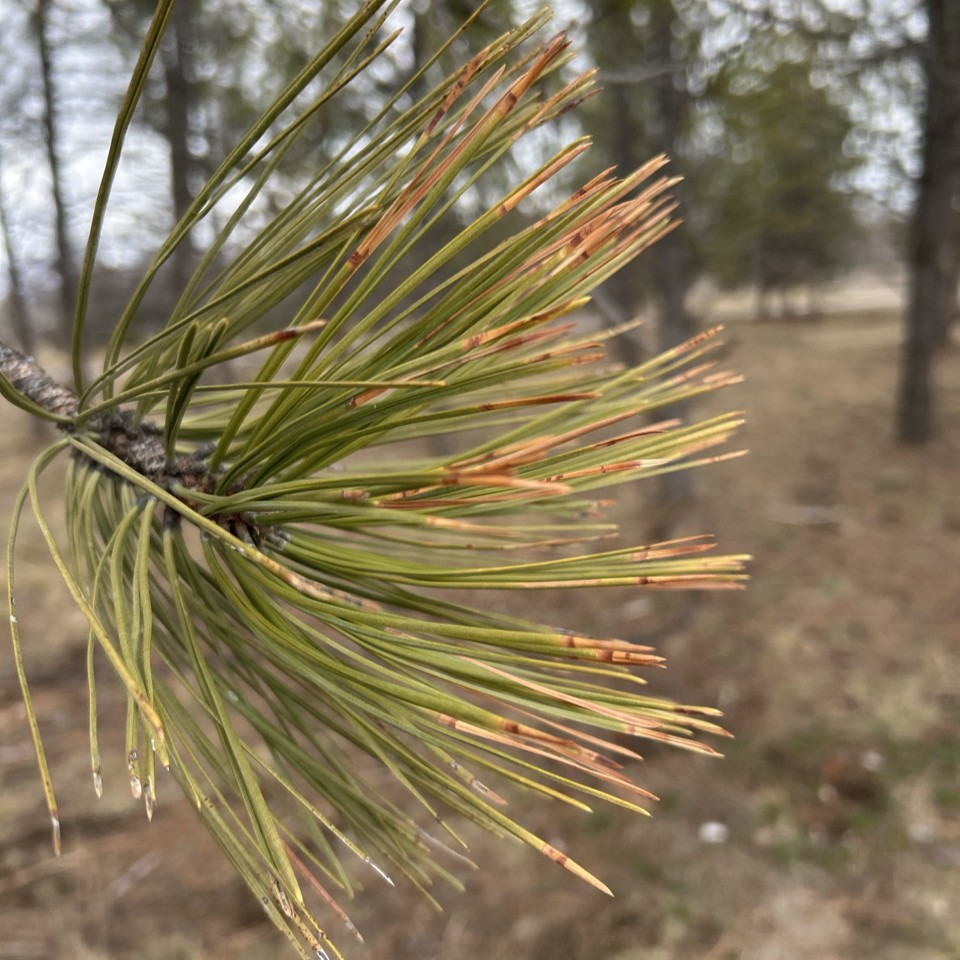
Dothistroma pini infects lodgepole and ponderosa pines. Early infections present as dark green bands and tan spots on needles, which turn red-brown over time. Ends of needles gradually become necrotic while the bases remain green.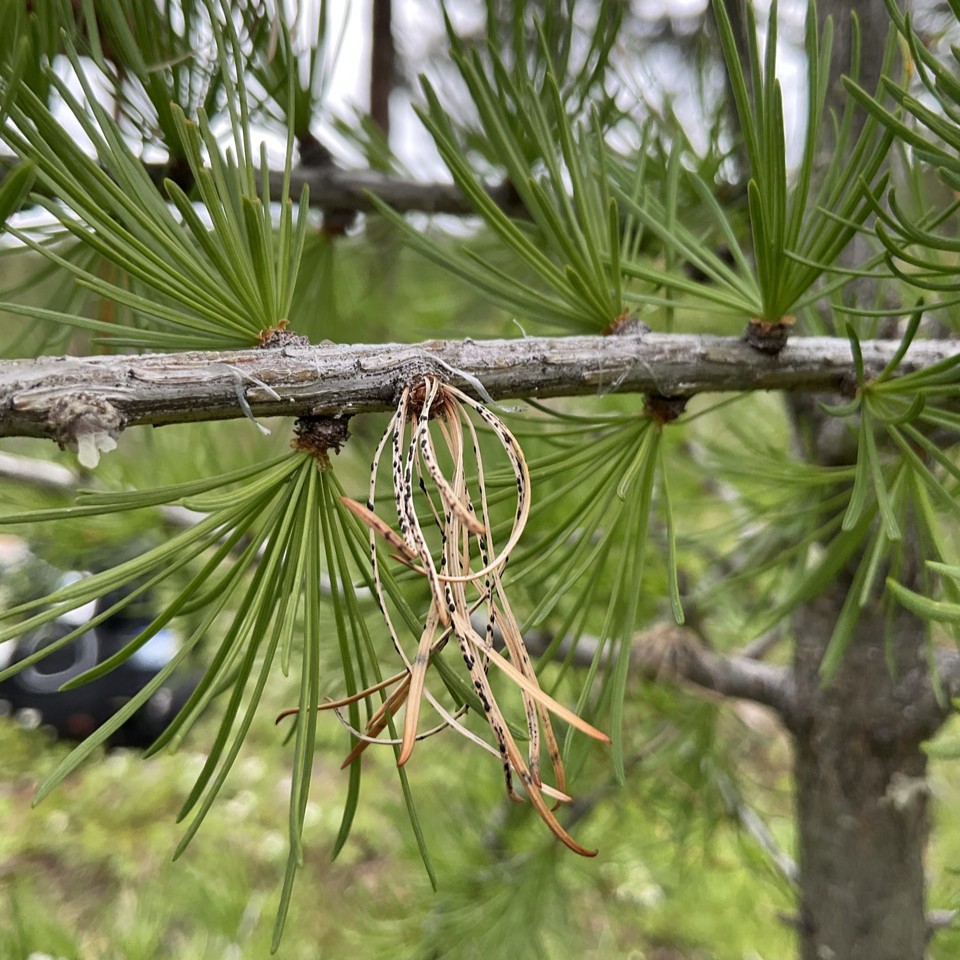
Larch Needle Cast & Blight
Hypodermella laricis, larch needle blight, infects needles soon after they flush in spring. By early summer, needles turn red-brown. Small, black fruiting bodies appear on the upper surface of needles after death. Blight "holds tight"- dead needles remain on the tree for a year, providing inoculum to infest new needles the following spring.
Rhabdocline laricis (formerly Meria laricis), larch needle cast, infection begin sin early spring and continues throughout the growing season. Needles start to turn yellow-brown where infection begins, and discoloration spreads from the tip or center. Fruiting bodies are not visible to the naked eye, and needles fall off once they die.
Rhabdocline Needle Cast of Douglas-fir
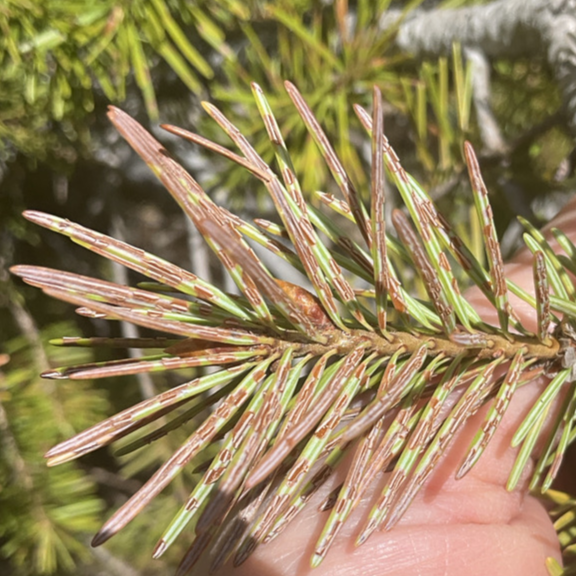
Rhabdocline needle cast is caused by fungi belonging to the genus Rhabdocline. Infected foliage has a mottled yellow-brown appearance. Spores are released in late spring and early summer; infected current-year needles turn chlorotic as the fungus grows. The following spring, bright orange fruiting bodies appear early in the season, and turn reddish-brown with age. Fruiting bodies swell when moist. By summer, infected needles appear yellow or red-brown, and drop in late summer to fall. Rhabdocline is common in Christmas tree farms and plantations.
Management
-
Thin stands to increase air flow and reduce moist conditions in crown. Dense crowns retain moisture and promote needle diseases.
-
Remove heavily impacted trees during thinning.
-
Diversify species, planting appropriate species and seed source for the site.
-
Fungicides may be appropriate in ornamental or nursery settings.
Additional Resources
Printable Fact Sheet: Needle Diseases
Forest Insect & Disease Leaflets: Dothistroma FIDL, Needle Discolorations of Western Larch FIDL, Rhabdocline Needle Cast FIDL
Management Guides: Dothistroma Needle Blight Management Guide, Larch Needle Cast Management Guide, Larch Needle Blight Management Guide
Contact the Forest Pest Management Program
The Forest Pest Management Program supports service foresters throughout Montana. Contact your local service forester for questions regarding insects and diseases in your area.
2705 Spurgin Rd Missoula, MT 59804