
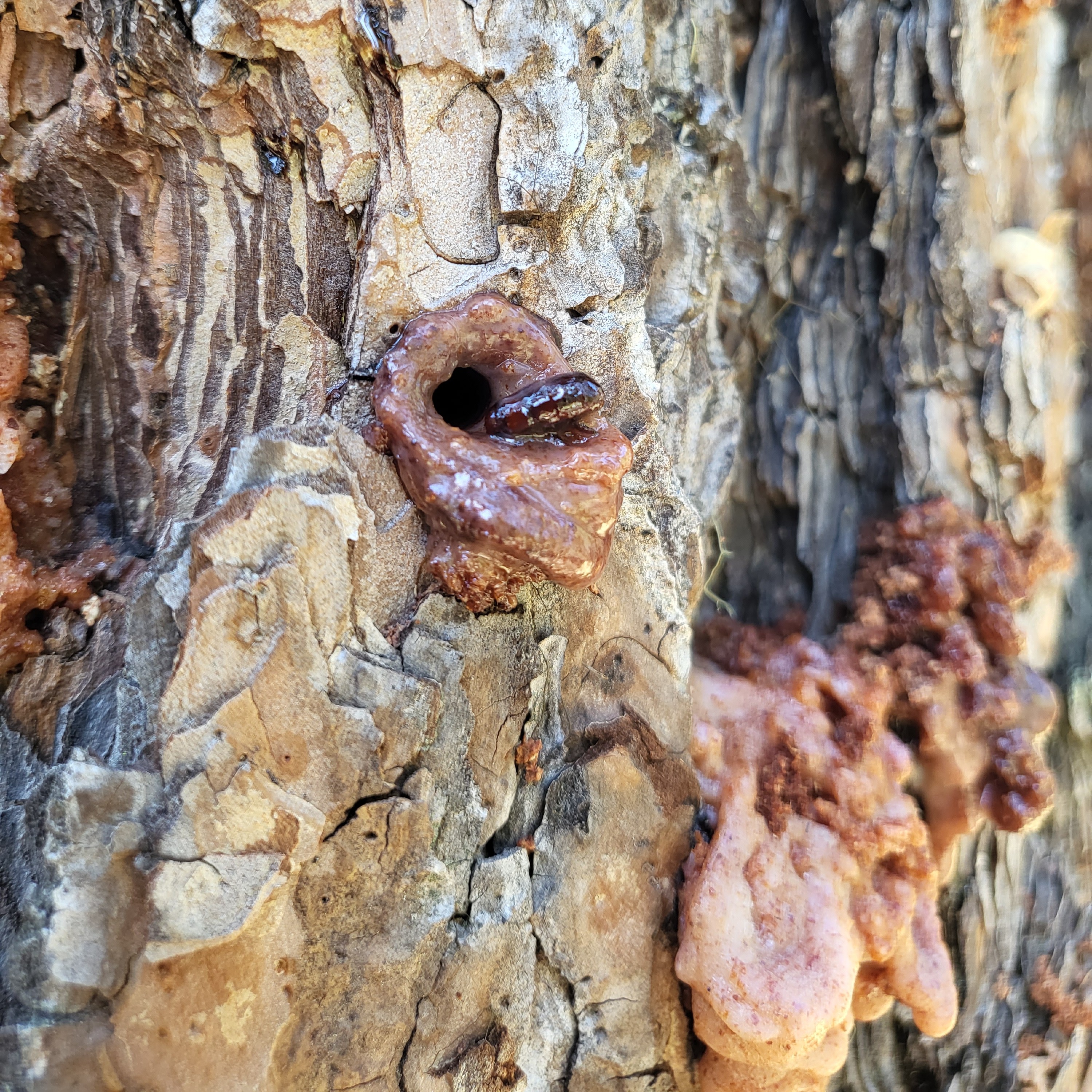
Red Turpentine Beetle
Dendroctonus valens
HOSTS: Ponderosa and lodgepole pine
Red turpentine beetle preferentially attacks trees that are fire-scorched, diseased, injured, or even attacked by other bark beetles.
DAMAGE: Variable
Healthy trees are rarely killed. Because this species opportunistically attacks trees that are already stressed/damage, it can be hard to separate RTB impacts from other factors.
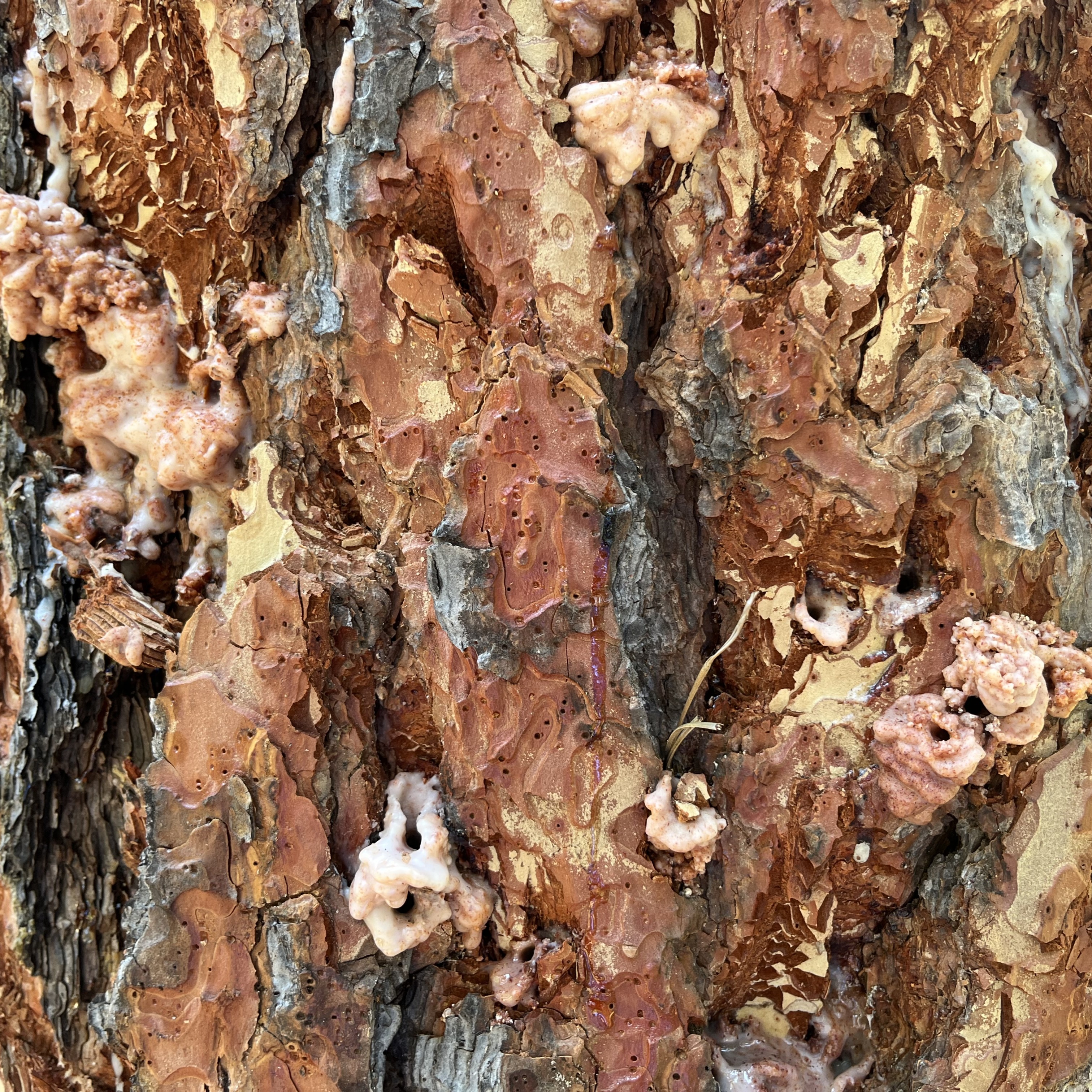
Red turpentine beetle pitch tubes
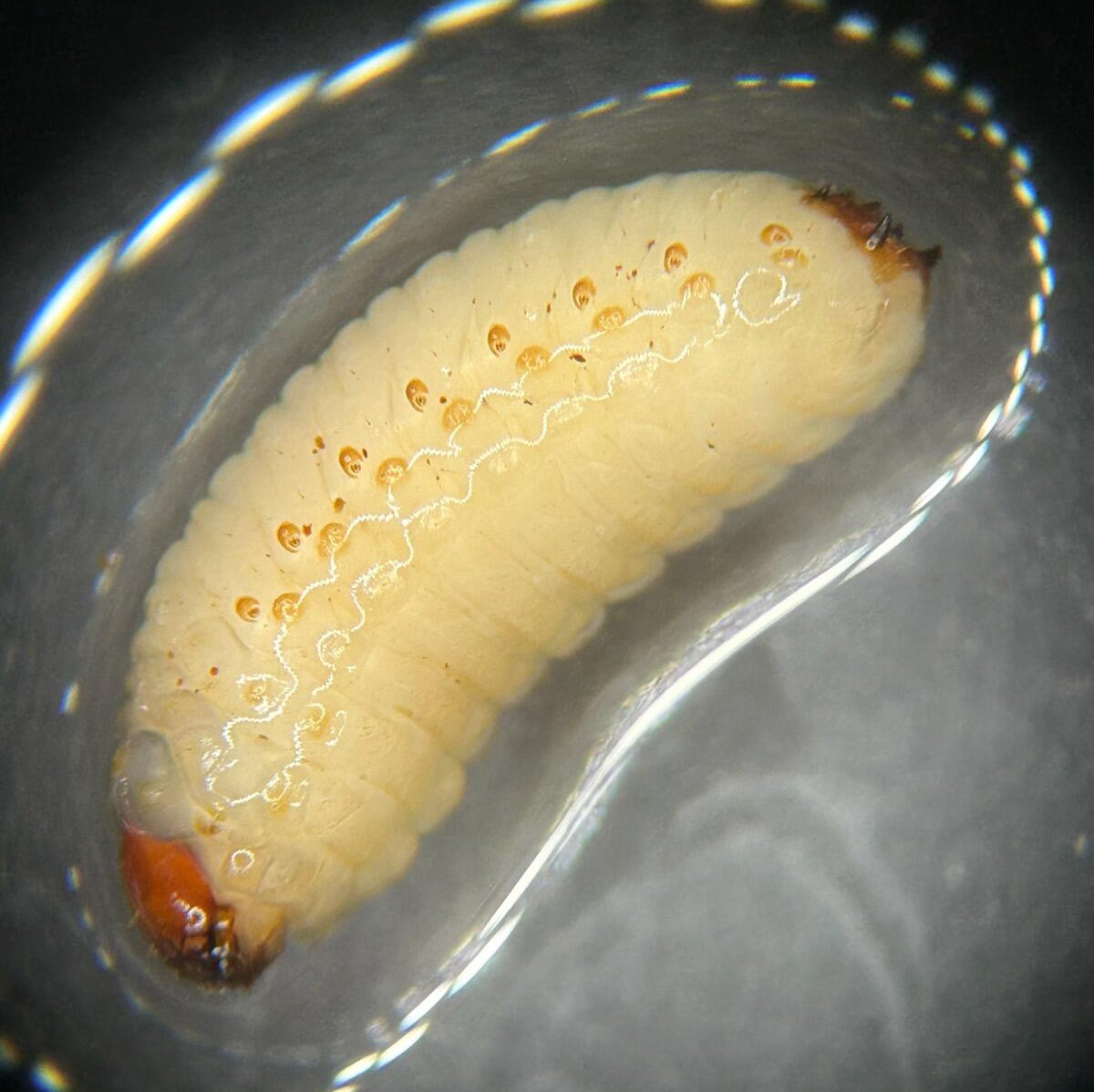
Red turpentine larva with spines on last segment
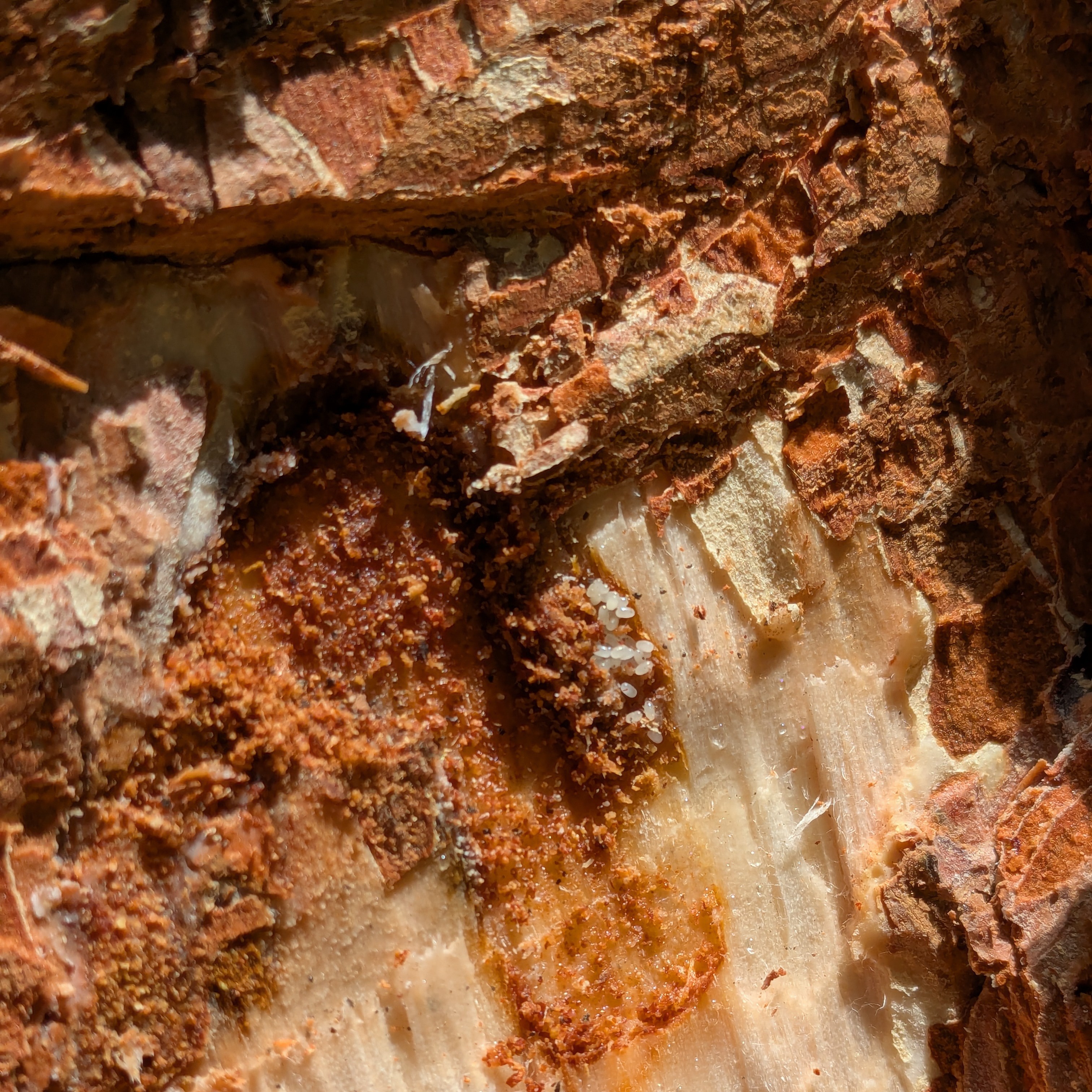
Cluster of red turpentine beetle eggs
Ecology
Red turpentine beetle (RTB) is native to North and Central America. It infests pine species within its range, living in and feeding on phloem (the vascular tissue that transports water and nutrients throughout the tree). This beetle is considered non-aggressive because it rarely kills healthy pines. Red turpentine beetle is attracted to turpentine, which is released when pine trees are cut or injured. THe beetle generally infests slash, fresh logs, and stumps in addition to weakened trees. Attacks on trees are usually restricted to the lower trunk and roots. Trees respond to attack by releasing copious amounts of resin, forming pitch tubes. Attacks are often limited to individual trees. Outbreaks are rare, and if they do occur, are localized around a common stressor. Populations can build up after fire, timber operations, or other events that can cause damage to trees. Trees attacked by RTB may also be colonized by other bark beetles and woodborer.
Identification
-
Large, granular clusters of boring dust at base of tree
-
Crowns of infested trees remain green (but may fade if tree is under attack from other insects).
-
Masses of red-orange pitch in lower 6 feet of the trunk and roots
-
Fresh pitch tubes are sticky and shiny, and vary in color from white to pink to red. Older attacks can be identified by hard and yellow/gray crumbling pitch tubes.
-
Chamber excavated under bark, as opposed to distinct galleries typical of other bark beetle species
-
Larvae feed in groups, creating irregular fan- or cloud-shaped galleries.
-
Presence of brown adult beetles approximately 1/4 inch long (largest of all bark beetles in Montana) or presence of small white larvae (less than 1/4 inch)
-
Larvae have spines at end of abdomen differentiating them from other bark beetles.
Life Cycle
Red turpentine beetle adults typically fly and attack new trees in the spring, and may continue to do so throughout the summer and early fall. Females are the host-selecting sex, and produce the pheromone frontalin to attract males. Development of offspring can vary in timing and overlapping generations can be present in a single tree, as females can lay multiple broods in the same host. The life cycle can be completed in less than a year in warmer areas, or take up to two years in cooler locations. The life stages that overwinter are larvae and adults.
Management
-
Avoid tree damage, particularly fire scorch, mechanical injury, and soil compaction.
-
Maintain a 40 to 50 foot barrier between large pines and construction activities (paving, grading, trenching, root smothering, etc.).
-
-
Thin stands to reduce competition and promote individual tree vigor.
-
Remove infested slash, stumps, severely scorched and/or wounded trees to prevent populations from spilling over into nearby healthy trees.
-
Monitor for activity. If five or more new pitch tubes appear over one to two months, assess tree for underlying causes of decline: disease, wounds, fire damage, other insect infestations, etc.
Additional Resources
Printable Fact Sheet: Red Turpentine Beetle
Forest Insect & Disease Leaflet: Red Turpentine Beetle FIDL
Management Guide: Red Turpentine Beetle Management Guide
Contact the Forest Pest Management Program
The Forest Pest Management Program supports service foresters throughout Montana. Contact your local service forester for questions regarding insects and diseases in your area.
2705 Spurgin Rd Missoula, MT 59804