
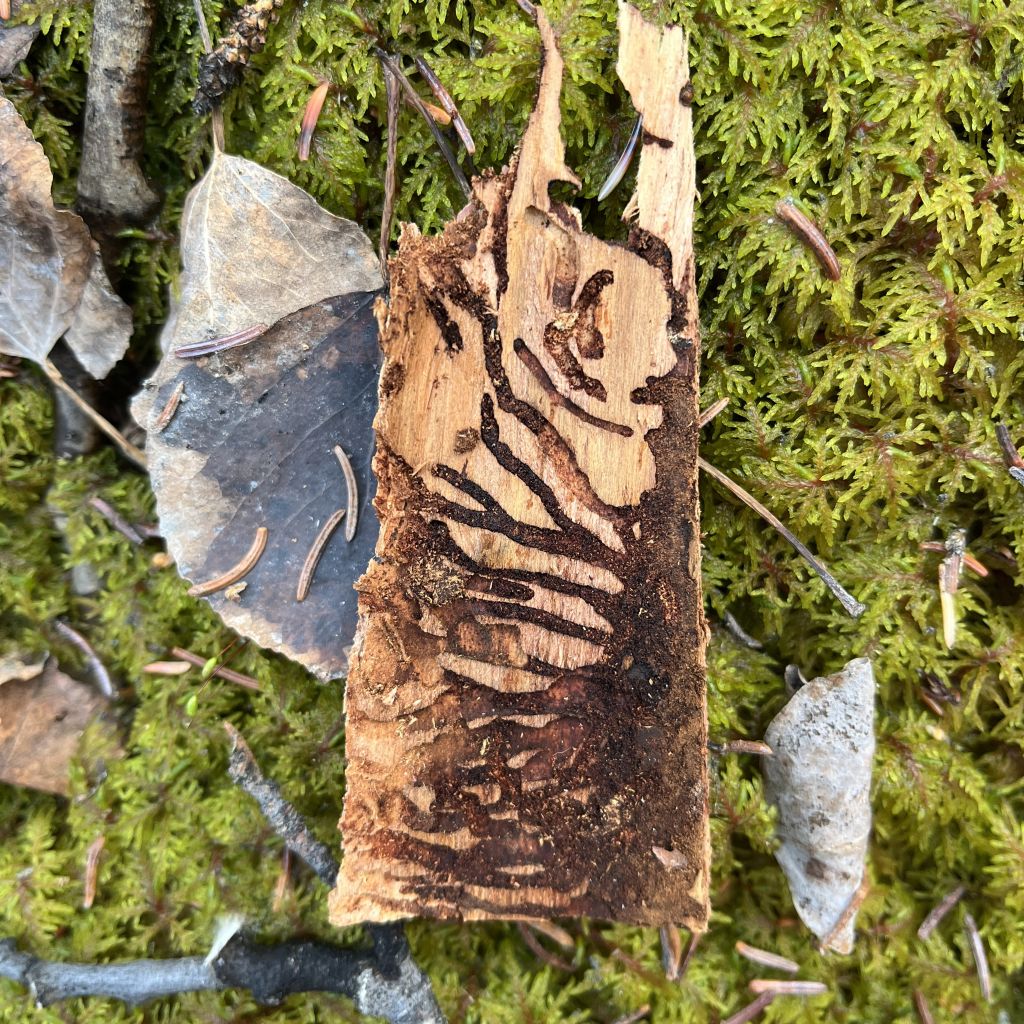
Spruce Beetle
Dendroctonus rufipennis
HOST: Engelmann spruce
DAMAGE: Mortality
Spruce beetle feeds on phloem (the vascular tissue that transports water and nutrients) and girdles the tree. Once infested, a tree cannot be saved.
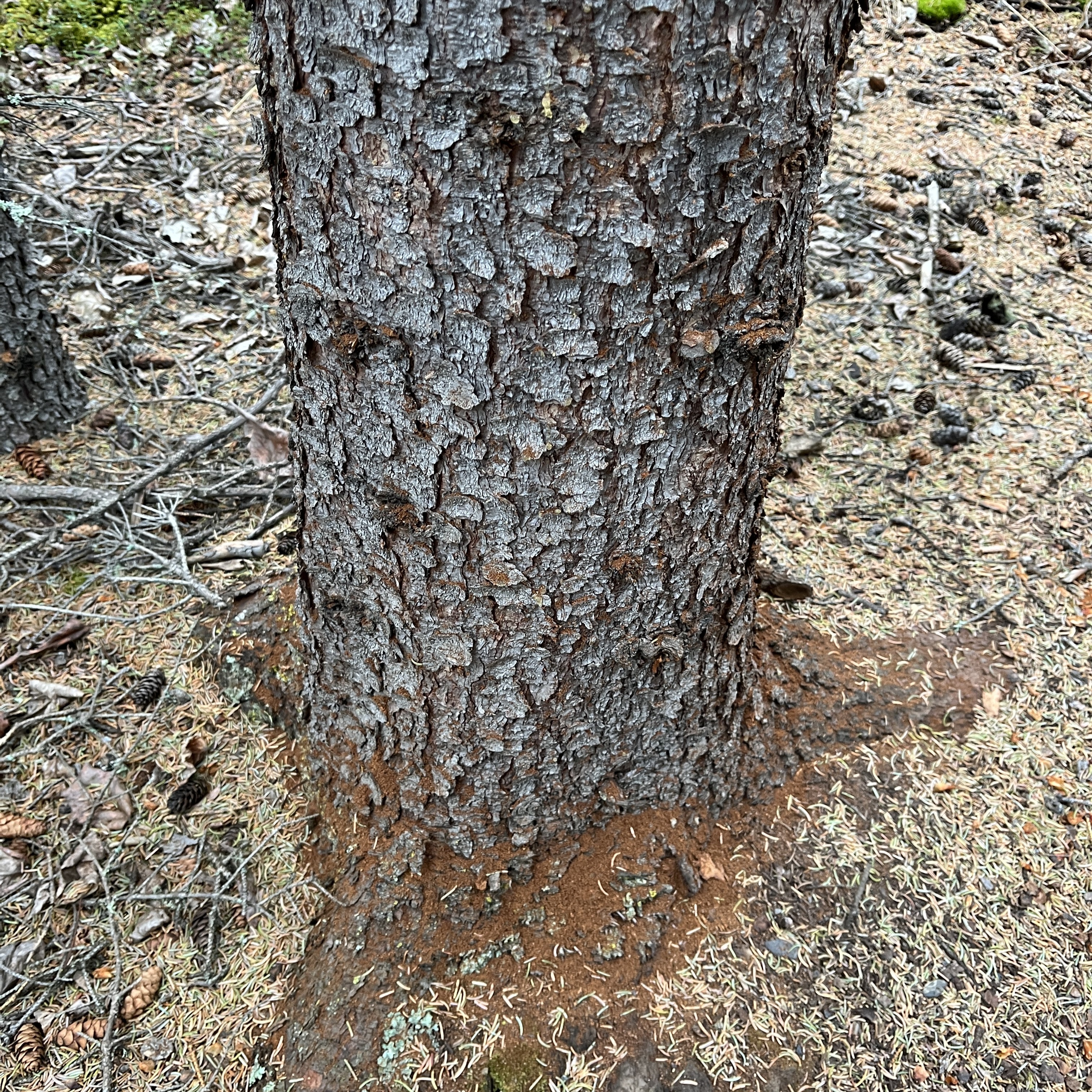
Frass is evidence of infestation. Photo credit: Grace Graham, AKDFFP
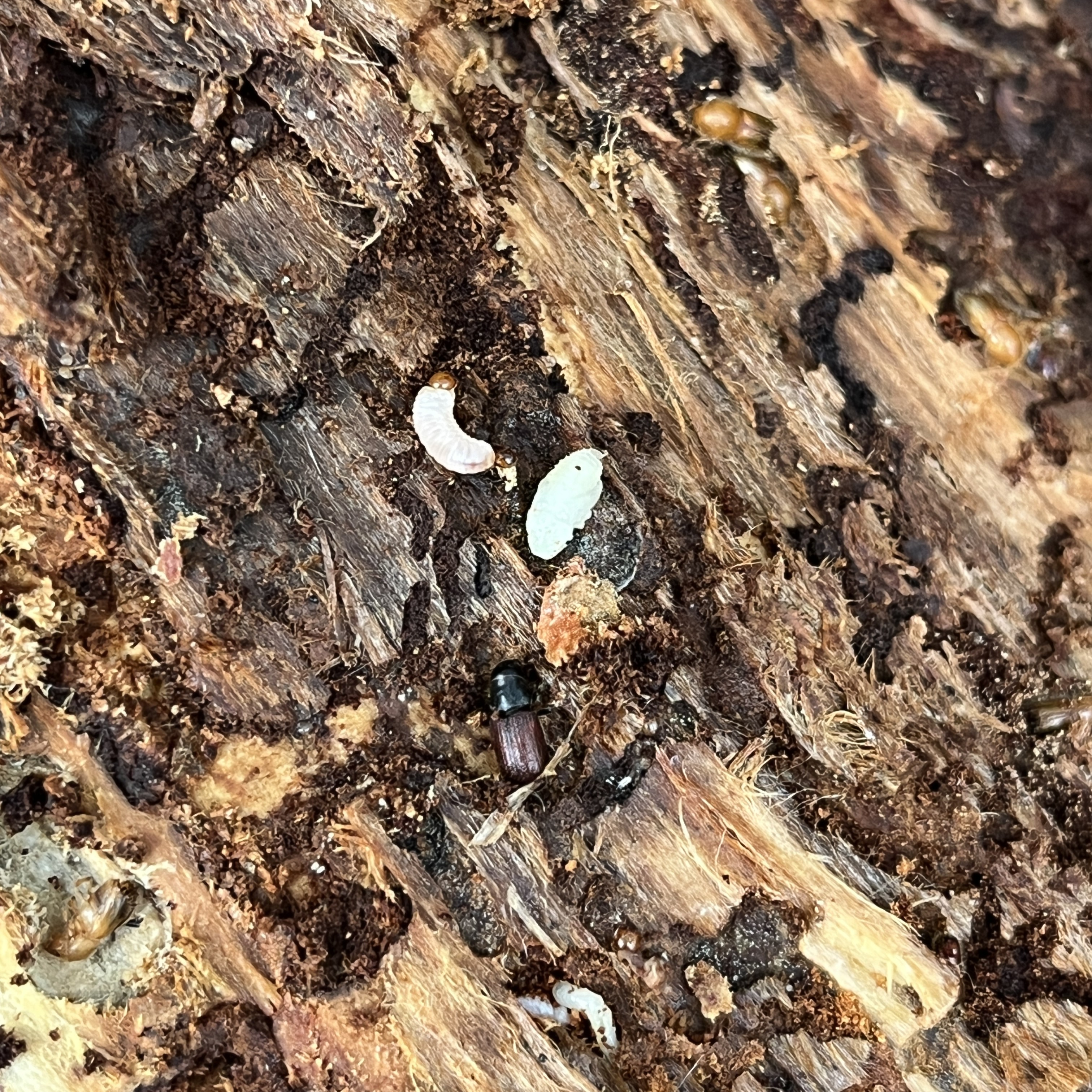
Larva, pupa, and adult spruce beetle. Photo credit: Grace Graham, AKDFFP
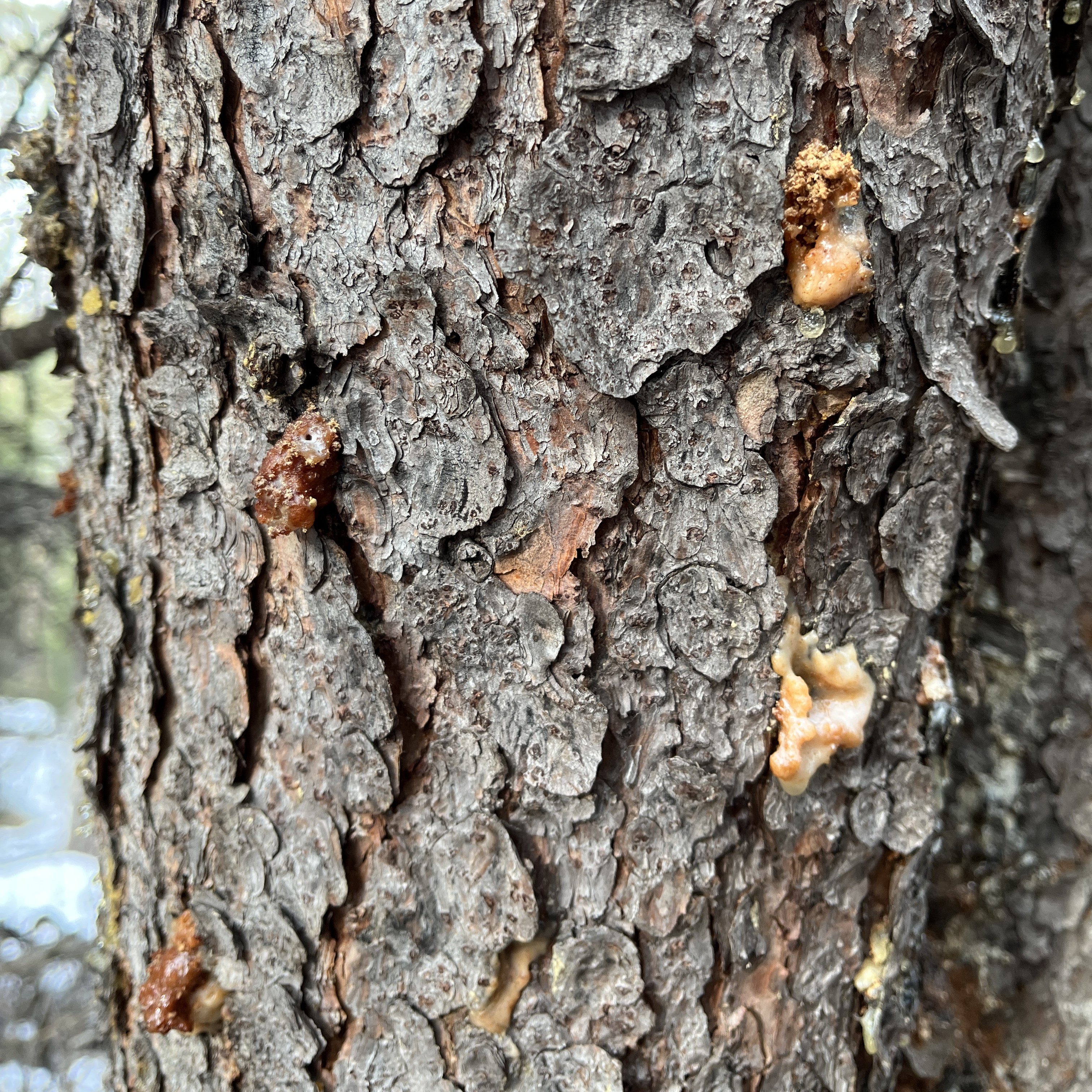
Pitch tubes. Photo credit: Grace Graham, AKDFFP
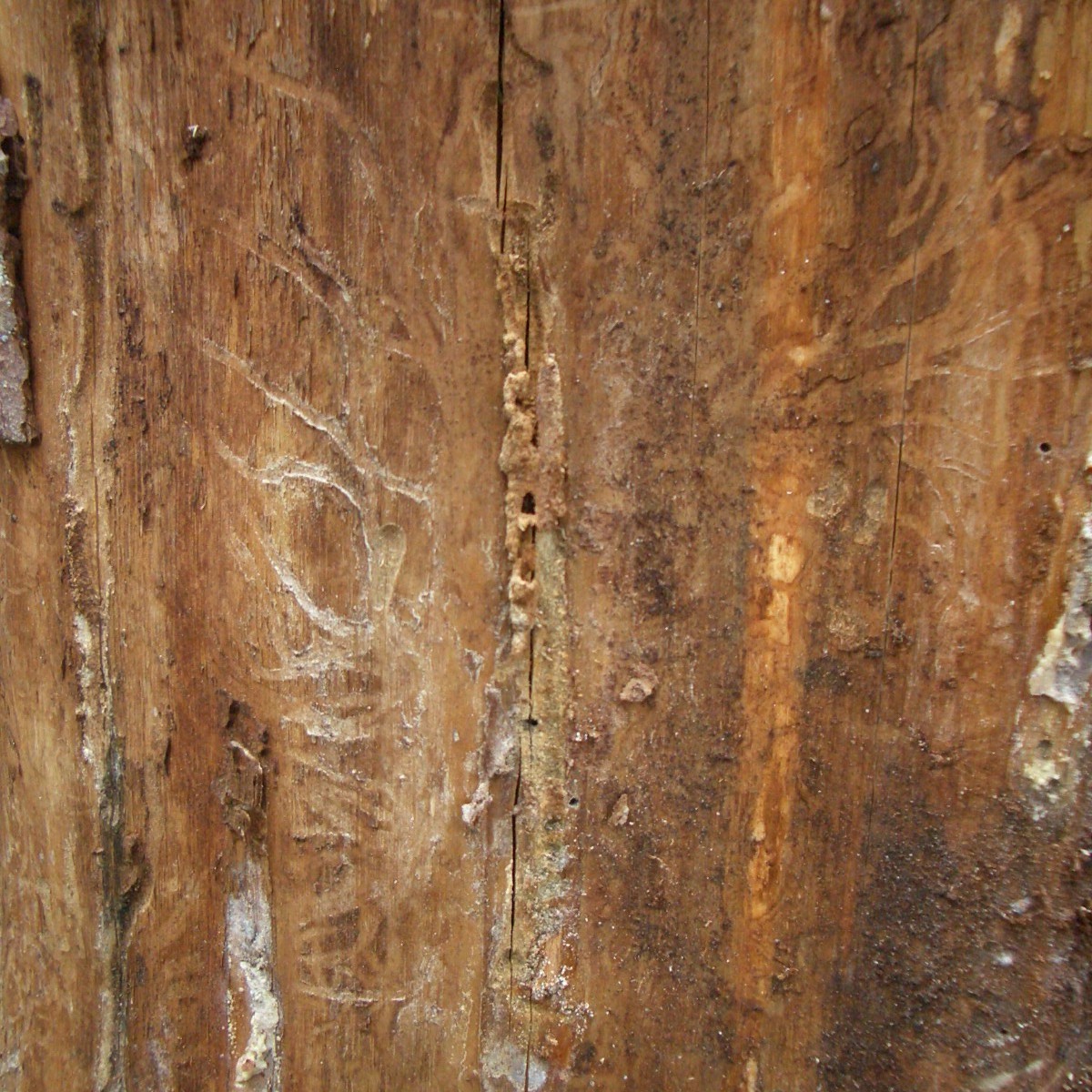
Spruce beetle gallery
Ecology
Spruce beetle infests all species of spruce (Picea spp.), and occurs across Canada, into Alaska, and down through the Rocky Mountains. Spruce beetle preferentially attacks downed or windthrown trees but will also attack standing, healthy spruce during outbreaks. Beetles also preferentially attack large, mature trees with thick phloem. Spruce injured by fire or infected with root diseases, such as tomentosus (Onnia tomentosa), are more prone to infestation. Root-disease infected trees may also be more likely to blow over during wind events, making them susceptible to spruce beetle.
Identification
-
Red-brown boring dust ("frass") accumulates in bark crevices and at the base of trees. Beetles often attack the cooler underside of logs, so frass can also accumulate on the lower surface.
-
Creamy white to red-brown pitch tubes may be present at entrance holes.
-
Galleries are parallel to the trunk of the tree and packed with frass. Larval feeding galleries radiate outward from the main gallery.
-
Mature adults are 1/8-1/4 inch wide, dark brown to black with red-brown or black wind coverings ("elytra"). Mature larvae are cream-colored and approximately the size of a grain of cooked rice.
-
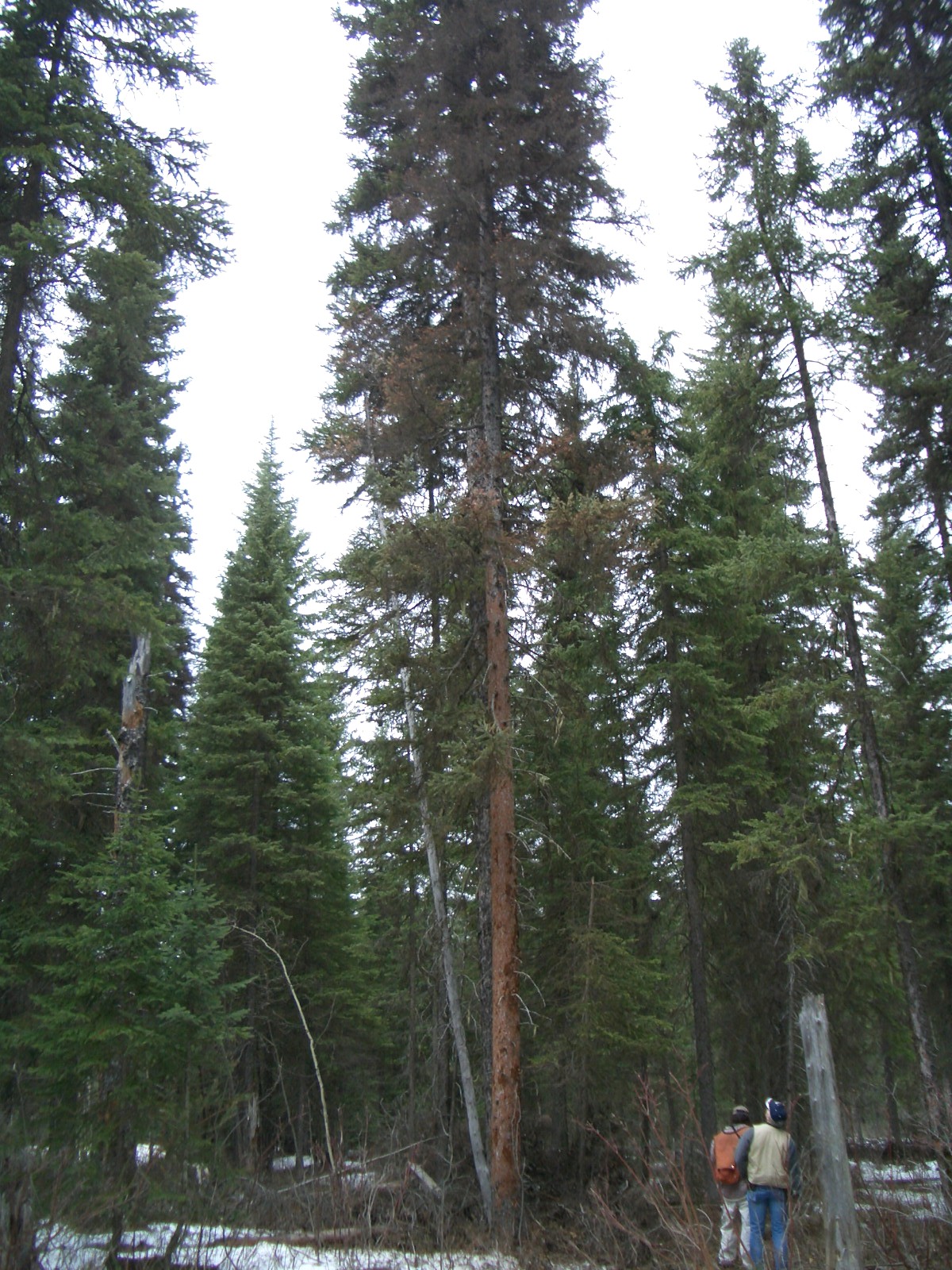
Crowns fade to yellowish-green within one year after attack.
-
Woodpeckers chip away bark to feed on developing broods.
-
Exit holes may be visible after adult beetles leave the host tree.
-
Spruce engraver beetles, Ips species, may co-occur but galleries are X-, Y-, or star-shaped and clear of frass. Adults will have spines on the rear end, unlike spruce beetle which has a smooth, curved behind.
Life Cycle
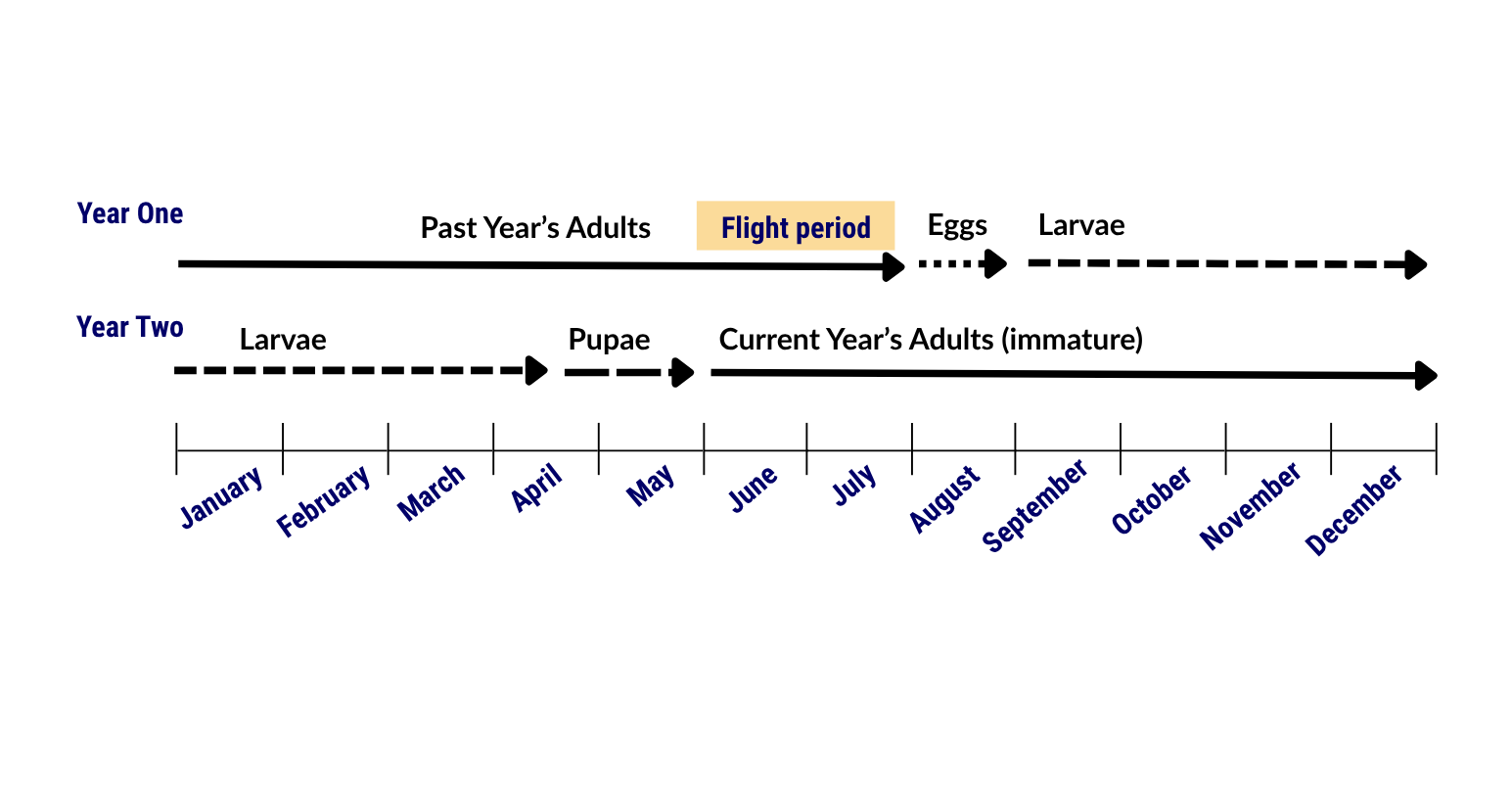
Adults attack new trees from June through July, with flight beginning when shade temperatures consistently reach 60 degrees Fahrenheit. Females release attractant pheromones to recruit more beetles to attack en masse. Once a tree is fully colonized, adults produce an anti-aggregation pheromone to prevent overcrowding. Females create vertical galleries and lay eggs along the margin. Eggs hatch into larvae that feed in galleries radiating outward from the parental gallery. Beetles spend the first year overwintering as larvae. Larvae resume feeding in the spring until pupation. Adults emerge in August through September and re-enter the same tree near the base or root collar. Spruce beetles spend the second year overwintering as adults. Temperature significantly influences development. Spruce beetle typically requires two years to reach maturity in Montana.
Management
- Diversify age and size classes.
- Use published hazard ratings to guide spruce management. Generally, maintain spruce stands with:
- Average spruce diameter of less than 16 inches DBH (diameter at breast height)
- Less than 60% spruce composition
- Spruce basal area of less than 150 square feet per acre
- Identify and remove beetle-infested trees. Crowns of infested trees may look healthy but closer inspection will reveal boring dust in bark crevices.
- Remove or destroy infested material. Beetles will continue developing in downed trees while phloem remains green. If left on site, beetles will emerge the following summer and attack nearby trees.
- Blowdown, felled trees, and log decks may function as trap trees to attract beetles away from stand. Trap trees must be chipped, burned, or removed prior to brood emergence.
- Chemical preventive sprays can protect individual trees when applied to the entire trunk before a tree is infested. Consult a licensed pesticide applicator.
Additional Resources
Printable Fact Sheet: Spruce Beetle
Forest Insect & Disease Leaflet: Spruce Beetle FIDL
Management Guide: Spruce Beetle Management Guide
Contact the Forest Pest Management Program
The Forest Pest Management Program supports service foresters throughout Montana. Contact your local service forester for questions regarding insects and diseases in your area.
2705 Spurgin Rd Missoula, MT 59804