
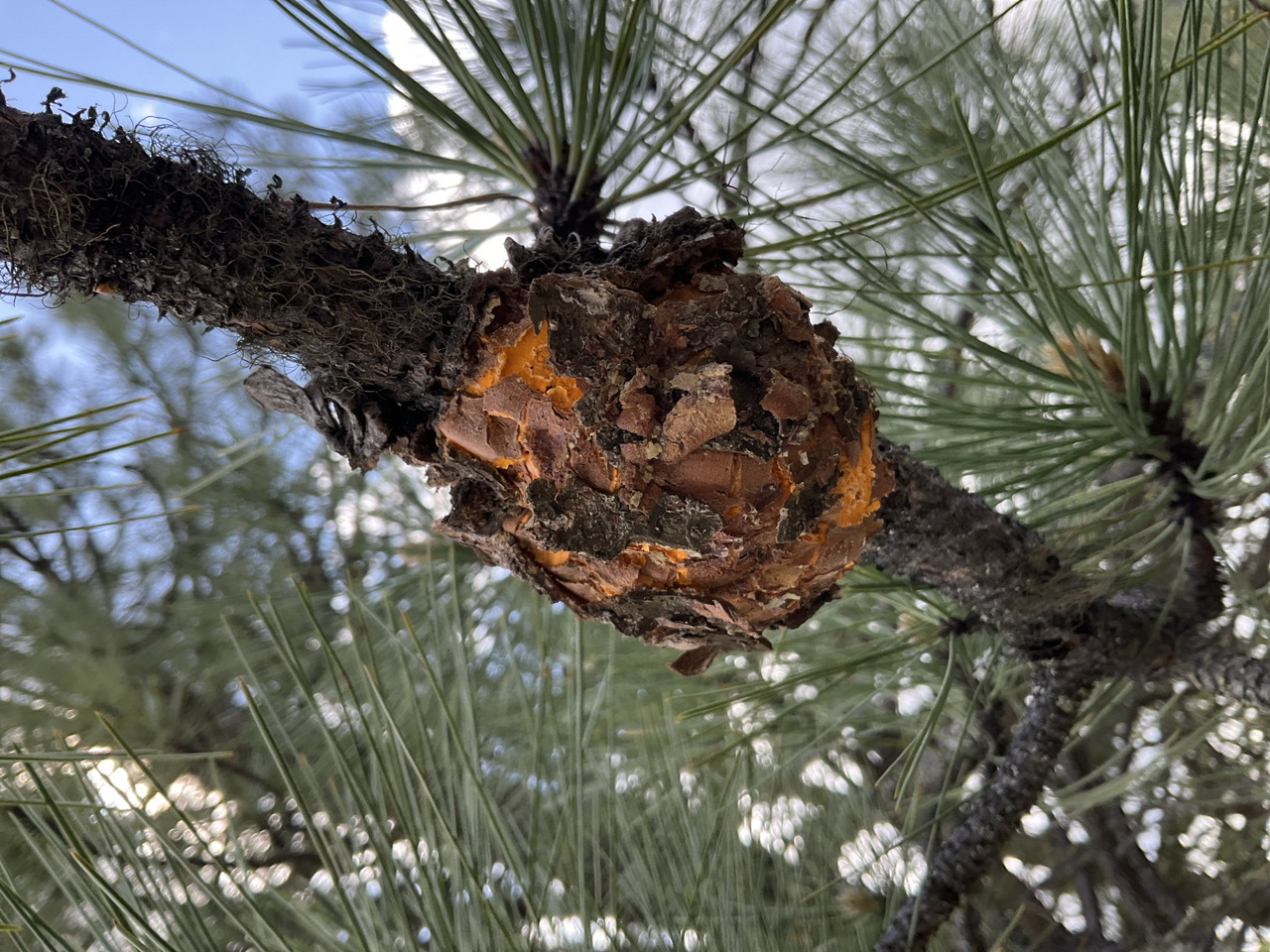
Western Gall Rust
Endocronartium harknessii
HOSTS:
Two- and three-needle pines such as ponderosa and lodgepole; ornamentals are also susceptible.
DAMAGE: Branch Dieback
Galls girdle branches, leading to branch dieback. Severely infected trees may die over time due ot loss of branches and restricted photosynthetic ability. Galls that form on the main stem may cause mortality in smaller-diameter seedlings/saplings as they girdle the tree. On larger trees, stem galls develop into hip cankers, causing deformity and weakness, leading to stem breakage.
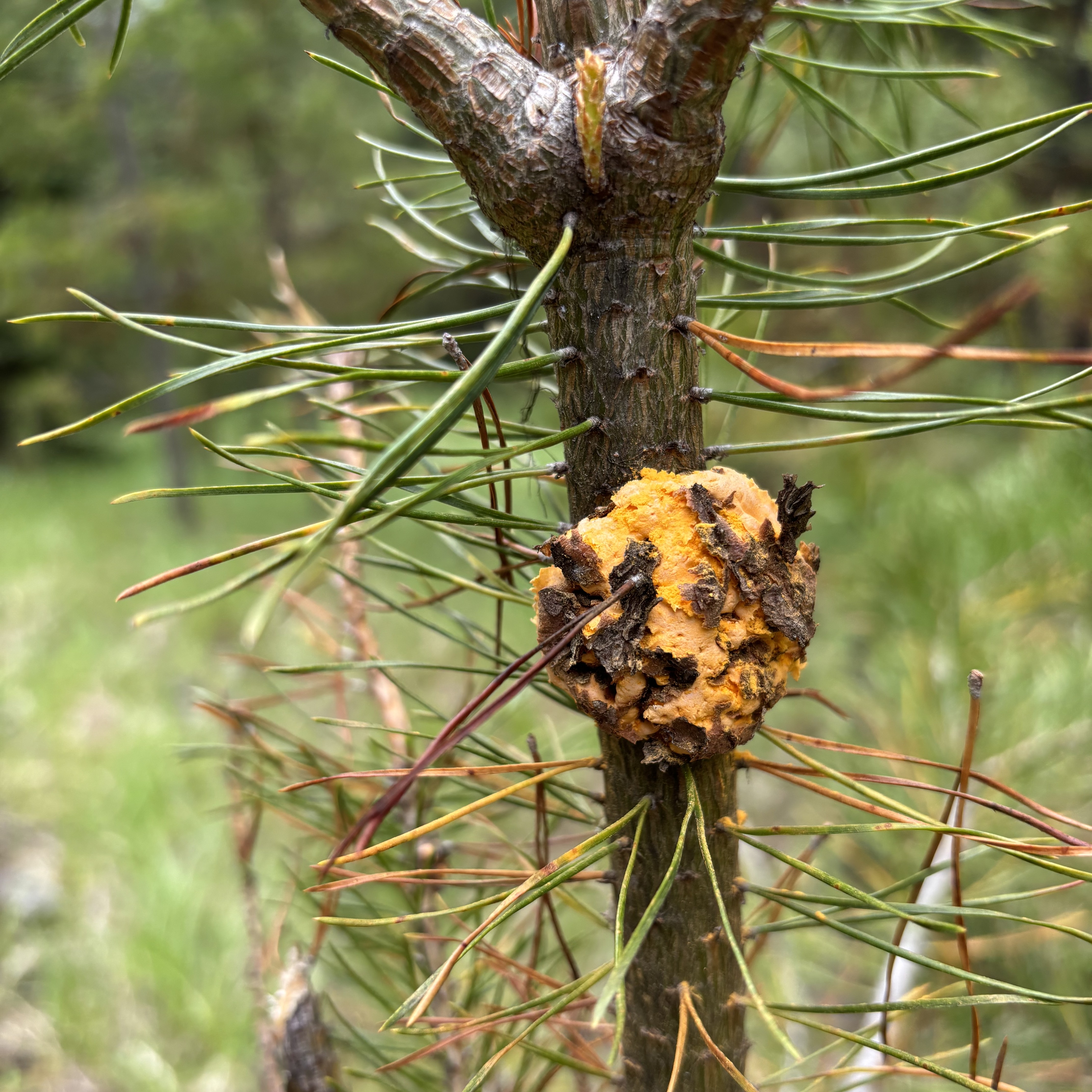
Sporulating western gall rust
Ecology
Western gall rust is a fungal pathogen native to North America. An obligate parasite, it only grows on live hosts. Unlike other rusts, it does not need an alternate host to complete its life cycle and can spread directly from pine to pine. Western gall rust produces round swellings (galls) on branches and on the stem. Galls on the stem develop into hip cankers over time, or girdle the tree.
High infection rates compromise tree vigor and can predispose trees to pine engraver beetles (Ips sp.). Rodents often chew on galls and cankers, while other insects such as sequoia pitch moth, Synanthedon sequoiae, feed on the perimeter of cankers.
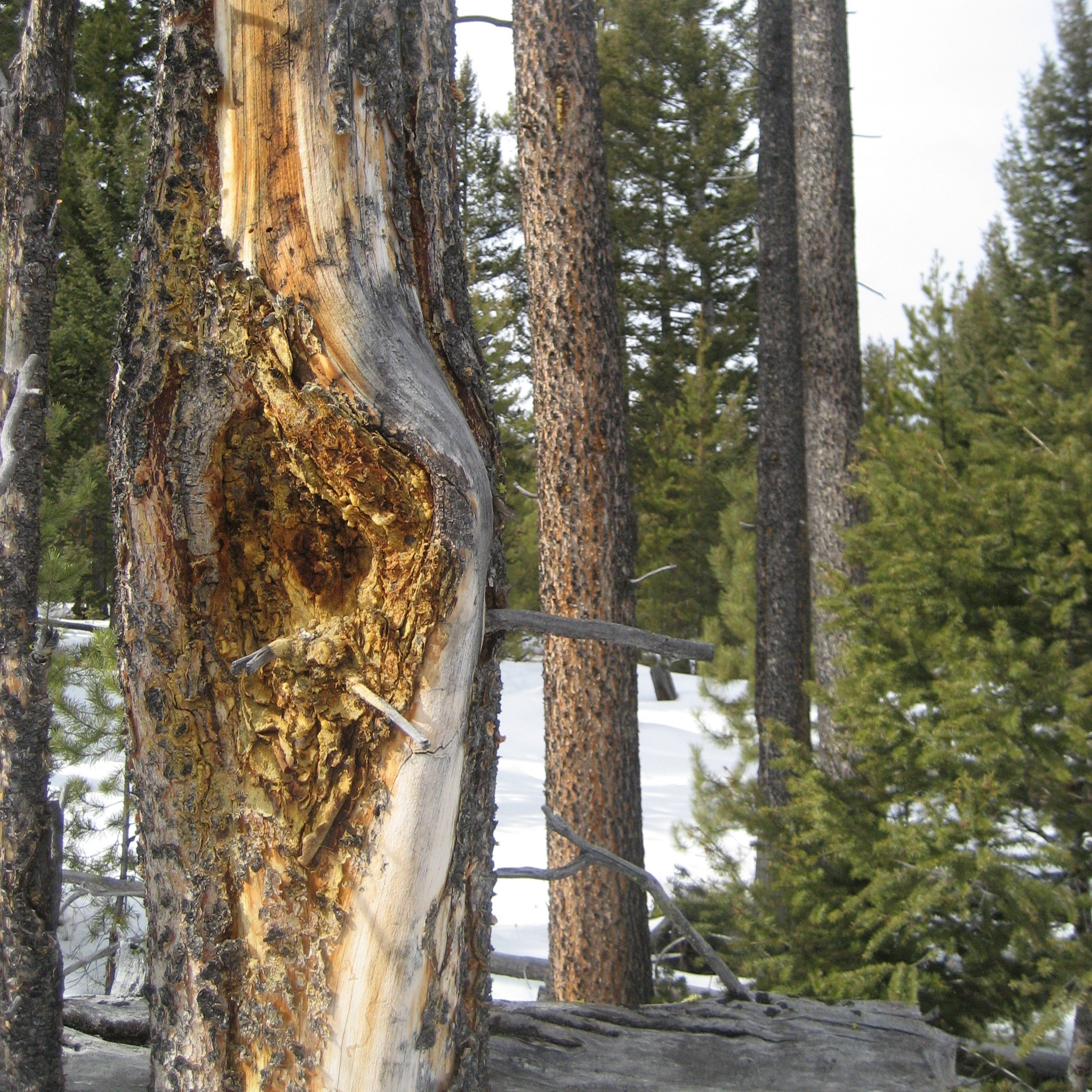
Hip canker
Identification
-
Dead branches, visible from a distance as clusters of orange or brown needles
-
Round swellings/galls on branches or main stem
-
Bright orange dusting of spores on galls in spring
-
Flared cankers on main stem, common referred to as "hip cankers"
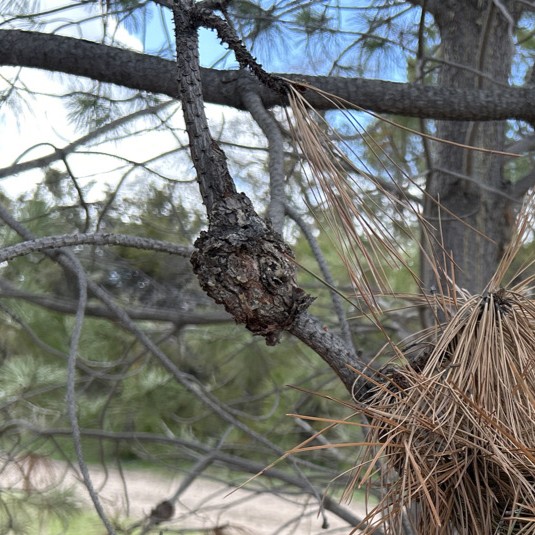
Dead gall
Life Cycle
One to two years after infection, galls will produce bright orange spores in spring, which infect new pine shoots and cone flowers. Galls on branches usually only live a couple of years, since once they begin producing spores, the galls disrupt host tissue function in the branch, causing the branch to die. Infection does not spread internally from branch galls into the main stem.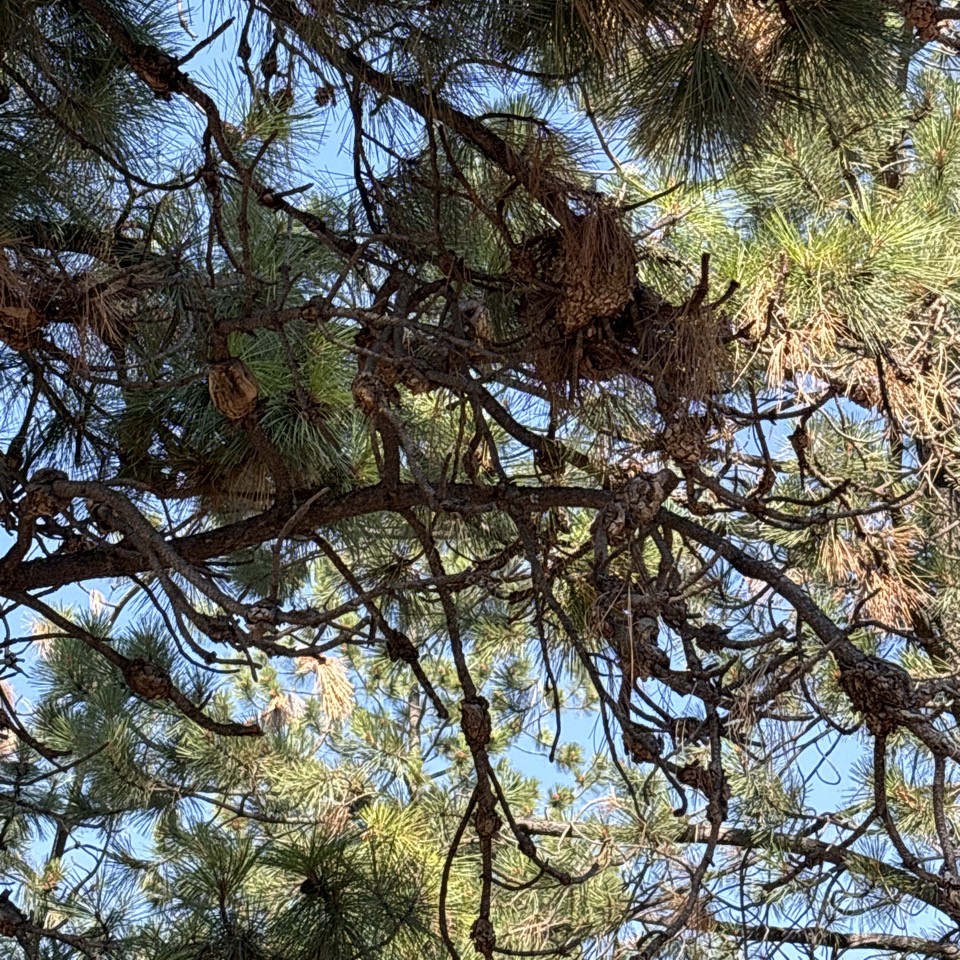
Management
-
Thin stands to reduce competition and promote individual tree vigor. When thinning or harvesting, selectively remove trees with most abundant galls.
-
In infected stands, remove trees with more than six branch galls as well as trees with stem galls that will develop into hip cankers.
-
Promote non-host species.
-
In ornamental pines, prune out infected branches to allow space for healthy branches to grow and reduce inoculum.
-
Source seed from trees that appear resistant.
-
The fungus cannot spread from dead trees nor dead branches, so disposing of slash is not necessary to control western gall rust.
Additional Resources
Printable fact sheet: Western Gall Rust
Forest Insect & Disease Leaflet: Western Gall Rust FIDL
Management Guide: Western Gall Rust Management Guide
Contact the Forest Pest Management Program
The Forest Pest Management Program supports service foresters throughout Montana. Contact your local service forester for questions regarding insects and diseases in your area.
2705 Spurgin Rd Missoula, MT 59804