
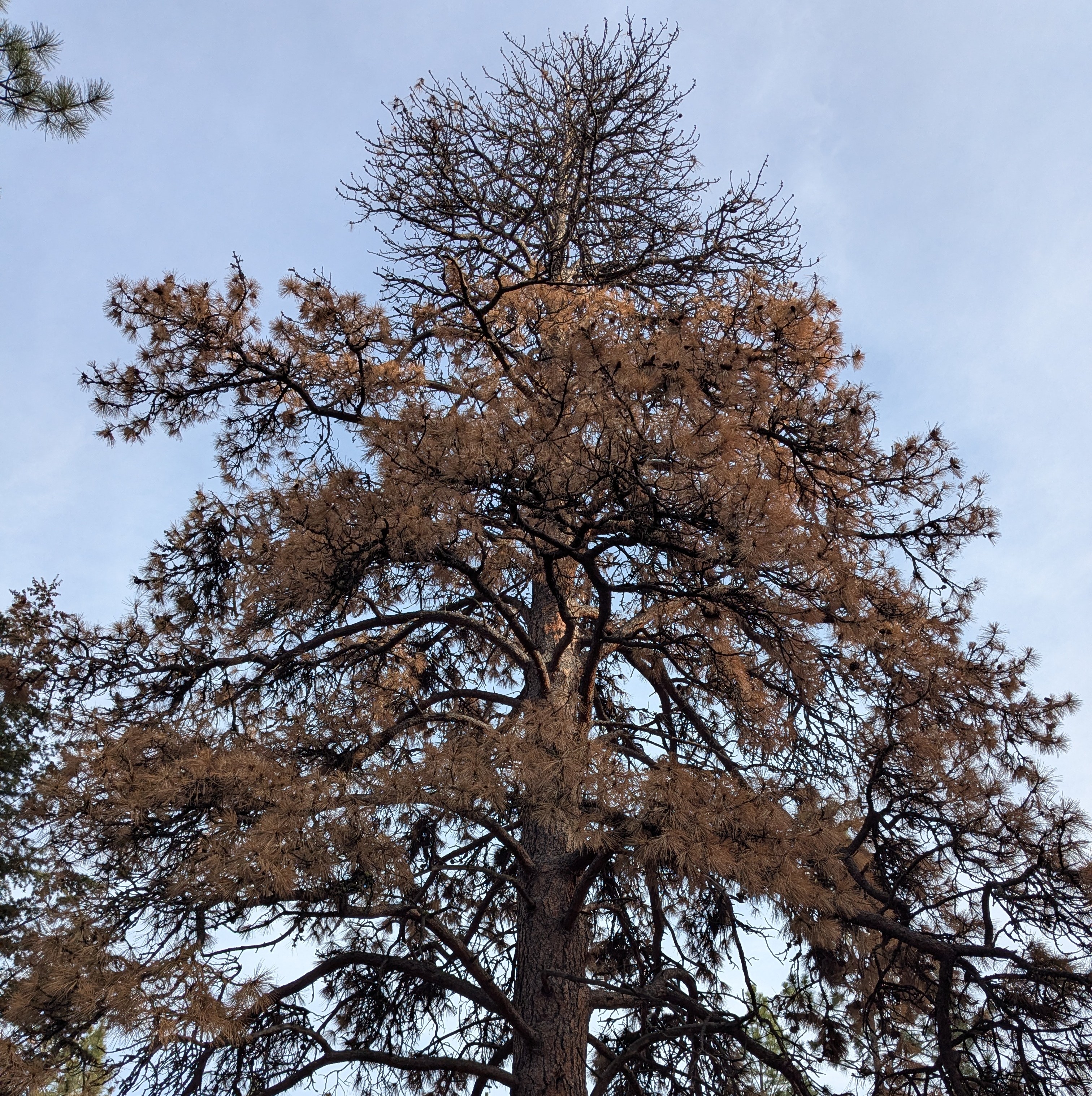
Western Pine Beetle
Dendroctonus brevicomis
HOST: Ponderosa Pine
Only known to occur west of the Continental Divide; larger trees (>20 inches diameter at breast height) are preferred.
DAMAGE: Mortality
Western pine beetle feeds under the bark on phloem, the vascular tissue that transports water and sugars throughout the tree. Beetles introduce blue stain fungi. Together, the beetles and fungi girdle the tree.
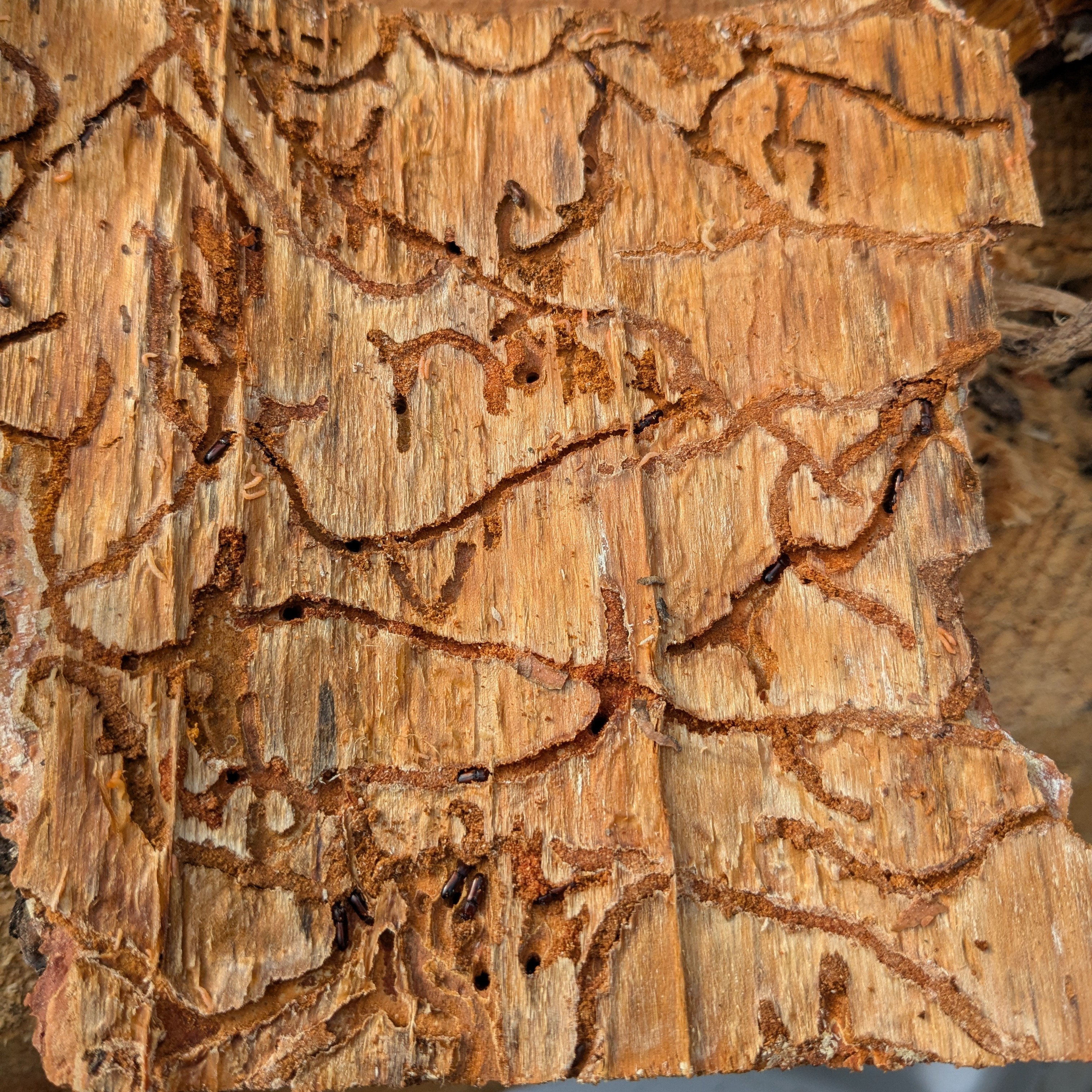
Western pine beetle galleries
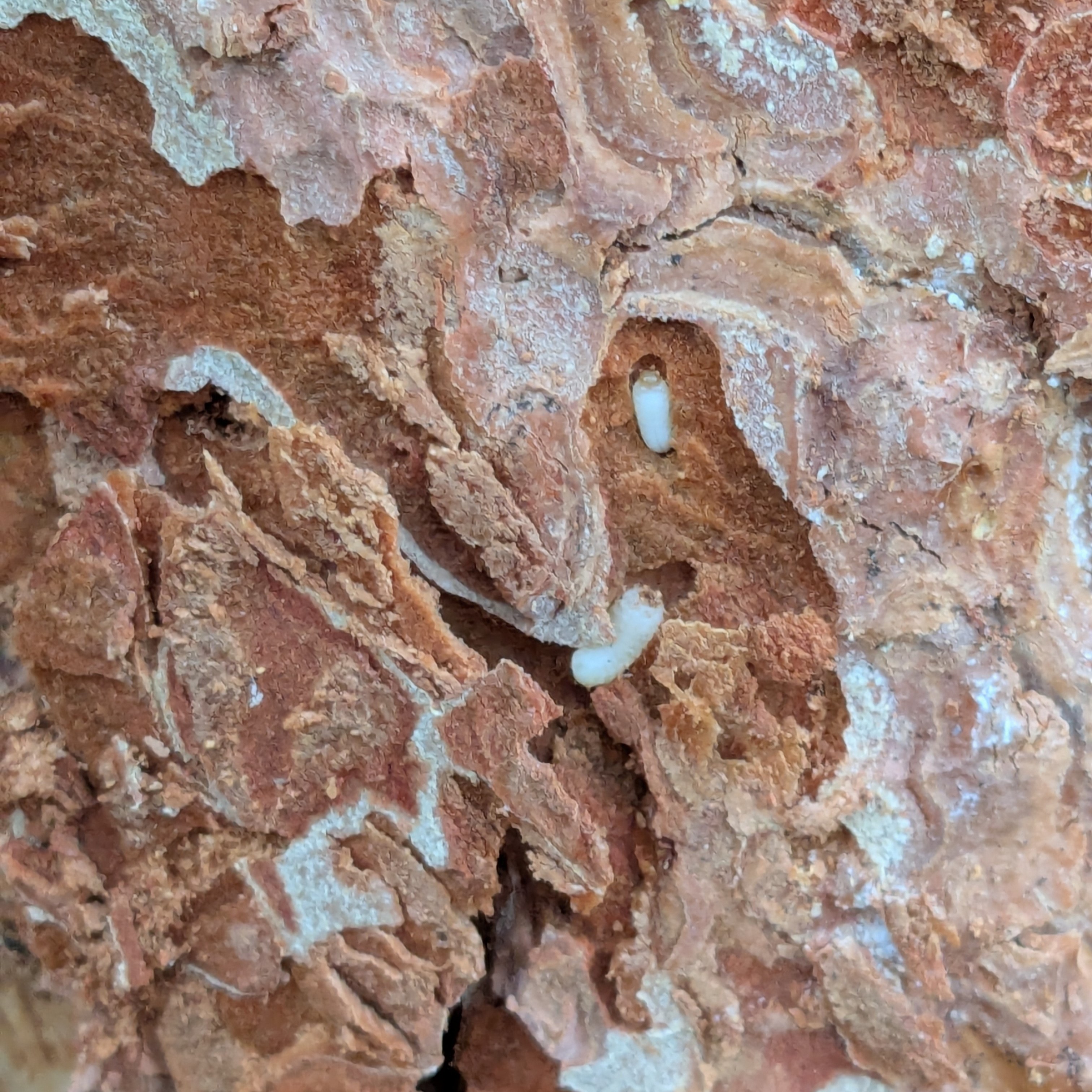
Western pine beetle larvae
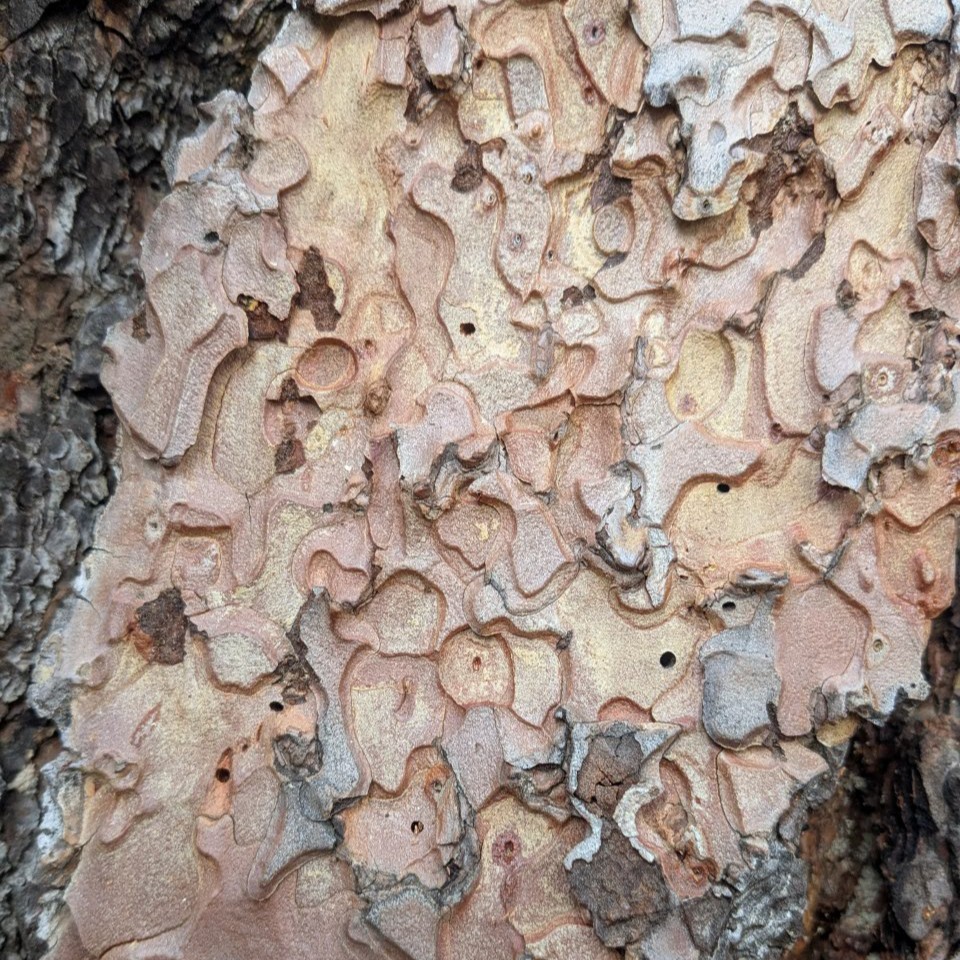
Western pine beetle exit holes
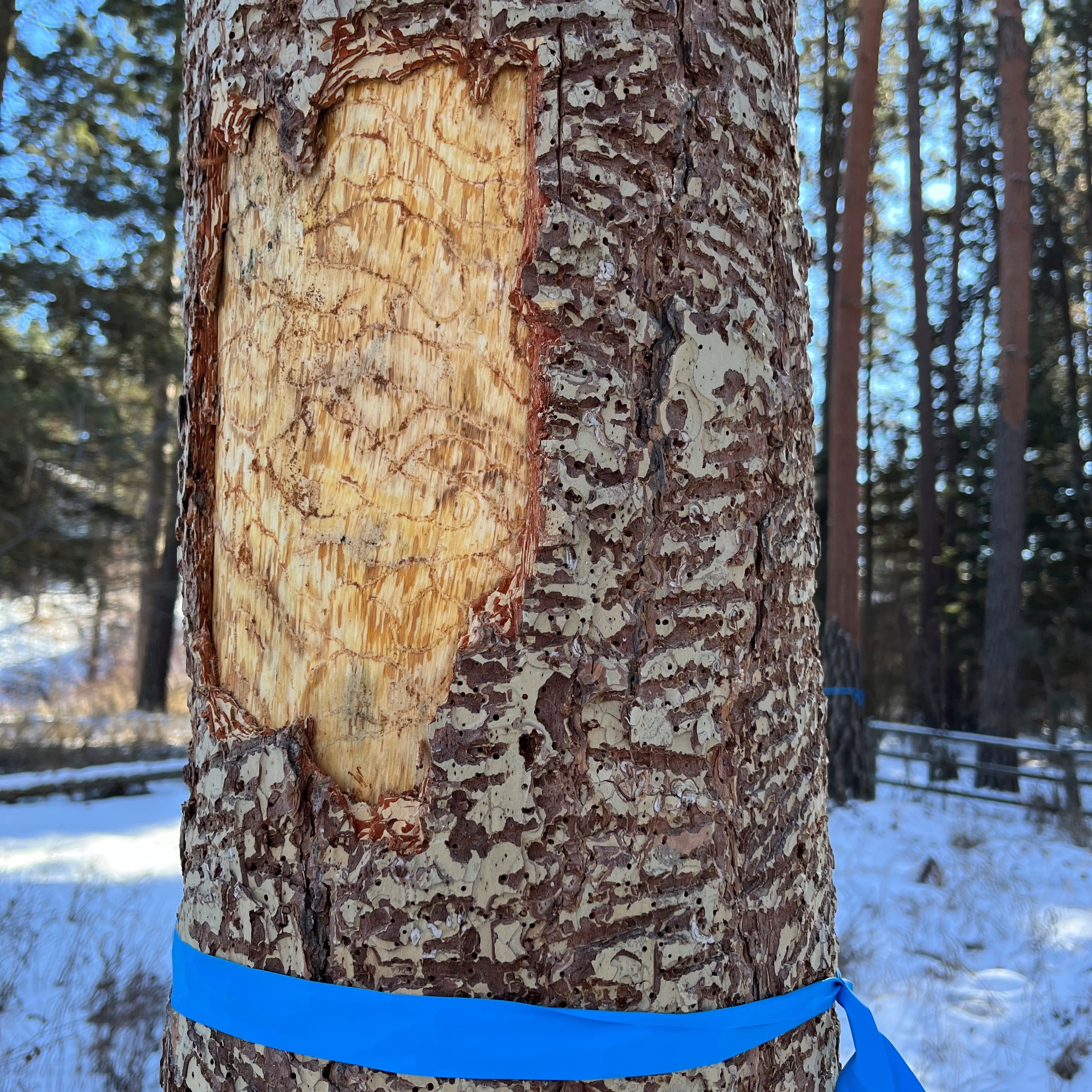
Woodpecker flaking on infested ponderosa; bark window shows western pine beetle galleries
Ecology
Western pine beetle (WPB) is a native bark beetle that infests ponderosa pine. At low population levels, WPB attacks and kills trees weakened by drought, fire scorch, mechanical injuries, root compaction, or disease. Trees are often killed in groups or clumps. When healthy trees are attacked, the tree will attempt to "pitch out" the beetle using resin defenses. However, drought stress hinders tree defenses. Outbreaks are significantly influenced by drought as well as forest conditions; high-density, over-mature host stands are most susceptible. At high population levels (outbreak conditions), WPB can cause between 60-90% mortality in ponderosa. Natural enemies- such as woodpeckers and predatory beetles- help regulate low-density populations but rarely stop outbreaks once they begin. Ultimately, the beetle plays a significant ecological role as a disturbance agent, reshaping ponderosa pine ecosystems in ways that influence succession, nutrient cycling, and long-term forest resilience.
Identification
-
Creamy orange pitch tubes up the main bole of tree (versus red turpentine beetle which is only the first six feet). Pitch tubes are not always present, especially when trees are drought-stressed.
-
Orange-red boring dust accumulating in bark crevices
-
Circuitous galleries etched into inner bark
-
Presence of brown adult beetles or small white larvae that are approximately the size of a grain of cooked rice (less than 1/4 inch)
-
Bark flaked off tree by woodpeckers feeding on beetles
-
Numerous small exit holes on outside of bark
-
Crowns of infested trees may be green. Trees often turn red after beetles have left the tree.
Life Cycle
Western pine beetle can produce two generations per year in Montana, although development is temperature-dependent, so warmer locations in the species' range (e.g., California) may see up to four generations of beetles per year. Adults attack trees in June and late August. Females initiate attack, releasing aggregation pheromones to attract more WPB. When a host tree is fully in habited, both male and female beetles release anti-aggregation pheromones to prevent overcrowding the host. Eggs hatch into larvae that initially feed in inner bark but then migrate toward outer bark before pupating. Mature adults then emerge from the host and begin another generation. Due to having two generations per year, life cycles overlap.
Management
-
Thin stands to reduce competition and promote individual tree vigor. Trees "pitch out" beetles so adequate moisture is important for successful defense.
-
Identify and remove beetle-infested trees. Woodpecker activity often indicates WPB presence before symptoms are visible lower on bole. Trees may appear healthy but closer inspection will reveal pitch tubes and boring dust in bark crevices.
-
Avoid soil compaction in stands with mature ponderosa pine.
-
Remove or destroy infested material. Bark beetles will continue to develop in logs and firewood and, if left on site, can emerge the following summer to attack nearby trees.
Additional Resources
Printable Fact Sheet: Western Pine Beetle
Forest Insect & Disease Leaflet: Western Pine Beetle FIDL
Management Guide: Western Pine Beetle Management Guide
Contact the Forest Pest Management Program
The Forest Pest Management Program supports service foresters throughout Montana. Contact your local service forester for questions regarding insects and diseases in your area.
2705 Spurgin Rd Missoula, MT 59804