
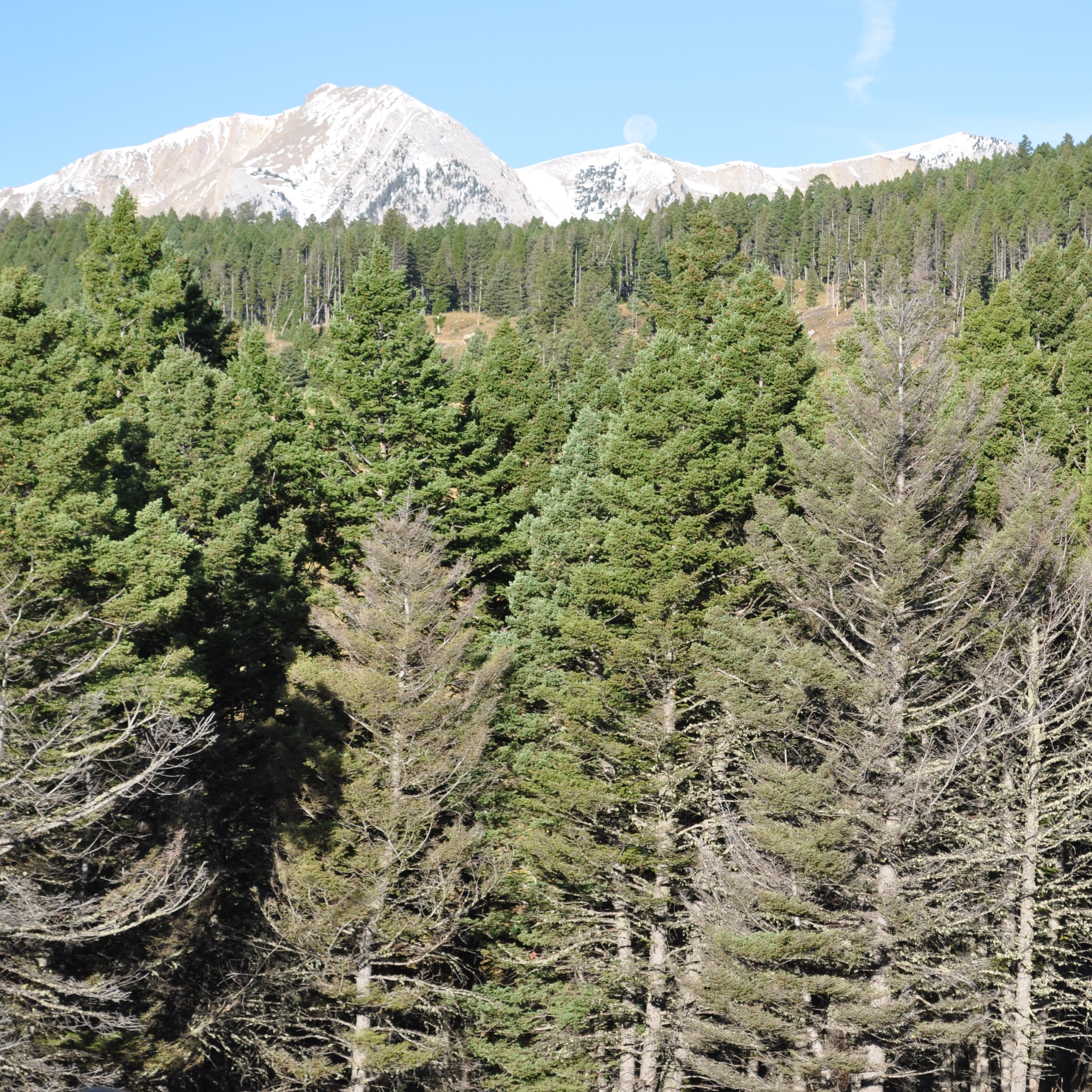
Western Spruce Budworm
Choristoneura freemani (formerly C. occidentalis)
HOSTS: Douglas-fir, grand fir, subalpine fir, spruce, and larch
High populations may spill over into neighboring pine trees.
DAMAGE: Defoliation
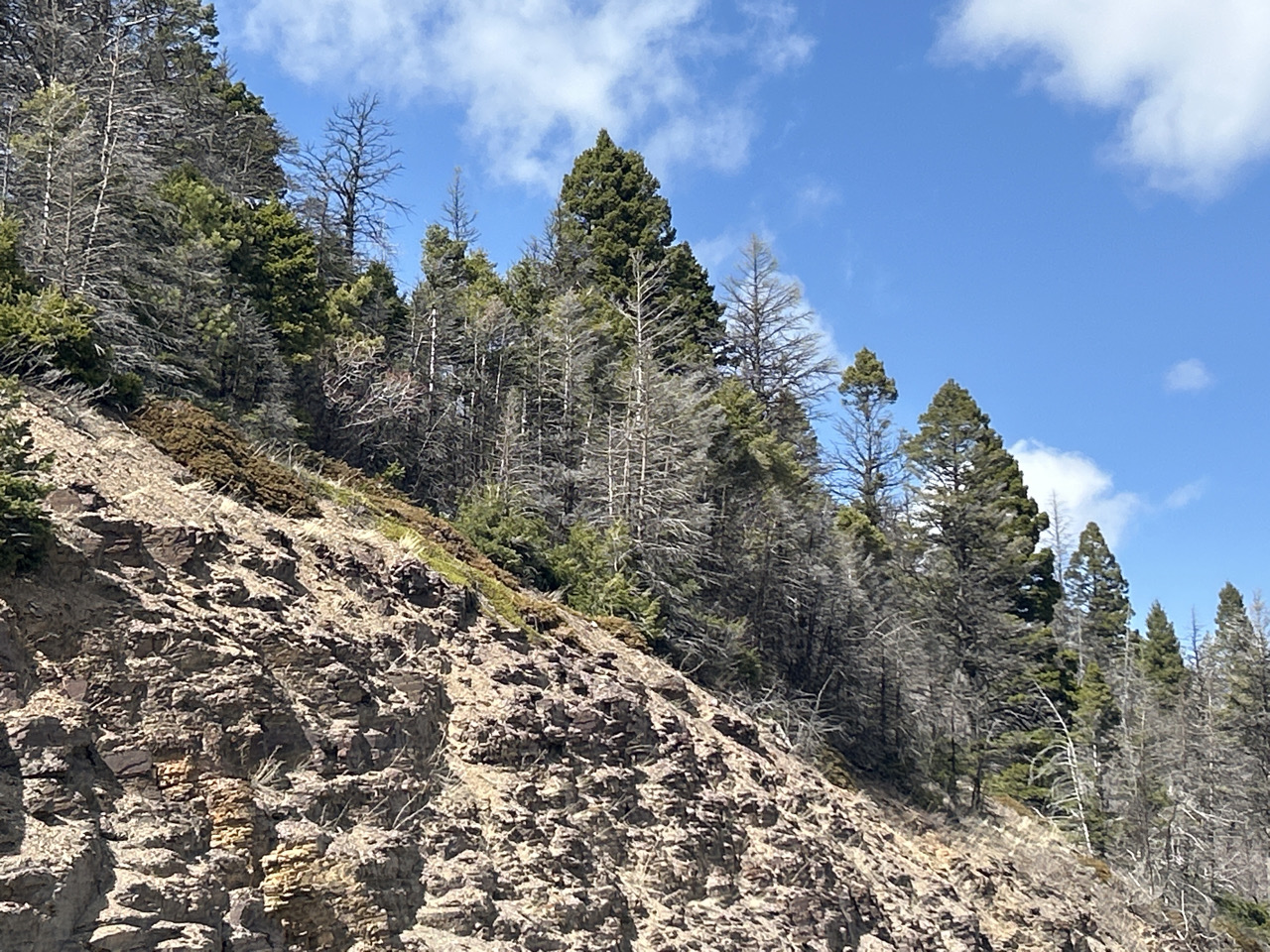
Caterpillars primarily feed on new needle growth, limiting tree vigor. Repeated, heavy defoliation can cause branch dieback and top kill. Severely defoliated trees in the understory can be killed within a single year.
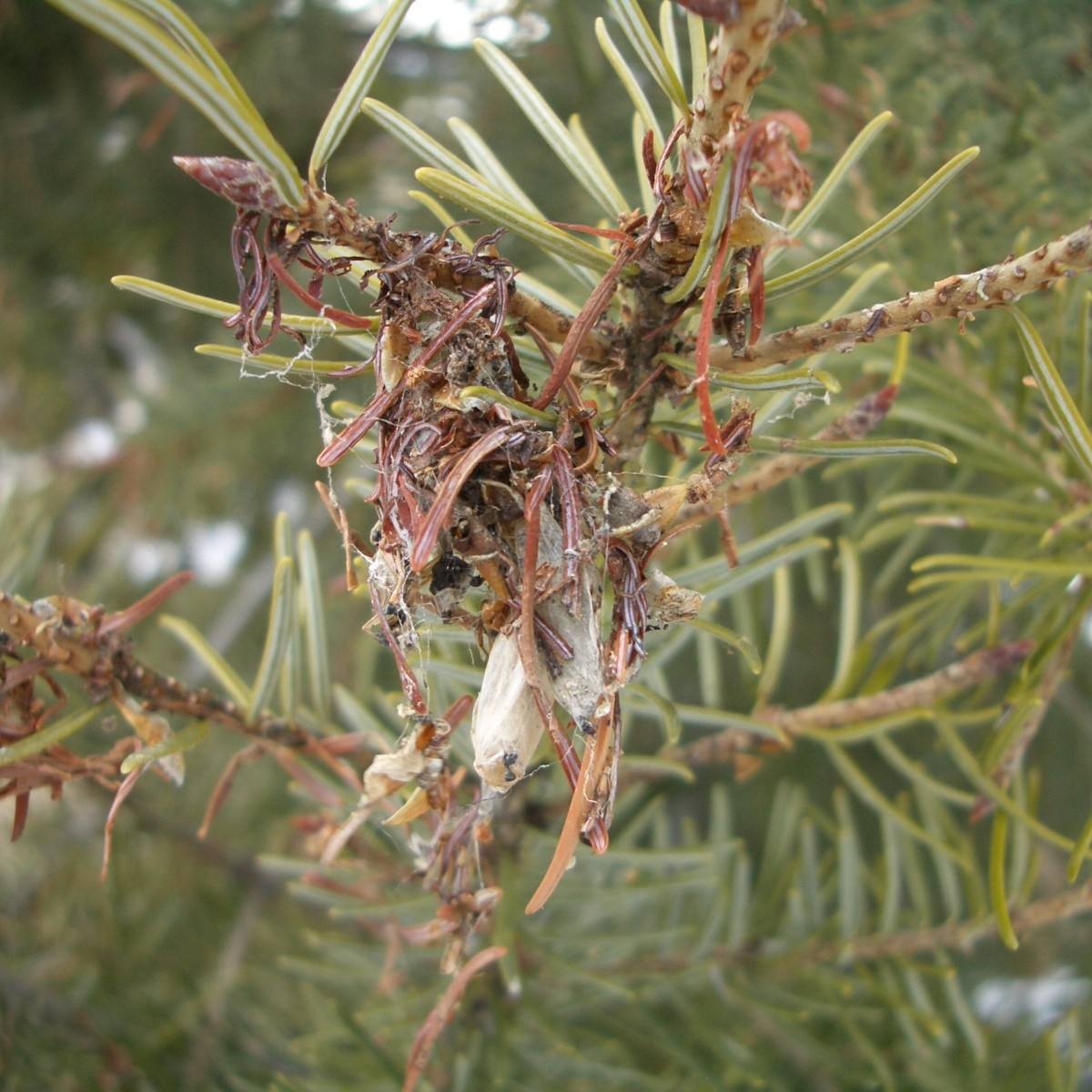
Western spruce budworm feeding damage
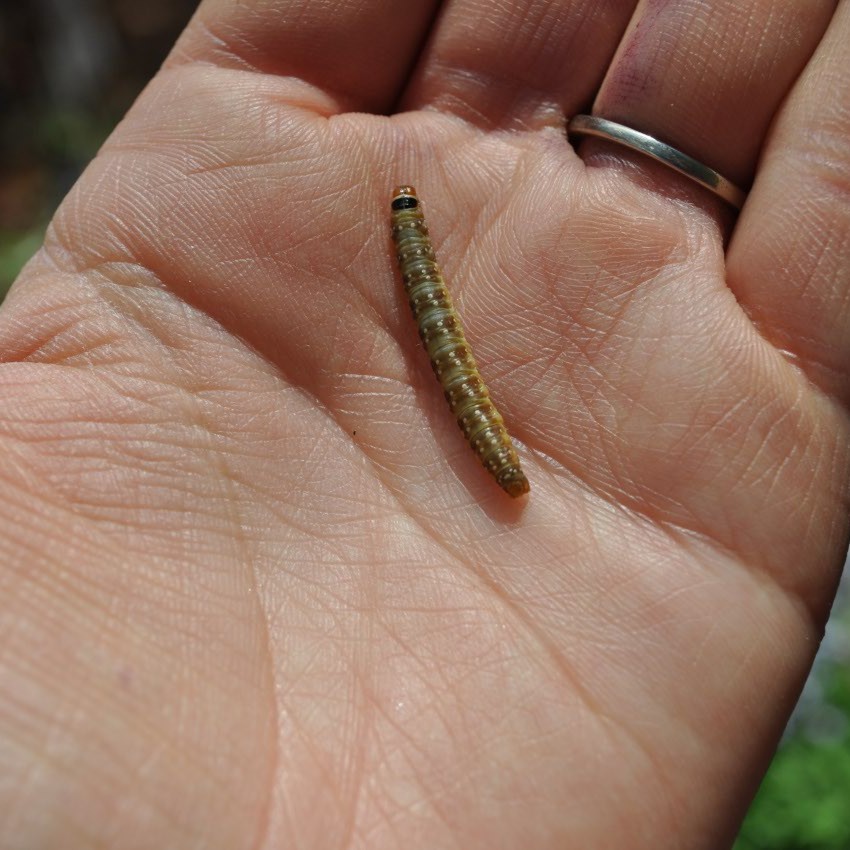
Western spruce budworm larva
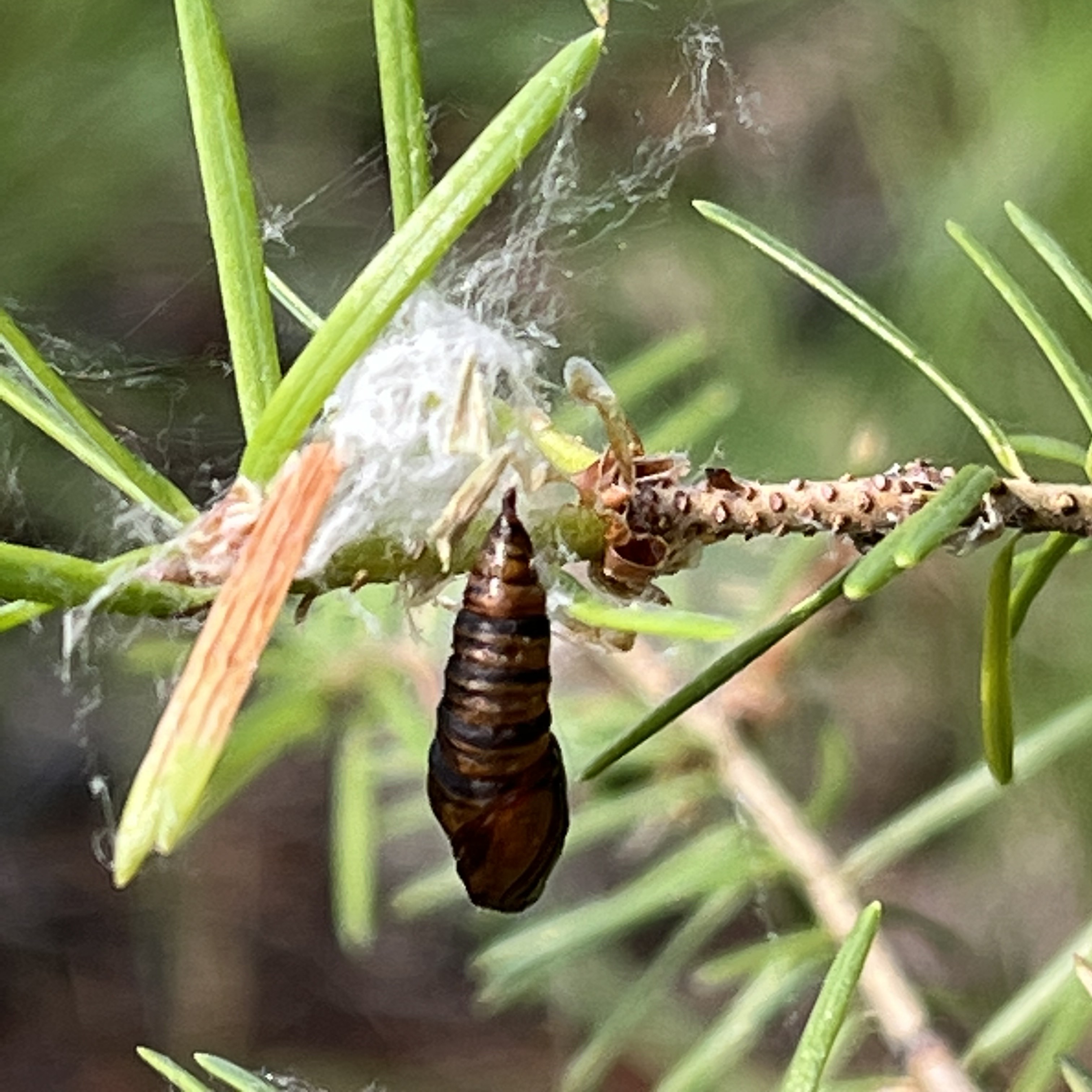
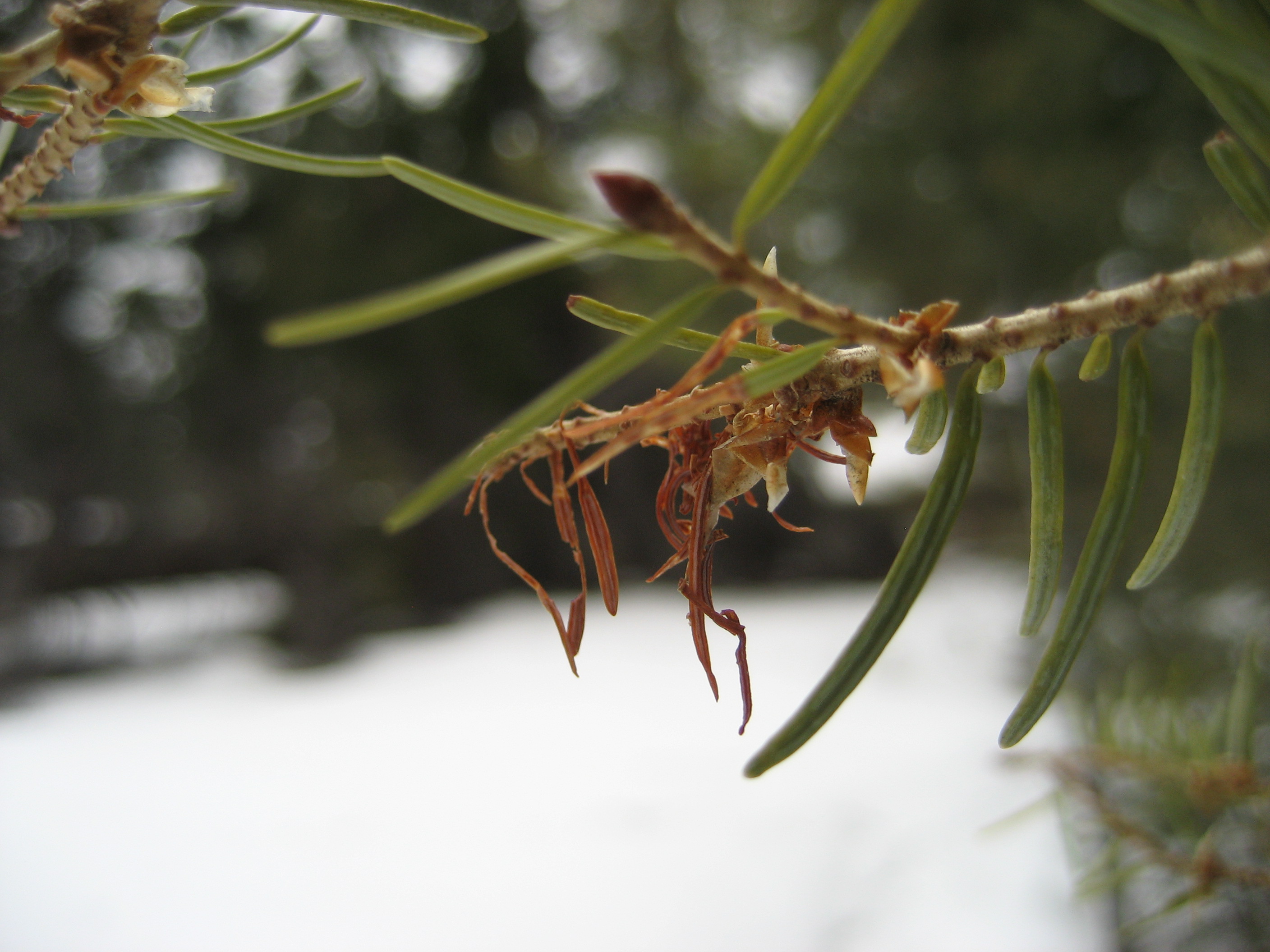
Western spruce budworm pupal case hanging from needles
Ecology
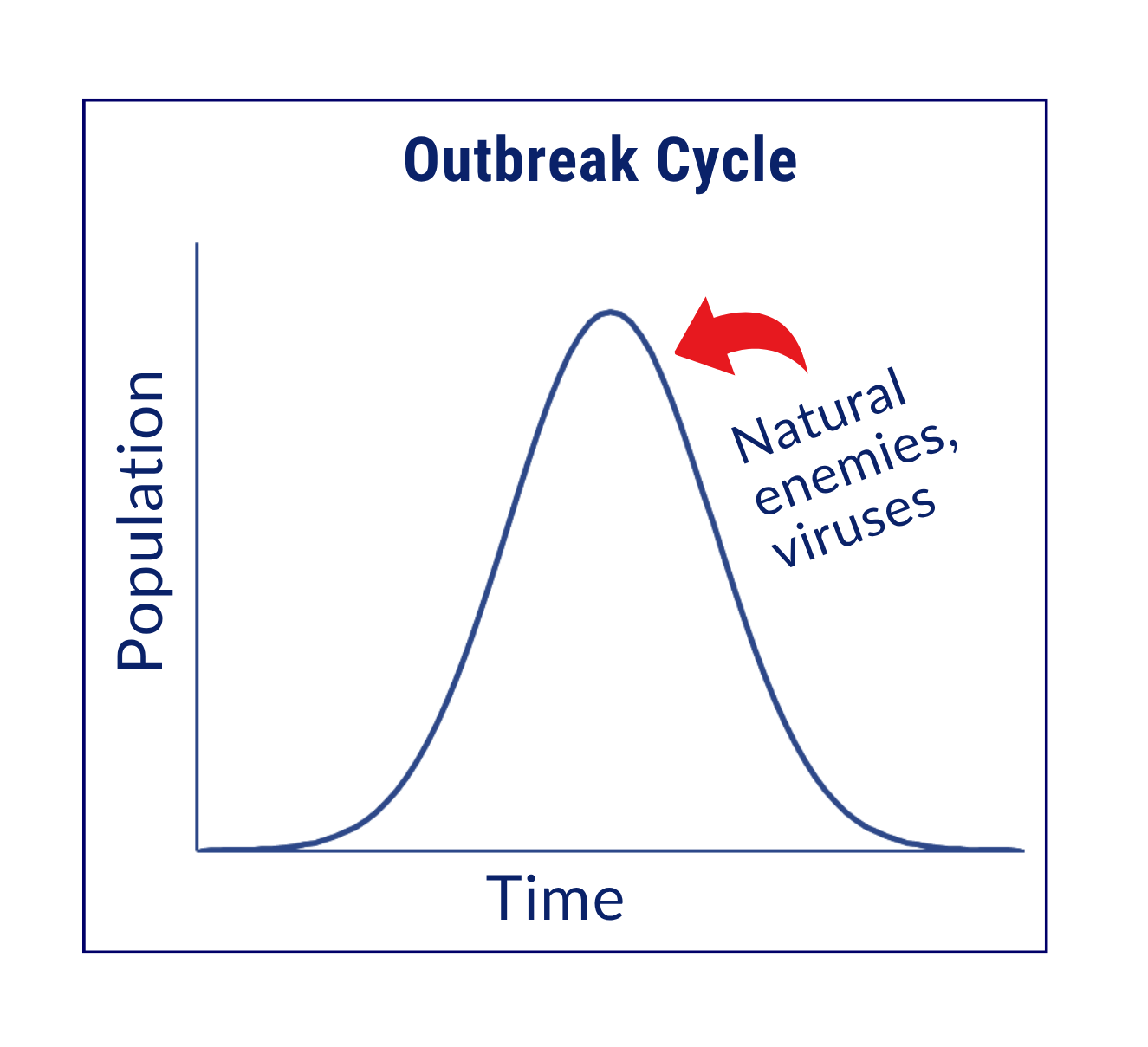
Western spruce budworm (WSBW) is a native moth that causes major defoliation in Montana's forests. West of the divide, populations are cyclical, with outbreaks occurring approximately every 10-15 years. Forests east of the continental divide experience chronic populations. Outbreaks are most severe on warm, dry sites with dense, multi-layered canopies of host trees. Past harvest practices and fire exclusion have shifted species composition and promoted stand conditions favoring WSBW. Outbreaks influence forest structure by creating snags, woody debris, and canopy openings, increasing stand biodiversity and wildlife habitat. Western spruce budworm is a major seasonal food source for birds, bats, and small mammals. Parasitoids and pathogens also regulate populations.
Identification
-
Smooth olive-brown caterpillars with pairs of cream-colored dots along back
-
Bronze pupal cases that persist on foliage after moths emerge
-
Small, copper-colored moths most visible in August, often gathering around lights or flying in clusters near branch tips
-
Chewed needles bound together by silk on branch tips and terminal leader
-
Crowns appearing thinned, scorched or stripped of foliage
Life Cycle
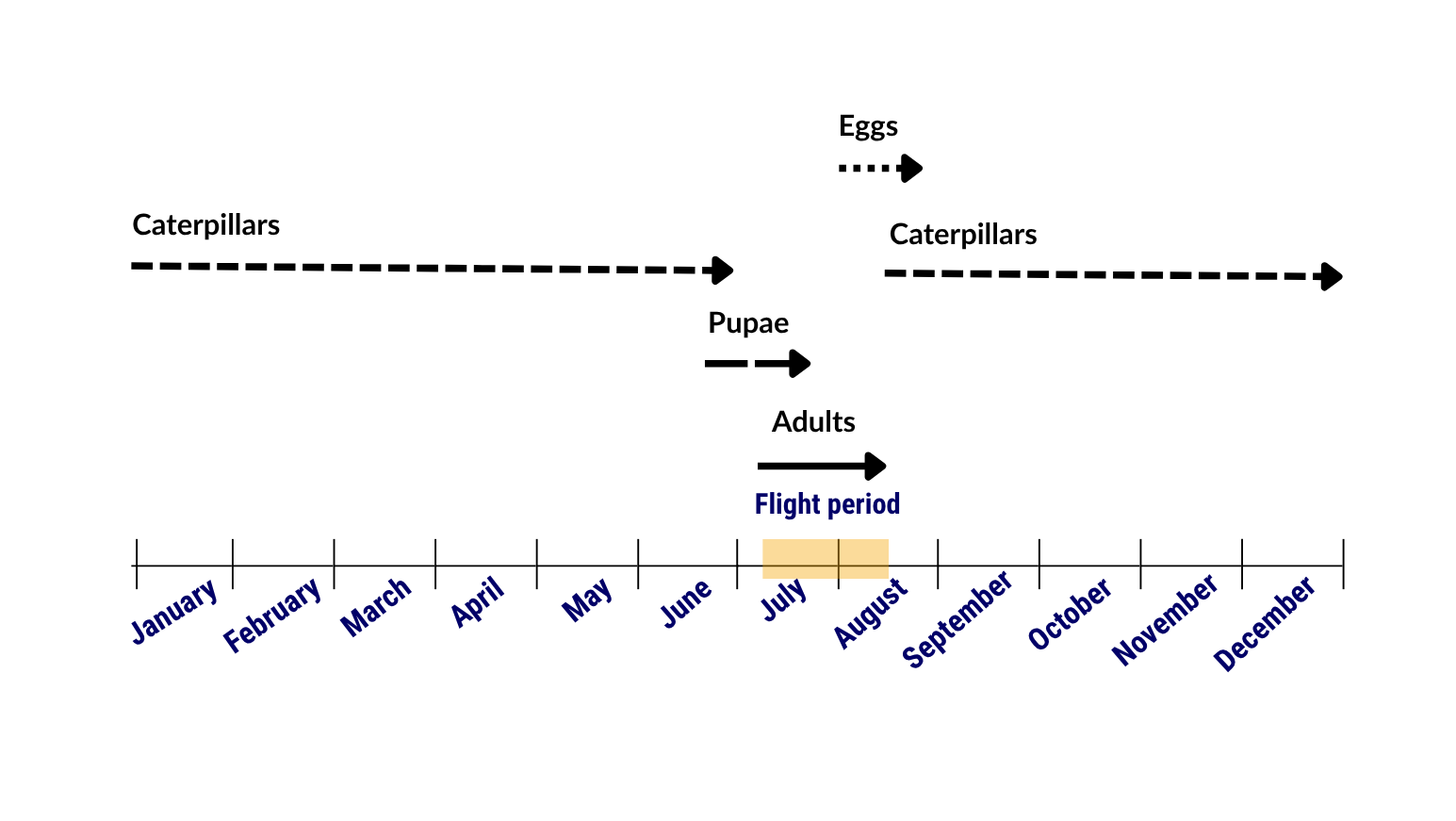
Western spruce budworm produce one generation per year. Adults typically emerge in late July to early August. Eggs are light green and found in overlapping masses on the underside of conifer needles. Caterpillars do not feed immediately after hatching. They spin silk "hibernacula" shelters in which they overwinter. The following spring, caterpillars emerge and begin feeding on needles or in buds. In mid-summer, they spin silken shelters in which they feed and later pupate. Copper-colored moths emerge in August, mate, and the cycle repeats.
Management
-
Thin stands to reduce competition and promote individual tree vigor. Defoliation may still occur but trees will be more likely to rebound after outbreak subsides.
-
Create a single layer canopy to interrupt dispersal of caterpillars from tree tops to understory.
-
Promote non-host species such as pines (lodgepole and ponderosa) and western larch.
-
Insecticides may be useful for short-term control of high-value trees. Follow the pesticide label and use proper personal protective equipment. A licensed pesticide applicator is encouraged.
Additional Resources
Printable Fact Sheet: Western Spruce Budworm
Forest Insect & Disease Leaflet: Western Spruce Budworm FIDL
Management Guide: Western Spruce Budworm Management Guide
Contact the Forest Pest Management Program
The Forest Pest Management Program supports service foresters throughout Montana. Contact your local service forester for questions regarding insects and diseases in your area.
2705 Spurgin Rd Missoula, MT 59804