
Bark Beetle Pheromones
Verbenone and MCH (methylcyclohexenone)
Bark Beetle Chemical Ecology
Pheromones are chemical signals that bark beetles use to communicate with one another. When a suitable host is found, they produce aggregation pheromones to attract more beetles to the area. Strength in numbers allows beetles to overwhelm host tree defenses when they attack en masse. When the host tree is full, bark beetles produce anti-aggregation pheromones, which effectively act as repellants to prevent overcrowding.
Research into bark beetle chemical ecology has advanced management techniques through use of synthesized pheromones. Aggregation pheromones can be used to lure and trap beetles, but this technique risks spillover into healthy trees. Anti-aggregation pheromones are more commonly used by landowners and resource managers to prevent infestations.
Using Pheromones
-
Pheromones are species-specific. Accurately identify which bark beetles are active in your target area before ordering.
-
Pheromones will not protect trees that have already been attacked. Pheromones must be hung before the bark beetle flight period begins to be effective. Note: timing of flight period varies by species.
-
Order pheromones well in advance to allow for shipping and delays.
-
Be sure to wear personal protective equipment (PPE), including eye protection, when hanging pheromones.
-
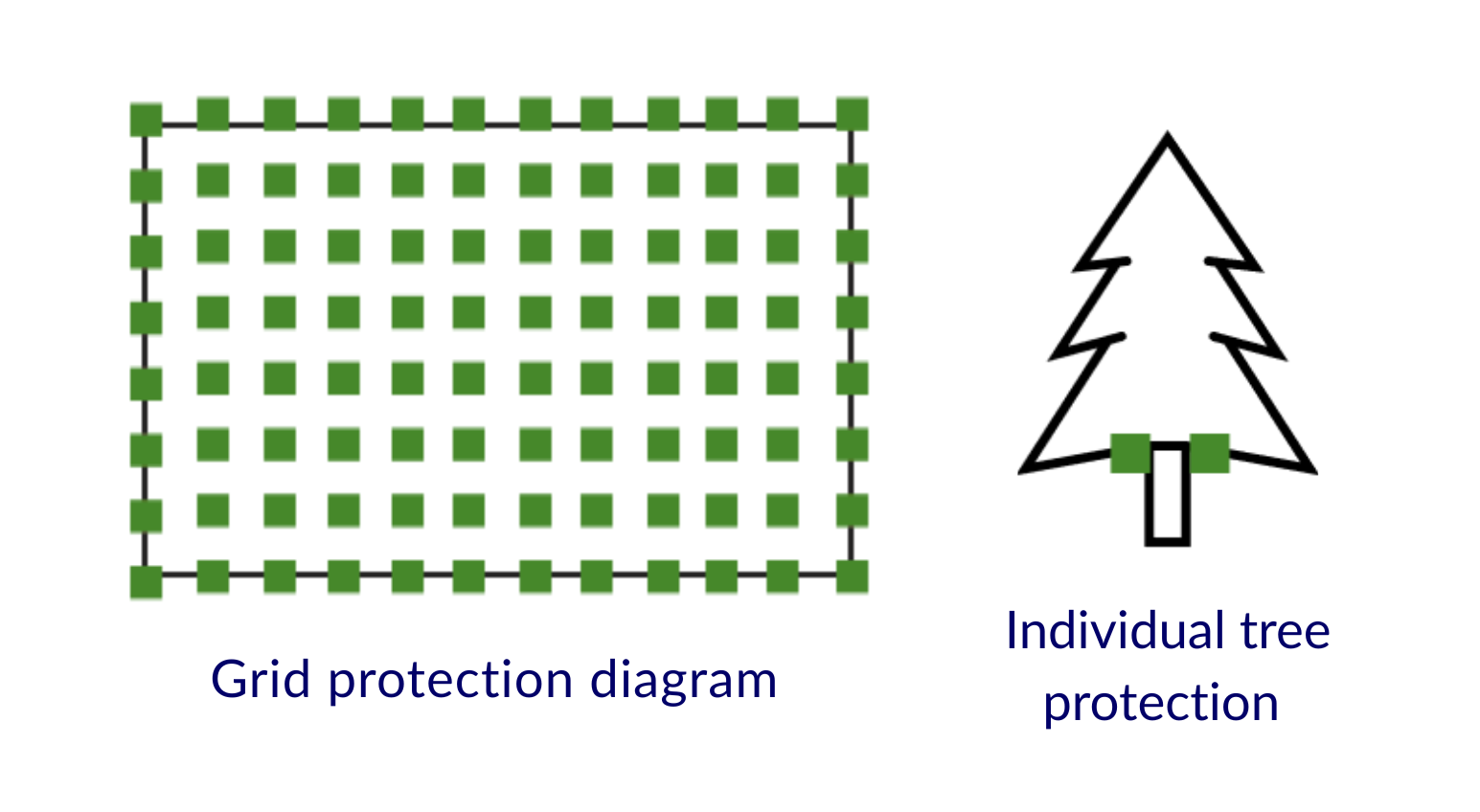
Pheromones may be hung to protect individual trees, or in a grid pattern to protect a larger area.
-
Do not pop the pheromone bubble capsule when hanging.
-
Pheromones last one season and must be replaced each year that protection is desired.
Commonly Used Pheromones
Anti-Aggregation Pheromone |
Verbenone | MCH (methylcyclohexenone) |
Bark Beetle |
Mountain Pine Beetle (MPB) | Douglas-fir Beetle (DFB) |
Host Trees |
Pines | Douglas-fir |
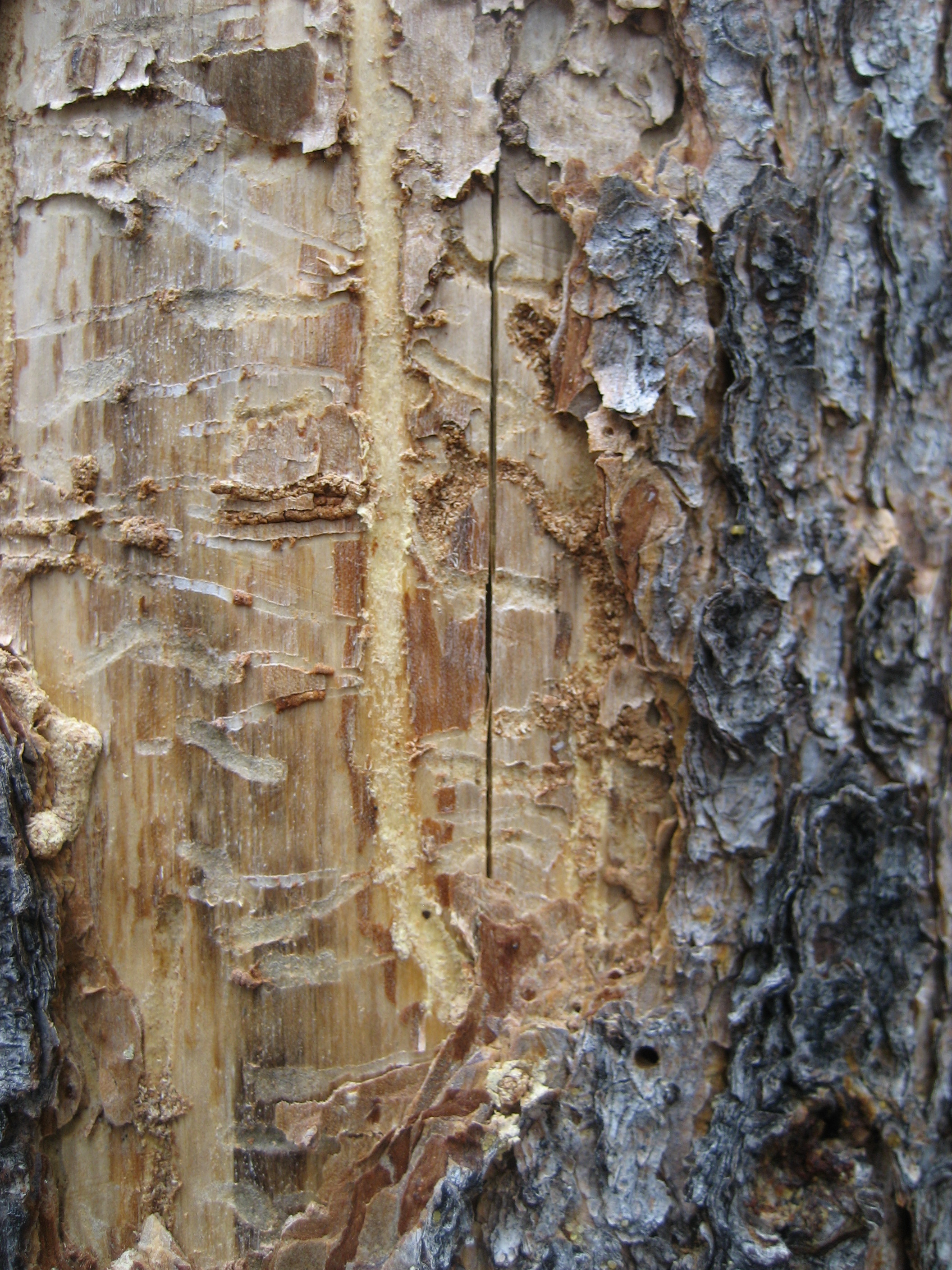
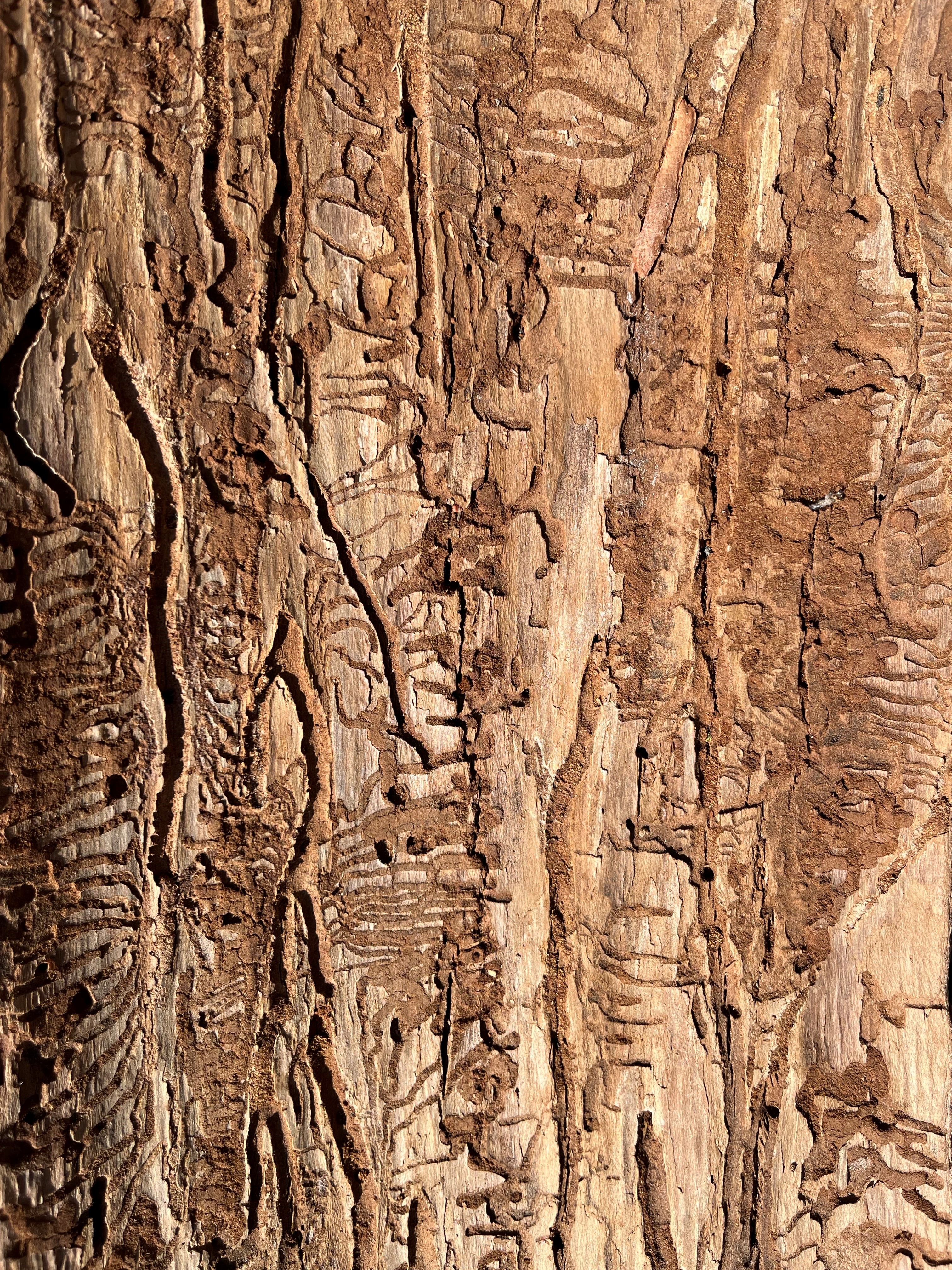
Gallery Pattern |
Long and straight with larval galleries on opposite sides, "crook" or J-shape at bottom
|
Long and straight with larval galleries on alternating sides
|
When to Hang |
MPB flight begins mid-summer, once overwintering larvae have completed development to adulthood. Hang between June 15-July 1. | DFB flight begins when temperatures are consistently reaching 60 degrees Fahrenheit (mid-spring in Montana). Hang by April 15. |
Pheromones are considered pesticides.
Although they do not kill bark beetles, pheromones are classified as pesticides. Therefore, Montana law requires a valid pesticide applicator/dealer license to sell or charge for application services. If applying pheromones on your own property, you do not need a license to purchase or apply. Follow the pesticide label and use proper personal protective equipment!
Additional Resources
Printable Fact Sheets: Bark Beetle Pheromones, Douglas-fir Beetle, Mountain Pine Beetle
Forest Insect & Disease Leaflets: Douglas-fir Beetle FIDL, Mountain Pine Beetle FIDL
Contact the Forest Pest Management Program
The Forest Pest Management Program supports service foresters throughout Montana. Contact your local service forester for questions regarding insects and diseases in your area.
2705 Spurgin Rd Missoula, MT 59804